
Miyetti Allah Seeks FG Loans for Butchers to Reduce Beef Prices

 The association argues that Nigeria’s beef inflation is not driven by cattle scarcity alone, but by a weak livestock-finance chain that leaves butchers dependent on middlemen and consumers paying more at the market.
 The association argues that
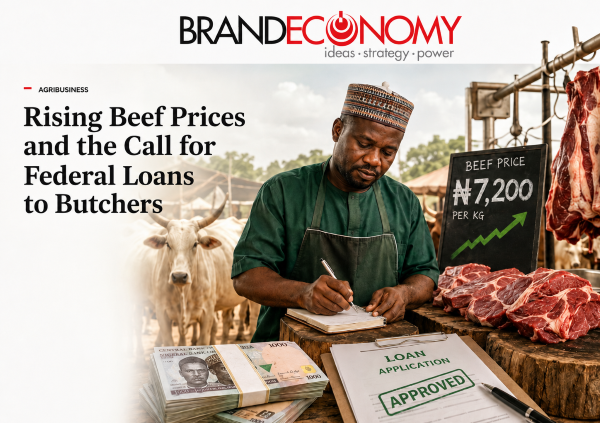
 The Miyetti-Allah Fulaku Yeso Yeso Development Association has urged the Federal Government to provide targeted loan facilities to butchers across Nigeria, arguing that cheaper access to working capital would enable them to buy cattle directly from livestock farmers and reduce the rising cost of beef, skin and offal.
Speaking in an interview with the News Agency of Nigeria, the association’s National Security Adviser, Comrade Pariya, said middlemen operating between Fulani herders and butchers had become a major factor in the widening gap between cattle prices at livestock markets and the final price of beef paid by consumers.
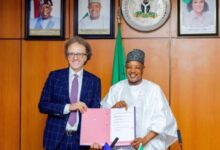

According to him, many butchers lack the cash required to purchase cattle directly from farmers. As a result, they often depend on dealers who supply animals on credit and recover payment after meat sales, but at significantly higher prices.
“The dealers take advantage of the butchers’ financial challenges to exploit them,” Pariya said. “Most butchers usually pay them after selling the meat. But if government supports butchers with loans, they can go to cattle markets and buy directly from farmers. In the long run, prices will come down across the country.”
Pariya said a large cow currently sells for between ₦500,000 and ₦750,000 at livestock markets, but middlemen may resell the same animal to butchers for between ₦1.3 million and ₦1.5 million, depending on location and market conditions.
That price spread, he argued, is one reason beef has become increasingly expensive for households already facing pressure from food inflation, transport costs and declining purchasing power.
He also acknowledged that insecurity and high transport costs contribute to the rising cost of beef, but maintained that the role of middlemen in the livestock value chain is often underestimated.
“Security challenges play a role, but they are sometimes exaggerated,” he said. “If butchers can go directly to the market and buy from farmers, everything will be easier.”
Also speaking, Ibrahim Mohammed, MAFYDA Secretary in Taraba State, said the cost pressure facing the livestock industry extends beyond trading margins. He identified rising prices of veterinary drugs, vaccines, professional consultation fees and shrinking grazing access as additional factors pushing up cattle production costs.
The price impact is already being felt by consumers. A kilogramme of beef, which sold earlier in the year for between ₦5,500 and ₦6,500, now reportedly sells for between ₦8,000 and ₦9,000, depending on location.
For many households, that means beef is gradually shifting from an everyday protein source to an occasional purchase. For restaurants, food vendors and processors, it means higher operating costs and tighter margins. For policymakers, it raises a broader question: how can Nigeria reduce food prices without fixing the financing, logistics and productivity gaps across the livestock economy?
BRANDECONOMY Insight
Beef Inflation Is Also a Finance Problem
The Miyetti Allah proposal may appear simple, but it speaks to a deeper structural weakness in Nigeria’s livestock market: the absence of affordable working capital for operators at the lower end of the value chain.
When butchers cannot buy directly from farmers, middlemen become the financiers of last resort. They provide informal credit, but at a cost that is ultimately passed to consumers. In that sense, beef inflation is not only a supply, transport or security problem. It is also a finance problem.
A targeted loan scheme for butchers, according to Miyetti Allah, could help reduce dependence on intermediaries, but it must be properly designed. Government should avoid another poorly monitored intervention fund. Any credit facility should be tied to registered butcher associations, livestock-market records, digital repayment tracking, veterinary certification, cold-chain support and transparent cattle sourcing.
The bigger opportunity is to modernise the livestock value chain. Nigeria needs better ranching systems, animal health services, feed support, grazing management, transport logistics, meat processing infrastructure and market finance. Without these, consumer prices will remain vulnerable to every shock — insecurity, fuel cost, disease outbreaks, middleman margins and seasonal supply disruptions.
Cheaper beef will not come from rhetoric. It will come from a more efficient livestock economy.