By Chiazo Ogbolu
Managing traffic is a huge challenge to modern cities, where growing populations and rising vehicle numbers continue to overstretch road infrastructure and economy of a state.


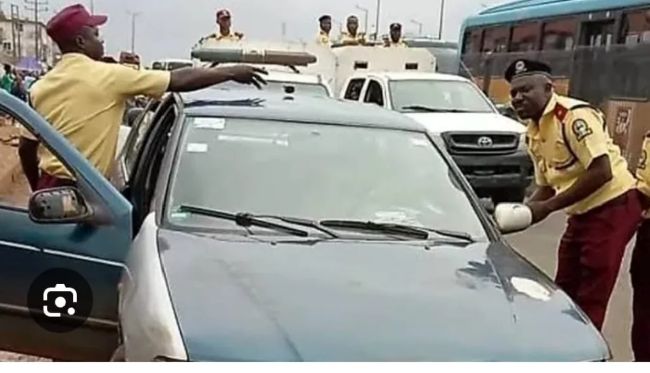
A state such as Lagos which experiences daily gridlock and road accidents has its residents’ productivity, safety and quality of life being negatively affected if the issues are not well tackled.
Lasting solutions will require sound policies, application of technology, effective law enforcement and public support and cooperation.
In an effort to improve traffic management, Lagos State Government, on July 15, 2000, under Chief Bola Tinubu as the Governor, established the Lagos State Traffic Management Authority (LASTMA) to manage traffic flow and enforce traffic rules and regulations.
This is aimed at transforming the state’s transport system.
Some Lagos residents are convinced that LASTMA, currently headed by the General Manager, Mr Olalekan Bakare-Oki, is doing much to meet public expectations but some others feel that the authority still has much to do.
At various fora, Bakare-Oki gave the assurance that the authority had put some mechanisms in place for checks and balances to reduce gridlock and associated problems.
According to him, LASTMA now monitors its traffic managers through its surveillance unit, and this has improved its operations.
Bakare-Oki said that, in 2025, the authority was able to improve in its traffic management strategy, especially on major routes in the state.
” We had to rejig our system to ensure that we improve travel time for Lagos residents.
“We did a massive human capacity building for our staff so that we are able to get the best out of them,” he said.
Bakare-Oki said that the authority was able to train over 3,700 out of 4,700 staff in 2025, and this yielded results.
He said that the agency equally improved in getting feedbacks from the public especially with its toll-free line, which received over 4,000 calls on information about traffic congestion, emergencies and accidents as well as complaints and praises about the conducts of LASTMA officers.
He gave the assurance that 87 per cent of all the calls were promptly attended to and issues resolved.
“We have been able to improve in technology application; that is, the use of Traffic Management Solutions (TMS) machine to capture traffic infractions.
“We have captured over 120,000 offences, and the agency was able to apprehend about 17,000 vehicles in 2025.
“The agency recorded 1,227 accidents and for vehicles that broke down, 5,000 were recorded.
“The larger percentage (61 per cent) happened to be trucks and the reason is not far-fetched. It is due to much activities and movements of cargoes from seaports in the state,” he said.
According to Bakare-Oki, in September 2025, the authority had an Ember Months programme during which stakeholders – transport unions, haulage companies, garages workers and government officials participated in a lecture on safety.
“Part of the plan and programme for the Ember months had to do with ensuring that we place 24-hour surveillance on major market within Lagos, which are Mile 12, Alabarago, Apongbon and others.
“We equally concentrated on major shopping malls around the city, as well as inter-state motor parks,” he said.
Some residents applauded Lagos State Government efforts in traffic management in 2025, lauding LASTMA’s commitment.
A banker, Mr Fabian Ugochukwu, said that LASTMA made noticeable efforts in managing road traffic especially across high-risk corridors such as Lagos Island, Oshodi, Ikeja and Lekki–Ajah axis.
Ugochukwu said that increased presence of LASTMA officers at peak hours, quicker deployment during breakdowns and minor crashes, as well as the authority’s collaboration with other emergency responders helped to reduce gridlock.
He added that intensified public sensitisation campaigns and enforcement of traffic rules and regulations helped to improve compliance in some locations.
He, however, alleged some gaps in the operations of the agency.
“Reports of inconsistent enforcement, inadequate officer training, occasional unprofessional conduct, and weak crowd control during major incidents affected public confidence.
“Response in some emergencies, particularly during evening hours and weekends, remains slow.
“Technology adoption for traffic monitoring is still limited, and coordination with road users — especially commercial transport operators — is often reactive rather than preventive,” he said.
He said that cases of alleged extortion and overzealous law enforcers continued to create friction between LASTMA officers and motorists.
He urged LASTMA management to plan better during major events, at construction zones and festive periods, instead of reactive deployment.
“They should prioritise continuous training on traffic psychology, emergency management, ethics, conflict resolution and first aid alongside improved welfare packages for officers to discourage misconduct,” he advised.
Mr Foster Obi, the Publisher/Editor-in-Chief of DFC News, an online news platform, said that LASTMA had justified its establishment to a great extent.
He said that in the past, LASTMA was organising training for drivers, which helped some of them to imbibe certain driving cultures such as use of seat belts, speeding within approved limits, and avoidance of drinking while driving.
According to Obi, gains recorded over the years from the training seem to be disappearing due to bad eggs in the agency.
“Some LASTMA officers appear more interested in collecting bribes from offenders than in controlling traffic.
“This has compromised the system, as drivers no longer follow the rules but prefer to bribe some officials while breaking traffic rules.
This is why Lagos still experiences some avoidable traffic congestion.
“While one may not condemn the organisation because of its usefulness, there is a need for the government to put LASTMA back on track to achieve its aim and objectives,” he said.
Mrs Comfort Okoye, a businesswoman, urged Lagos State Government to see the agency first as a traffic manager and not a revenue-generating organisation.
“Government must emphasise training and re-training to equip the officers with adequate knowledge about traffic management in the digital age.
“Any LASTMA officer found compromising his job ethics must be sacked to promote discipline in the agency.
“Targets for recruitment must be people with the right mindset,” she said.
News Agency of Nigeria (NAN)