Lagos Launches Biofortified Rice to Fight Micronutrient Deficiency and Boost Public Health

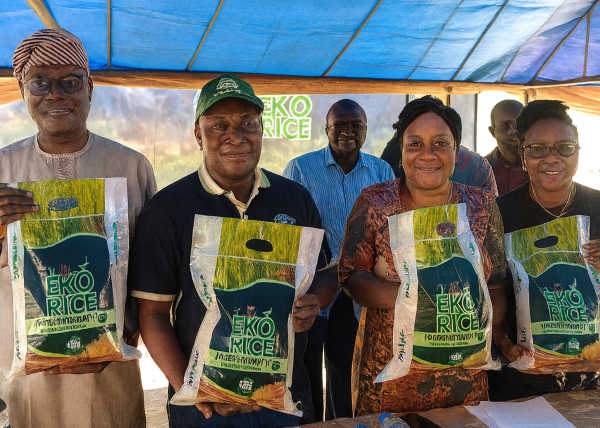
Lagos State has officially taken a bold step in its mission to improve public health and strengthen food security with the unveiling of its Biofortified Rice and Biofortified Blending Machine—a milestone intervention aimed at tackling rising micronutrient deficiencies across the state.
The launch, held at the prestigious Imota Rice Mill, Ikorodu—one of the largest and most advanced rice processing complexes in Africa—signals Lagos’ transition from food sufficiency to nutrition-led food security, aligning with global best practices in fortification and public health nutrition.




The biofortified blending machine is the sixth of its kind in Nigeria, placing Lagos among the nation’s elite states prioritizing nutrition innovation at industrial scale.
A New Era of Nutrition-Led Agriculture in Lagos
Special Adviser on Agriculture to Governor Babajide Sanwo-Olu, Dr. Oluwarotimi Fashola, emphasized that the launch marks another major milestone in Lagos’ strategic journey to secure healthy, sustainable food for its fast-growing population.
According to him, Lagos’ giant leap into biofortification is no accident—it is driven by visionary government investment, advanced milling technology, and deliberate policy direction.
What the Biofortified Rice Contains
The newly optimized mill now produces rice enriched with essential micronutrients, including:
- Iron
- Zinc
- Folic Acid
- Vitamin B1 (Thiamine)
- Vitamin B3 (Niacin)
- Vitamin B6
- Vitamin B12
This transforms Eko Rice from a staple commodity into a nutrition delivery platform—especially significant in a country where micronutrient deficiency remains a silent but dangerous public health crisis.
Why Biofortification Matters for Nigeria
Micronutrient deficiency—especially iron-deficiency anemia, zinc deficiency, and vitamin B deficits—affects millions of Nigerian children and adults, leading to poor cognitive development, weakened immunity, pregnancy complications, fatigue, and reduced productivity.
By fortifying the country’s most consumed staple, Lagos is delivering nutrition at scale, ensuring families—especially women and children—receive essential nutrients through everyday meals.
Dr. Fashola described the achievement as “a tangible solution with real-life impact”, adding that fortified rice will directly improve health outcomes and help combat malnutrition, particularly in low-income communities.
Imota Rice Mill: The Engine Room of Lagos’ Nutrition Ambition
Permanent Secretary, Ministry of Agriculture and Food Systems, Mr. Emmanuel Audu, reinforced Lagos’ commitment to food system excellence, describing the Imota mill as “the Rolls Royce of rice mills globally.”
With world-class technology and capacity, the mill is now positioned to deliver:
- Fortified Rice
- Classic Eko Rice
- Standard Eko Rice
Audu urged buyers—especially women who dominate the marketplace—to insist on Eko Rice, describing it as the healthier and superior choice.
Health Sector Endorses the Biofortified Rice Initiative
Special Adviser to the Governor on Health, Dr. Kemi Ogunyemi, represented by Mrs. Sarah Balogun, praised the initiative as a decisive action that will help Lagos overcome nutrition deficiencies affecting countless households.
She noted that fortified rice will support:
- Healthier living
- Better food quality
- Improved immunity
- More resilient communities
The initiative, she said, reflects Lagos State’s multi-sector approach to health—uniting agriculture, food systems, and public health into one integrated strategy.
BRANDECONOMY INSIGHT
The unveiling of Lagos’ biofortified rice is more than a food initiative—it is a strategic health and economic intervention with far-reaching implications.
Here are the key takeaways from BRANDECONOMY’s analysis:
1. Lagos Is Shifting from Food Supply to Food Quality
Nigeria’s food policy has long focused on availability. Lagos is now redefining food policy around nutrition density, which is the frontier of modern food security.
2. Biofortification Is a Low-Cost, High-Impact Public Health Tool
By fortifying rice, Lagos leverages an everyday staple to deliver essential nutrients—removing barriers of accessibility, affordability, and awareness.
3. Imota Rice Mill Is Becoming a National Nutrition Hub
With its ability to process and fortify rice at continental scale, Imota is positioning Lagos as a leader in nutrition-centered agribusiness.
4. The Eko Rice Brand Is Being Elevated into a Premium Nutrition Product
Eko Rice is no longer just a state-branded commodity—it is evolving into a trusted, health-forward consumer staple.
5. Lagos’ Strategy Aligns with Global Nutrition Movements
Countries like India, Bangladesh, Brazil, and the Philippines have used fortified rice to reduce hidden hunger significantly. Lagos is now aligning with this global shift.
The message is clear:
Nutrition is becoming the new frontier of food system competitiveness. Lagos wants to lead that race.