Intelligence-Led Operation Frees Abducted Oyo Pupils and Teachers, Arrests Eight Suspects and Offers a Powerful—But Incomplete—Template for Defeating Nigeria’s Kidnapping Economy
 Intelligence-Led Operation Frees Abducted Oyo Pupils and Teachers, Arrests Eight Suspects and Offers a Powerful—But Incomplete—Template for Defeating Nigeria’s Kidnapping Economy
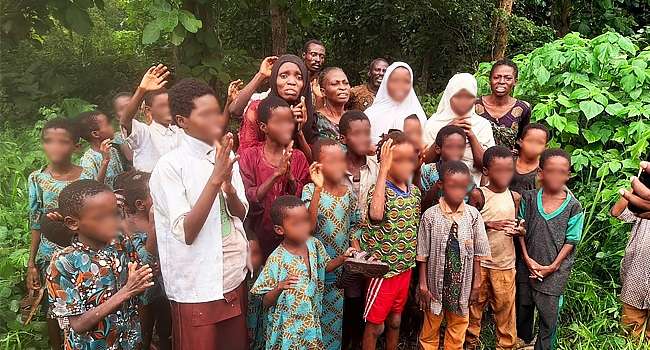
After 56 days of fear, uncertainty and national anxiety, the pupils and teachers abducted from three schools in Oriire Local Government Area of Oyo State have regained their freedom.
The Oyo pupils and teachers rescued on Friday, July 10, 2026, brought enormous relief to families who had endured nearly two months without their children, relatives and colleagues. It also ended a prolonged security standoff that had shaken public confidence, disrupted education and challenged the long-held perception of Nigeria’s South-West as comparatively insulated from mass school kidnappings.




President Bola Tinubu described the outcome as a major national relief and commended the military, Department of State Services, Nigeria Police Force and other participating agencies. Eight suspected members of the kidnapping network were arrested and placed in DSS custody, while the government said other members of the gang were killed during the operation.
The Presidency also maintained that the rescue was achieved without releasing a detained militant leader demanded by the kidnappers. Oyo State authorities similarly said the government resisted ransom payment and rejected a “quick-fix” settlement that could have strengthened the criminal enterprise behind the attack. These remain official government accounts pending the fuller operational report promised by the security agencies.
The freedom of the children and their teachers deserves celebration. But the deeper significance lies in what the operation reveals about Nigeria’s evolving security challenge: what worked, what failed, what must now change and why school security has become an economic, governance and national-brand imperative.
Fifty-Six Days That Held a Nation in Suspense
The ordeal began on May 15, 2026, when armed assailants attacked schools in the Yawota and Ahoro-Esiele communities of Oriire Local Government Area, near Ogbomoso.
The affected institutions included Baptist Nursery and Primary School, Community Grammar School and L.A. Primary School. Initial reports identified 39 pupils and seven teachers among those abducted. One educator was reportedly killed during the attack, while another teacher, Michael Oyedokun, was later killed in captivity.
The violence generated outrage far beyond Oyo State.
Teachers organised protests and industrial action. Parents pleaded for urgent intervention. Communities became increasingly fearful, while misinformation repeatedly circulated online claiming that the victims had already been released. Police and state authorities had to counter several premature reports before the authentic rescue announcement was made.
The attack also forced families in parts of Oriire’s farming communities to relocate. Residents told Reuters that weak mobile connectivity made it difficult to report threats or summon help, exposing the dangerous intersection between rural underdevelopment, communications gaps and insecurity.
What began as an attack on three schools therefore expanded into a crisis affecting education, agriculture, community stability, public trust and the credibility of Nigeria’s security institutions.
Inside the Operation That Broke the Kidnappers’ Network
According to the Nigerian Army, the rescue was the result of an intelligence-led operation that lasted more than one month and extended beyond the immediate locations where the victims were being held.
The operation was led by the General Officer Commanding 2 Division, Major General C.R. Nnebeife, and brought together an unusually broad coalition of institutions.
Participants included the Office of the National Security Adviser and the National Counter Terrorism Centre; Defence Headquarters; Special Forces drawn from the Nigerian Army, Navy and Air Force; the Nigeria Police Force; DSS; National Intelligence Agency; Nigeria Security and Civil Defence Corps; local vigilantes and hunters; and the Oyo State Amotekun Corps.
Rather than concentrating solely on the physical location of the captives, the operation reportedly targeted the wider criminal infrastructure supporting the abduction.
Security personnel pursued suspected commanders, informants, logistics providers, facilitators and hideouts linked to the network. Arrests were made in Oyo State and elsewhere in the country. The Army said the resulting pressure disrupted the group’s communications, logistics and internal cohesion, eventually compelling the abductors to release the victims unconditionally.
The operation reportedly focused substantially on the Old Oyo National Park forest and surrounding territories—an expansive, difficult landscape extending towards the Oyo-Kwara boundary and capable of providing concealment, mobility and supply routes for armed groups.
The Army said considerable caution was exercised to protect the captives and avoid civilian casualties. It nevertheless acknowledged that security personnel suffered casualties during the wider operation, although complete details had not been released at the time of publication.
This matters. The rescue was not presented merely as a chance encounter with kidnappers. It was described as a sustained campaign to weaken the ecosystem around them.
That distinction may be the most important lesson of Oriire.
What Worked: Intelligence Fusion Rather Than Institutional Rivalry
Nigeria’s security agencies have frequently been criticised for fragmented intelligence, overlapping mandates and limited coordination.
The Oriire operation appears to demonstrate what becomes possible when different agencies share intelligence, pool capabilities and operate under a coordinated command objective.
The military contributed specialised operational capacity. Intelligence agencies worked on identifying members and associates of the network. Police and civil-defence formations supported enforcement and territorial operations. Local hunters, vigilantes and Amotekun personnel provided knowledge of the environment, movement patterns and difficult forest terrain.
This combination of national intelligence and local knowledge is essential in confronting decentralised armed groups.
Modern kidnappers do not necessarily operate as conventional armies. Their strength often lies in dispersed networks: informants who monitor security movements, suppliers who provide food and fuel, intermediaries who carry messages, collaborators who disguise financial transactions and local contacts who understand the terrain.
Arresting only the men physically guarding captives may produce a rescue without destroying the business model.
By targeting the wider network, the security forces appear to have placed the kidnappers under pressure that could not easily be relieved by simply changing location. That is the difference between responding to an incident and dismantling an enterprise.
The No-Concession Claim—and Why It Matters
The Presidency said there was no exchange or concession to the kidnappers, despite demands that a detained militant leader be released.
Oyo State officials also said the government declined to pay ransom, arguing that doing so would reward criminality and finance future attacks.
Should the promised full operational account substantiate these claims, the rescue would establish an important precedent.
Kidnapping has grown partly because it can be highly profitable. Each successful payment creates capital for recruitment, logistics, communications, informant networks and further attacks. It also creates the expectation that abducting more valuable or emotionally sensitive targets—particularly children—will produce greater political and financial pressure.
Refusing concessions, however, is only credible when government possesses the intelligence, operational patience and victim-protection capability required to secure freedom by other means.
A no-ransom policy without a capable rescue architecture can expose captives to unacceptable danger. A rescue policy that quietly relies on recurring ransom payments can strengthen the very groups government claims to be fighting.
The strategic objective must therefore be more ambitious: make kidnapping increasingly difficult to execute, increasingly difficult to monetise and increasingly likely to result in the destruction of the supporting network.
Two Truths Nigeria Must Hold at Once
The Oriire outcome contains two truths that should not be confused.
The first is that the rescue represents a significant tactical success. Children and teachers returned alive after a complex, prolonged security operation. Suspects were arrested, the network was disrupted and the government says it did not surrender a detained militant leader.
The second truth is that the initial attack represented a profound preventive failure.
Armed men were able to strike multiple schools, seize children and educators, withdraw into forest territory and hold their captives for 56 days. Two educators were reported killed in connection with the attack and captivity. Schools were disrupted, teachers withdrew their services, communities were traumatised and residents fled their homes.
Celebrating the rescue must not erase the failures that made the rescue necessary.
The appropriate national response is therefore neither cynicism nor triumphalism. It is sober institutional learning.
The operation should be studied, documented and converted into a repeatable doctrine—while the intelligence, policing, telecommunications and community-protection failures preceding the attack should be investigated just as seriously.
An Unresolved Question: How Many People Were Rescued?
A credible security victory should be supported by precise public information.
At the time of writing, published figures remained inconsistent.
Initial accounts said 39 pupils and seven teachers—46 people—were abducted. The Nigerian Army subsequently reported that 44 pupils and teachers were rescued. Reuters, citing the Presidency, reported that 39 children and six teachers had been recovered.
These differences may reflect fatalities, earlier recoveries, classification changes or simple errors in the evolving public record. But it would be irresponsible to speculate.
Federal and Oyo State authorities should publish a reconciled nominal record stating:
- The verified number originally abducted;
- The number rescued on July 10;
- Any individuals released or recovered earlier;
- The identities and status of those who lost their lives;
- The medical condition of the survivors, subject to privacy protections; and
- Whether anyone connected to the original attacks remains unaccounted for.
Transparency would prevent misinformation, honour every victim and strengthen confidence in the official account.
The Rescue Is Only the Beginning of Recovery
Freedom from captivity is not the end of the ordeal.
The rescued pupils and teachers may require sustained medical attention, nutrition support, psychological care, family counselling, educational reintegration and protection from intrusive publicity.
Governor Seyi Makinde has said the state’s immediate priority is family reunification and rehabilitation. President Tinubu also directed emergency agencies to work with the Oyo State Government in providing medical and relief assistance.
That commitment must extend beyond the first photographs and ceremonial visits.
Children can carry the effects of frightening experiences long after visible injuries have healed. Families may also experience fear, guilt, sleeplessness, financial hardship and anxiety about returning their children to school.
UNICEF has emphasised that children affected by violence require expanded mental-health and psychosocial support, while communities recovering from conflict need assistance to rebuild livelihoods, social trust and local economies.
The victims should not be compelled to recount their experiences repeatedly for political, media or promotional purposes. Their privacy and dignity must come first.
The government should also support the families of educators and security personnel who lost their lives during the crisis and its response. A nation cannot demand courage from teachers and security officers while leaving their dependants to carry the cost alone.
What the Rescue Signals for Nigeria’s Security Architecture
1. The South-West Can No Longer Treat Mass Kidnapping as a Distant Threat
The Oriire attack symbolically breached the assumption that large-scale school abductions belong mainly to northern Nigeria.
The perpetrators demonstrated that forest corridors, weakly protected rural communities and limited communications infrastructure can be exploited in any region.
Security planning across Oyo, Kwara, Ogun, Osun, Ekiti and neighbouring states must now be organised around shared threat corridors rather than administrative boundaries. Criminal groups do not stop at state borders, and intelligence must move as quickly as they do.
2. Forest Governance Has Become a National Security Priority
Nigeria’s extensive forests and protected areas can support tourism, conservation, agriculture and rural livelihoods. When poorly monitored, they can also provide concealment for kidnappers, smugglers and violent groups.
The Old Oyo National Park and adjoining territories require an integrated protection system combining trained forest guards, aerial and satellite surveillance, communications infrastructure, ranger stations, community intelligence and coordinated patrols.
President Tinubu had approved the recruitment of 1,000 forest guards for Oyo State following the abduction. The challenge is to ensure that recruitment produces disciplined, trained and properly supervised personnel rather than another poorly coordinated security layer.
3. Local Intelligence Is Indispensable—but Must Be Professionalised
Hunters, traditional institutions, farmers, transporters and community groups often recognise unfamiliar movements before formal agencies do.
Their knowledge should feed into secure intelligence channels. But community participation must be governed by training, accountability, human-rights standards and clear command structures. Vigilantism without oversight can create new risks even while attempting to solve old ones.
4. Rural Connectivity Is Security Infrastructure
Communities without reliable mobile coverage cannot quickly report suspicious movements, activate emergency responses or exchange verified information.
Telecommunications investment in underserved communities should no longer be treated purely as a commercial-development issue. It is part of the country’s early-warning and emergency-response architecture.
5. Intelligence Success Must Lead to Prosecution
The arrest of eight suspects is significant only if it leads to credible investigation, transparent prosecution and lawful conviction where guilt is established.
Prosecution can expose financing channels, informant networks, weapons suppliers, transport routes and links to other crimes. It also demonstrates that arrests are not merely temporary public-relations achievements.
The Economic Cost of Unsafe Schools
A school attack is not only a security incident. It is an attack on human capital.
When parents believe schools are unsafe, enrolment falls. Teachers avoid vulnerable communities. Governments close classrooms. Families relocate. Children lose months of learning, and some never return.
UNICEF reported that earlier waves of school attacks in Nigeria had caused hundreds of schools to close and contributed to extensive learning losses. Its more recent recommendations call for safe, inclusive schools and stronger protection of learning spaces from violence and conflict.
The economic effects spread outward.
Rural producers may abandon farms. Transport costs rise as drivers avoid unsafe corridors. Small businesses lose customers. Public resources intended for education and development are redirected to emergency security operations. Insurance risks increase. Property values weaken in affected communities, while investors demand a higher premium for uncertainty.
Insecurity is therefore a hidden tax on every legitimate business.
It raises the cost of movement, employment, distribution, construction, education and capital. It also reduces the productivity of workers preoccupied with the safety of their families.
Investor Relevance: Security Is a Measure of State Capacity
Investors do not assess a market through tax incentives and growth projections alone. They also examine whether government can protect employees, infrastructure, supply chains and host communities.
The Oriire rescue sends a cautiously positive signal: Nigerian institutions can coordinate a complex, intelligence-driven operation across agencies and jurisdictions.
But the 56-day captivity also reveals the distance Nigeria must still travel.
For investors, the key issue is not whether the state can occasionally produce a successful rescue. It is whether security institutions can generate consistent deterrence, rapid response, reliable intelligence and predictable law enforcement.
Companies operating in agriculture, mining, telecommunications, logistics, tourism and infrastructure should review their exposure to forest corridors and remote communities. They should strengthen crisis protocols, employee-accounting systems, community engagement and communications resilience without attempting to replace government security institutions.
Responsible investors can also support school fencing, emergency communications, safe transportation, teacher training and community early-warning programmes as carefully governed components of their social-investment strategies.
Brand Implications: National Reputation Is Built in Moments of Crisis
Countries are brands, whether governments acknowledge it or not.
Nigeria’s reputation is shaped not only by advertising campaigns, diplomatic statements or investment summits, but by what happens when citizens are in danger.
Every prolonged abduction weakens confidence in the promise that government can secure lives and property. Every professional rescue can rebuild a measure of that confidence. Every inconsistency in official communication can diminish it again.
The Oriire operation offers the Federal Government and Oyo State an opportunity to demonstrate competence, cooperation and empathy. But the communication must remain victim-centred rather than politically self-congratulatory.
The strongest national-brand message will not come from repeatedly broadcasting gratitude from exhausted survivors. It will come from:
- Transparent disclosure of what happened;
- Dignified rehabilitation of the victims;
- Justice for those killed;
- Successful prosecution of suspects;
- Protection of the affected schools;
- Restoration of community confidence; and
- Measurable prevention of future attacks.
Trust grows when institutions do difficult work consistently—not merely when they announce success loudly.
What Must Happen Next
The rescued pupils and teachers require a structured recovery programme lasting months, not days. Each survivor should receive individual medical and psychosocial assessment, with confidential care plans and educational support.
The affected schools should undergo independent security assessments before full reopening. Measures should include controlled access, perimeter protection, functioning communications, emergency drills, safe evacuation procedures and reliable contact with nearby security formations.
Oyo State should map vulnerable schools located near forests, isolated roads and weak telecommunications zones. Federal and state agencies must also establish a joint forest-security command covering the Old Oyo National Park corridor and adjoining areas.
The government should publish its promised operational account without revealing information that could endanger intelligence sources or future missions. The account should reconcile the victim count, explain the institutional coordination model and identify reforms that can be replicated elsewhere.
Finally, the arrested suspects must face due process. Networks supporting kidnapping through information, logistics, financing or concealment should be prosecuted with the same seriousness as those who physically carried out the attack.
BRANDECONOMY Insight
The liberation of the Oriire pupils and teachers is a victory for intelligence cooperation, operational patience and the refusal—according to the government—to exchange a detained militant leader for innocent children.
But Nigeria should resist the temptation to convert a rescue into a substitute for accountability.
The operation leading to the Oyo pupils and teachers rescued succeeded tactically. The country must now make it succeed strategically.
That means transforming a one-off coalition into a permanent intelligence-fusion model; converting forest spaces from criminal sanctuaries into governed territories; treating mobile connectivity as security infrastructure; supporting survivors beyond the news cycle; prosecuting the entire kidnapping value chain; and securing schools before attackers arrive.
The true measure of victory will not be another dramatic rescue.
It will be the day Nigerian children can enter classrooms—from Oriire to Chibok, Kaduna to Kebbi—without being turned into bargaining instruments in a criminal economy.
The children are free. The larger national assignment has only begun.