LAGOS — Nigeria’s Minister of Finance and Coordinating Minister of the Economy, Mr. Wale Edun, has called on the banking sector to empower young innovators and entrepreneurs by expanding credit access, investing in digital infrastructure, and adopting technology that supports inclusive growth.
Speaking at the 2025 Chartered Institute of Bankers of Nigeria (CIBN) Fellowship Investiture in Lagos, Edun emphasized that the next phase of Nigeria’s financial evolution must be driven by youth innovation, digital transformation, and inclusive banking ecosystems that leave no generation behind.




Banking on Youth: Unlocking Nigeria’s Demographic Dividend
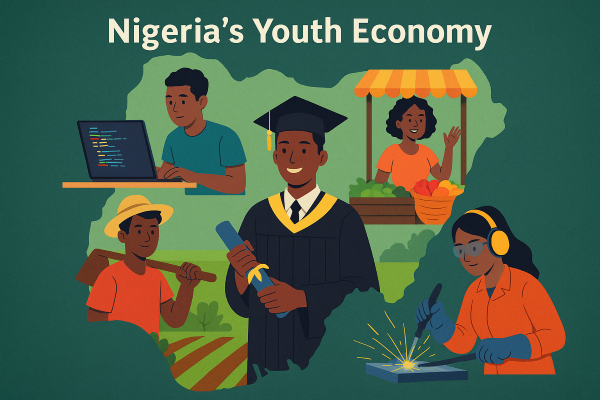
Nigeria, with over 400,000 graduates entering the workforce annually, faces a pressing challenge — integrating its young, energetic population into a modern, technology-driven economy.
Edun urged banks to rethink their role beyond traditional intermediation, positioning themselves as strategic partners in innovation, entrepreneurship, and financial inclusion.
“Our youth should not have to seek validation or venture funding in Silicon Valley. Nigeria’s banking system must provide that backing here at home,” Edun asserted.
He warned that the failure to engage young Nigerians in productive innovation could push them toward unregulated virtual financial systems, including cryptocurrency platforms.
Digital Infrastructure as the Backbone of Youth Empowerment
The minister revealed that President Bola Tinubu’s administration is rolling out 90,000 kilometres of fibre-optic cable across the country to expand digital access and support smart banking, fintech collaboration, and modern payment infrastructure.
This initiative, he noted, forms part of the government’s broader effort to stabilize the economy, deepen capital markets, and stimulate small and medium enterprise (SME) growth, particularly among young entrepreneurs.
“The digital economy is the new frontier of Nigeria’s growth story. Financial institutions must lead this transformation with innovation and inclusion at the core,” Edun said.
Industry Leaders Echo Call for Inclusive Digital Transformation
UBA Group Managing Director, Oliver Alawuba, urged banks to use technology as a bridge, not a barrier, stressing that empathy, trust, and accessibility remain the cornerstones of modern banking.
He cautioned that while artificial intelligence, blockchain, and open banking are essential tools for competitiveness, cybersecurity must become a culture, not an afterthought.
“If we fail to secure digital systems, we risk losing public trust — the very currency of banking,” Alawuba warned.
Lagos Takes the Lead as Nigeria’s Digital Powerhouse
Lagos State Governor, Babajide Sanwo-Olu, represented by Finance Commissioner Abayomi Oluyomi, reaffirmed the state’s position as Nigeria’s digital hub, highlighting investments in broadband infrastructure, digital literacy, and cyber protection.
“We are building a resilient, globally competitive financial ecosystem — one that combines technology with human foresight and discipline,” the governor stated.
Building the Future: A Collective Agenda for Youth Empowerment
Experts at the event, including Dr. Iyinoluwa Aboyeji, Co-founder of Andela and former Flutterwave CEO, emphasized that banks must reimagine inclusion to avoid alienating young innovators. Aboyeji warned that if financial institutions do not evolve fast enough, the youth will migrate to alternative digital systems outside the traditional banking framework.
Plateau State Governor, Caleb Mutfwang, and Katsina Deputy Governor, Faruk Jobe, echoed similar sentiments, calling for diversified investments in technology, agriculture, and education to build a competitive, inclusive economy that reflects the aspirations of Nigeria’s youth.
BRANDECONOMY ANALYSIS: Banking the Youth Economy
The CIBN Fellowship event underscored a critical reality: Nigeria’s financial system cannot thrive without banking the youth economy.
To harness the nation’s demographic advantage, experts argue that banks must become innovation enablers, offering tailored products for startups, creative entrepreneurs, and tech-driven SMEs.
With over 65% of Nigeria’s population under 35, youth inclusion is no longer optional — it’s a strategic necessity for sustainable economic growth and financial stability.