
NIS Raises Alarm Over Fake Websites, Fake Passports and Immigration Scams

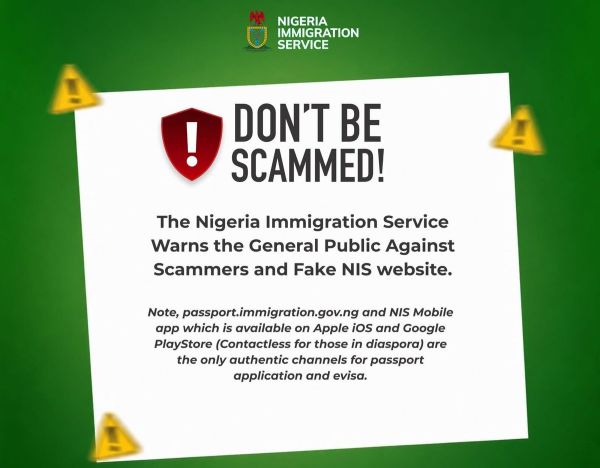 Nigeria’s expanding digital immigration system is attracting a parallel industry of fake websites, fraudulent facilitators and online impersonators seeking to steal money and sensitive personal information from applicants.
The Nigeria Immigration Service has warned Nigerians and foreign nationals to use only its authorised platforms when applying for passports, visas, Temporary Work Permits and residence documentation.




The warning, issued through the Service’s official social-media channels on Thursday in Abuja, followed concerns that fraudulent websites were presenting themselves as legitimate NIS portals.
Such platforms frequently target applicants when they are under pressure to secure passports, renew travel documents, obtain visas or regularise expatriate status. The promise of faster processing can make an unofficial intermediary appear attractive, particularly when applicants encounter delays or find government procedures difficult to navigate.
That convenience can, however, become an expensive trap.
More than a payment scam
Fake immigration platforms can collect considerably more than fraudulent application fees.
Passport and visa processes involve highly sensitive data, including names, dates of birth, residential addresses, passport details, employment records, travel histories, identity numbers and photographs. In the wrong hands, this information can be exploited for identity theft, account impersonation and other forms of digital fraud.
Applicants may also expose payment-card details or banking information when making transactions through counterfeit platforms.
The NIS stressed that separate authorised systems exist for domestic passport applications, embassy-related visa services, electronic visas, Temporary Work Permits and the Combined Expatriate Residence Permit and Aliens Card.
Its official passport platform supports fresh applications, renewals, corrections, appointment booking and application tracking. The Service has previously issued a specific warning about fake electronic-visa websites, reinforcing the scale of the impersonation problem. NIS Passport Portal NIS Scam Advisory
Verify before paying
The Service advised applicants to begin every transaction through its main website or verified communication channels, rather than relying on links supplied through unsolicited messages, online advertisements or unofficial agents.
Applicants should carefully examine website addresses before uploading documents or making payments. Minor spelling variations, unusual extensions, demands for transfers into personal accounts and promises of guaranteed or unusually rapid approval should be treated as warning signs.
NIS also disclosed that its Contactless Passport Application mobile application was available through the official Apple iOS and Google Play stores. The application offers another secure route for eligible passport-processing services.
However, downloading an application merely because it displays an NIS name or emblem is not sufficient. Users should confirm the publisher and access the download through directions issued by the Service.
Suspicious websites, payment requests and persons falsely claiming to represent the NIS should be reported promptly to the appropriate authorities.
Market and investor implications
Reliable immigration services are important economic infrastructure. Business travel, international education, tourism, labour mobility, diaspora engagement and foreign investment all depend on credible identity and border-management systems.
When applicants cannot distinguish government platforms from fraudulent copies, transaction costs rise. Companies may face delays in securing expatriate permits, travellers lose money and confidence in digital public services deteriorates.
For investors, immigration efficiency contributes to perceptions of a country’s ease of doing business. Strong cybersecurity and dependable application channels therefore support more than administrative convenience; they affect Nigeria’s reputation as a destination for capital, talent and international partnerships.
Brand implications
The warning presents a significant brand-protection challenge for the NIS. Fraudsters borrow the Service’s name, colours, terminology and institutional authority to manufacture credibility.
NIS must consequently compete for control of its own digital identity. Verified social accounts, consistent search visibility, rapid takedown of imitation sites and clear public guidance should form part of a continuous reputation-security programme.
Banks, travel companies, airlines, schools and legitimate immigration advisers also have a role. They can amplify verified information and warn customers before payments or documents are submitted.
BRANDECONOMY Insight
Digitisation can reduce queues, middlemen and administrative delays, but it also transfers trust from physical offices to screens.
That makes clarity a security requirement. Every official immigration service should be easy to identify, simple to navigate and difficult to imitate.
The public’s strongest protection is a pause before payment: verify the platform, confirm the service through an official NIS channel and never surrender sensitive information merely because a website looks convincing.
Guided caution can never be too much under the circumstances.