WhatsApp Starts Username Reservations Ahead of Major Privacy Rollout

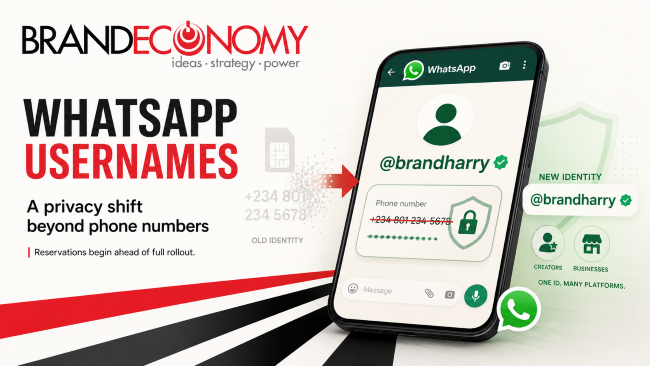 A new privacy feature could reshape how users, creators and businesses connect—allowing first-time conversations without automatically disclosing a personal mobile number. It would be just a WhatsApp Username instead.
WhatsApp is beginning one of its most consequential privacy changes in years: the gradual introduction of usernames.




The messaging platform has opened reservations for usernames ahead of the feature’s full rollout later in 2026, giving users the option to create a distinct identity for new conversations without immediately revealing the phone number attached to their account.
For a platform built around mobile numbers, the change is more than a cosmetic update. It represents a shift in how identity, privacy, customer engagement and digital reputation may work across one of the world’s largest messaging ecosystems.
Until now, exchanging WhatsApp messages with a new contact almost always meant exposing a phone number. That arrangement has been convenient, but it has also made personal numbers a default gateway to friendships, business enquiries, group conversations, event networks and customer interactions.
Usernames seek to change that.
Instead of sharing a number, a user may be able to share a unique WhatsApp identity. The person trying to make contact will need to know that exact WhatsApp username, as WhatsApp says there will be no open directory for browsing names and no automatic username recommendations.
The approach is designed to preserve privacy while keeping WhatsApp’s familiar direct-message experience intact.
A New Privacy Layer for Everyday Communication
Phone numbers have become deeply connected to modern life.
They are used for banking alerts, account recovery, family communication, delivery coordination, customer service, social groups, work contacts and security verification. Sharing one with a stranger or a new acquaintance can therefore feel like sharing more information than a conversation requires.
WhatsApp’s username model introduces a buffer between a user’s public-facing identity and their personal number.
The feature is likely to be especially useful in situations where users want to join a group, respond to an online enquiry, attend an event, engage a seller, connect with a new contact or participate in a community without making their mobile number immediately visible.
WhatsApp says that, once usernames are fully available and activated by users, a person or business contacted for the first time will not see the user’s phone number.
This is a material change.
It could reduce the pressure many users feel when they are asked to “send your number” before deciding whether a new connection is worth maintaining.
Reservations Open Before Full Rollout
WhatsApp has started the reservation process before the feature becomes universally active, recognising that more than three billion users may compete for similar names and identities.
Users who see the option in their app can reserve a username through:
Settings > Account > Username
The rollout is gradual, meaning the option may not appear immediately for every user or in every country. WhatsApp says users will receive in-app notifications when the feature becomes available to them.
The company has also introduced a username generator for people who do not want to create an identity from scratch.
For creators, small businesses and organisations, the more strategic opportunity is the option to claim the same username already used on Instagram or Facebook. That could help establish a more consistent brand identity across Meta’s platforms.
The Optional Username Key: Privacy Beyond the Handle
WhatsApp is pairing usernames with an optional extra layer of protection known as a username key.
The idea is simple: even if someone knows a username, they may still need the user’s separate key before being able to send a first message.
This could be particularly valuable for public-facing professionals, women, creators, journalists, business owners, public officials and organisations that want to be reachable without opening the door to indiscriminate unsolicited messages.
The username key creates a more deliberate first-contact process.
A creator, for instance, could publish a username for broad visibility but share the key only with clients, customers, partners, verified community members or event participants. A business could use the feature to control access to support teams, sales channels or VIP communities.
The full effectiveness of the feature will depend on how well users understand and manage their username settings. But the direction is clear: WhatsApp is moving towards more granular control over who can reach whom.
What It Means for Nigerian Users
For Nigerian users, the change could be especially meaningful.
WhatsApp is central to daily life across Nigeria. It supports family communication, professional networks, religious groups, school communities, political mobilisation, trade, customer care, logistics, vendor relationships and informal commerce.
But its popularity has also made mobile numbers widely exposed.
A user who posts a number for business enquiries, advertises a service online or joins a large group may quickly find that their number travels beyond its original purpose. That can lead to spam, unwanted calls, fraud attempts, marketing messages and persistent unsolicited contact.
Usernames could provide a more controlled alternative.
A fashion entrepreneur may share a WhatsApp username on Instagram without publishing a personal line. A student may join academic or professional communities without giving every participant access to a number. A freelancer may separate client communication from private family contacts. A customer may make an enquiry without immediately exposing personal details.
This is not a complete solution to online safety. Users will still need to be careful about impersonation, phishing, fraud and suspicious links. But it may reduce one of the most common forms of unwanted exposure in digital communication: the routine sharing of personal numbers with strangers.
A New Opportunity for Creators and Small Businesses
The business implications could be considerable.
WhatsApp has become one of the most important customer-engagement tools for Nigerian SMEs. Small businesses use it to display products, confirm orders, resolve complaints, manage deliveries, share catalogues and build repeat relationships with customers.
A username could turn WhatsApp into a more formal brand touchpoint.
Rather than putting a staff member’s phone number on every flier, social-media post, billboard, packaging label or influencer campaign, businesses may increasingly promote a recognisable WhatsApp identity.
That can make communication look more professional, more consistent and more scalable.
A business with the same identity across Instagram, Facebook and WhatsApp could make it easier for customers to find the right account, recognise the official brand and move from discovery to conversation without friction.
For creators, usernames may also strengthen personal-brand architecture.
A music artiste, comedian, consultant, fashion designer, coach or media platform can use a single identifiable username as part of a broader digital presence. The result is not merely convenience. It is brand coherence.
The Brand Protection Question
The new feature also introduces a fresh urgency around identity protection.
Businesses, public figures and institutions should not treat WhatsApp usernames as a minor technical update. They should see them as digital brand assets.
A strong username can become part of a company’s communications infrastructure, alongside its domain name, social-media handles, customer-care channels and verified business identity.
The first priority should be consistency.
Brands should aim to reserve a name that aligns with their established Instagram and Facebook identities where possible. They should also develop internal rules around who controls the username, who responds to customer enquiries, how the account is monitored and how customers are informed about official channels.
The second priority is trust.
As usernames become more visible, impersonation risks may rise. Customers could encounter accounts that appear similar to a known business or creator. Companies will need clearer public guidance on how to identify official handles, report suspicious accounts and avoid fraudulent payment requests.
The strongest brands will use the transition to strengthen trust rather than simply add another contact channel.
Market Implications: Messaging Becomes More Like a Public Digital Layer
WhatsApp usernames could push the platform closer to the model already familiar on social networks: a space where people and brands can be found through a recognisable handle rather than a private number.
But WhatsApp’s approach remains deliberately more guarded.
There will be no searchable username directory. People will need the exact username to make first contact. This preserves the platform’s privacy-first character and distinguishes it from open social platforms where discovery often invites unwanted attention.
For businesses, this creates a more curated form of discoverability.
The username may become the endpoint of a campaign, but it will still need to be distributed deliberately through official websites, adverts, social-media pages, product packaging, customer emails, QR codes and other trusted channels.
That could create a more disciplined form of conversational commerce.
Customers will know where to find a business. Businesses will gain a cleaner way to manage first contact. And WhatsApp may become even more central to the conversion journey from awareness to enquiry, order, payment, support and loyalty.
What Users and Brands Should Do Now
Users should reserve a username when the feature becomes available in their app, especially where they want an identity that reflects their name, personal brand or professional role.
Creators and businesses should move quickly to secure usernames that align with their established public identities.
They should also avoid treating a username as a substitute for good security practice.
A WhatsApp username should be unique, memorable and difficult to confuse with another account. It should not contain sensitive information. Users should enable additional privacy controls where needed, remain cautious about unexpected messages and never share security codes, banking details or account-recovery information with unknown contacts.
For brands, the transition should be accompanied by a clear communication plan:
- Reserve the preferred official username.
- Align it with existing social handles.
- Update websites, advertising and packaging when the feature becomes active.
- Publish official customer-contact guidance.
- Train support teams to manage username-led enquiries.
- Monitor for impersonation and scam attempts.
BRANDECONOMY Insight
WhatsApp usernames are not just a new setting.
They represent a quiet redesign of the relationship between identity and access in digital communication.
For users, the feature promises a better balance between being reachable and remaining private.
For creators and businesses, it offers a new layer of brand consistency, customer access and digital trust.
For Nigeria’s fast-growing social-commerce economy, the potential is substantial. Millions of small businesses already depend on WhatsApp as a storefront, customer-service desk and sales channel. A username system could make that interaction more professional, safer and more brand-led.
The bigger lesson is simple: in the next phase of digital commerce, a phone number may no longer be the primary doorway to a customer relationship.
A trusted digital identity could be.