UNDP, GEF-SGP Inaugurate Solar-Powered Cold Room to Support Lagos Fishing Community

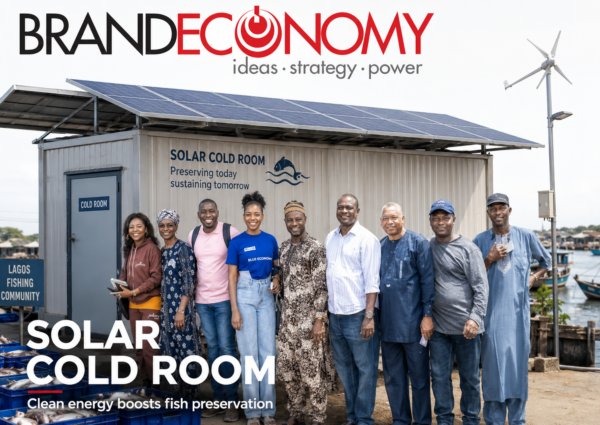 A solar-powered cold room in Sagbokoji, Lagos, is more than a community project. It is a practical intervention at the intersection of clean energy, fish preservation, women’s livelihoods, food security and the blue economy.
The Global Environment Facility Small Grants Programme, GEF-SGP, implemented by the United Nations Development Programme, UNDP, has inaugurated a solar-powered cold room in Sagbokoji, a riverine community in Amuwo-Odofin Local Government Area of Lagos State, to improve fish preservation and reduce post-harvest losses.



The News Agency of Nigeria reports that Sagbokoji lies opposite Tin Can Island, placing the community within one of Lagos’ important maritime and fishing environments.
The project was implemented in partnership with the Nigeria Energy Forum, NEF, and community stakeholders.
At the inauguration on Tuesday, the GEF-SGP UNDP Programme Assistant, Mrs Rose Agbo, said the intervention upgraded the solar energy infrastructure earlier installed in the community by adding a three-horsepower solar-powered cooling system.
Clean Energy, Better Storage
Agbo said the upgrade followed requests from women fish processors in the community, who said the existing freezers could no longer meet rising demand.
According to her, the new cold room runs fully on solar energy and is supported by battery storage and inverter systems. This enables beneficiaries to preserve larger quantities of fish without depending on unreliable grid electricity or expensive fuel-powered alternatives.
That detail matters.
For fishing communities, cold storage is not a luxury. It is a productivity tool. Without reliable preservation, fish spoils quickly, traders lose income, consumers face higher prices and food waste increases.
A 2026 study on cold storage in Nigeria’s informal food systems described cold storage as a persistent constraint in sub-Saharan Africa, especially where food is traded in open markets and electricity supply is intermittent. It also noted that solar-based refrigeration and storage systems can help address the challenge when properly designed around local food flows and energy needs.
Women at the Centre
The Sagbokoji project is especially significant because women fish processors were central to the request for expansion.
In many fishing communities, women dominate post-harvest activities: processing, smoking, drying, selling, storage, trading and household-level distribution. When storage improves, women can preserve more fish, reduce emergency selling, negotiate better prices and stabilise income.
That is why this project should be viewed not only as an energy intervention but also as a livelihood asset.
The initial solar-powered cold room was installed in the community in 2024 to replace traditional fish-preservation methods that relied heavily on charcoal and firewood. The new expansion improves capacity and strengthens the transition from smoky, fuel-intensive preservation to cleaner, more sustainable cooling.
The NEF Link
The Chairman of the Nigeria Energy Forum, Dr Daniel Adeuyi, said the project reflected the Forum’s commitment to translating clean-energy conversations into practical community interventions.
According to him, the upgraded facility will strengthen the community’s cold chain, reduce post-harvest losses and support sustainable livelihoods.
Adeuyi called for stronger collaboration among communities, development partners and project developers to ensure the sustainability of similar projects.
This is an important point. Community energy projects do not succeed merely because equipment is installed. They succeed when beneficiaries own the process, maintain the asset, manage usage fairly and build a financial model for repairs, replacements and long-term operation.
Community Ownership
Also speaking, the Co-Chair of NEF and former President of the Nigerian Institute of Electrical and Electronic Engineers, NIEEE, Mr Adekunle Makinde, expressed satisfaction with the community’s response to the project.
Makinde said the beneficiaries had demonstrated that the facility was working effectively and had pledged to use it responsibly for the benefit of the association.
The President of NIEEE, Mr Felix Adeboye, urged organisations, philanthropists and development partners to replicate similar projects in other underserved communities.
Adeboye also commended the people of Sagbokoji for accepting the intervention, noting that some communities had rejected similar initiatives in the past.
That observation should not be ignored. Development projects work best when communities understand the value, participate in implementation and take responsibility for sustainability.
Beneficiaries Respond
Speaking on behalf of the beneficiaries, the leader of the Fish Sellers Association, Mrs Jiselle Azankpo, thanked GEF-SGP and its partners for expanding the facility.
She said the upgraded cold room had been tested and was working efficiently. She also assured the partners that the association would ensure proper maintenance.
That commitment is vital.
Solar equipment, batteries, inverters and cooling systems require care. A strong local management structure will determine whether the cold room remains productive over time or becomes another abandoned development asset.
Market Implications
The project has clear market implications for fish trading and local food systems.
First, it can reduce post-harvest losses by keeping fish fresh for longer periods.
Second, it can improve income stability for fish sellers, especially women who often face pressure to sell quickly when preservation options are limited.
Third, it can improve product quality and consumer confidence.
Fourth, it can reduce dependence on charcoal, firewood and diesel-based alternatives.
Fifth, it can support a more resilient fish value chain in a riverine economy close to Lagos’ major port and urban food markets.
Solar mini-grid and off-grid energy research in Nigeria and Kenya has shown that decentralised renewable energy can improve productivity, economic activity, safety and livelihoods when it is connected to real community needs.
Brand Implications
For UNDP and GEF-SGP, the Sagbokoji project strengthens the brand message of grassroots climate action: small but practical interventions that improve lives directly.
For NEF, it demonstrates that energy-sector advocacy can move beyond conferences into measurable local impact.
For Lagos State and development partners, the project shows how clean energy can be linked to food security, women’s enterprise and the blue economy.
For the fish sellers, the cold room can also improve their market identity. Better preservation means better quality, fewer losses and stronger customer trust.
Investor Relevance
Investors should pay attention to this model.
Solar-powered cold storage has strong potential across Nigeria’s agriculture, fisheries, dairy, meat, fruit and vegetable value chains. The opportunity is not only in equipment supply. It is in community cooling-as-a-service, asset leasing, battery storage, maintenance, micro-payments, cooperative ownership and cold-chain logistics.
However, the business case must be grounded in local realities: power demand, product volumes, ability to pay, seasonality, management structure and maintenance capacity.
Cold storage investment succeeds when it is designed around livelihoods, not technology alone.
BRANDECONOMY Insight
The Sagbokoji solar cold room is a small project with a big message.
Nigeria’s food-security challenge is not only about producing more. It is also about losing less.
For fishing communities, clean cold storage can turn fragile daily income into more stable enterprise. It can protect women’s livelihoods, reduce waste, improve product quality and lower dependence on firewood and charcoal.
The future of community development will belong to practical projects like this: clean energy tied directly to productive work.
In Sagbokoji, solar power is not just lighting a community.
It is helping preserve value.