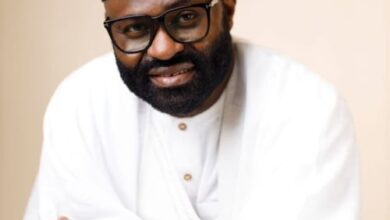


 Peter Obi and Rabiu Musa Kwankwaso’s reported move from the ADC to the Nigeria Democratic Congress has reopened the 2027 opposition equation. To supporters, it is the birth of a possible “OK Movement” that could unite Obi’s southern youth-driven reform appeal with Kwankwaso’s northern grassroots machinery. To critics, it is another sign of opposition fragmentation, personal ambition and platform-hopping. The path to the presidency exists—but it is narrow, brutal and dependent on structure, zoning clarity, coalition discipline and trust.
A New Platform, a Familiar Opposition Puzzle
The reported defection of Peter Obi and Rabiu Musa Kwankwaso to the Nigeria Democratic Congress has dramatically altered the early calculations ahead of Nigeria’s 2027 presidential race.



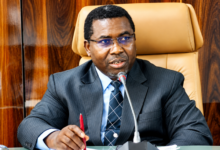
Both men had only recently been associated with the African Democratic Congress, a platform many opposition actors hoped could become a convergence point for forces seeking to challenge the ruling APC. Their move to the NDC, where they were received by the party’s national leader, Senator Seriake Dickson, suggests that the opposition’s search for a stable vehicle remains unresolved.
The symbolism is powerful. Obi brings national name recognition, urban reform appeal, youth energy and a strong moral-politics brand. Kwankwaso brings one of the most organised political machines in northern Nigeria, anchored by the Kwankwasiyya movement and a proven vote base in Kano and surrounding areas.
Together, they could represent something the opposition failed to produce in 2023: a credible bridge between southern reformist enthusiasm and northern grassroots mobilisation.
But symbolism does not win elections. Structure does.
Why They Left ADC
The ADC problem appears to have been a mixture of leadership uncertainty, litigation risk, zoning anxiety and elite distrust.
Reports indicate that while the Supreme Court recognised the David Mark-led leadership of the ADC, it also remitted aspects of the leadership dispute to the trial court. For politicians preparing for a presidential contest, the prospect of prolonged litigation is dangerous. A party trapped in court cannot easily become a national campaign machine.
Obi had already complained of the same pattern he said forced him out of the Labour Party: internal crises, endless court cases, suspicion, exclusion and what he described as political systems built more around control than service. Kwankwaso, too, had signalled discomfort with internal instability and had been consulting widely before settling on the NDC.
There was also the zoning question.
According to the material supplied, some within the ADC were uncomfortable that the party had not clearly stated whether its presidential ticket would be zoned to the North or South. In a country where rotation remains politically sensitive, silence can be interpreted as strategy. Obi’s camp appeared concerned that the platform could eventually tilt toward another Atiku Abubakar candidacy, while Kwankwaso’s supporters were also watching the internal arithmetic.
The result: Obi and Kwankwaso chose a newer, less encumbered platform.
The NDC as Political Reset Button
The Nigeria Democratic Congress is being framed as a fresh ideological platform built around progress, inclusion and integrity. Its national leader, Seriake Dickson, has described it as a disciplined democratic alternative. The party, according to the provided report, was formally registered in February 2026 through a court-backed process and has begun building structures ahead of its first national convention.
That newness is both an advantage and a danger.
It is an advantage because the NDC may not carry the same level of entrenched factional baggage as older parties. It can offer Obi and Kwankwaso a cleaner platform, faster decision-making and perhaps a more flexible route to a joint ticket.
But it is also a danger because presidential elections are not won by enthusiasm alone. New parties must build ward structures, state executives, polling-unit agents, legal teams, funding pipelines, candidate networks and national messaging machinery. They must also withstand the pressure that comes once serious contenders arrive.
The NDC may be a fresh platform. It now has to prove it is not a fragile one.
The “OK Movement”: Arithmetic and Reality
A possible Obi–Kwankwaso or Kwankwaso–Obi ticket is already being discussed as the “OK Movement.”
On paper, the arithmetic is attractive. In 2023, Bola Tinubu won with about 8.8 million votes, while Atiku Abubakar secured about 6.98 million, Peter Obi about 6.10 million, and Kwankwaso about 1.48 million. The popular argument is that a unified opposition could have defeated the APC if these blocs had combined.
But politics is not mathematics.
Votes do not transfer automatically. Obi’s supporters may not all accept Kwankwaso as presidential candidate. Kwankwaso’s base may not automatically mobilise for Obi. Some Atiku loyalists may remain in ADC or PDP-linked structures. Regional expectations will matter. Religious balancing will matter. Zoning will matter. Party agents will matter. Funding will matter. The ruling party’s incumbency advantage will matter.
Still, an Obi-Kwankwaso alignment is potentially serious because each man compensates for the other’s weakness. Obi’s 2023 surge was strongest among urban voters, young people, sections of the South-East, South-South, Lagos and reform-minded middle-class voters. Kwankwaso’s strength was organisational, northern and grassroots, especially in Kano.
If disciplined, the combination could become the most disruptive opposition pairing in the race.
The Critics’ Counterattack
The APC has quickly moved to frame Obi’s exit as political restlessness rather than strategic repositioning.
Presidential adviser Bayo Onanuga reportedly described Obi as a “political nomad,” arguing that he is running away from a contest against Atiku and others. APC spokesman Felix Morka also mocked Obi as a “political rolling stone” searching for an easy presidential ticket rather than staying to build a party.
That line of attack will likely continue.
Critics will say Obi moved from APGA to PDP, from PDP to Labour, from Labour to ADC, and now to NDC. They will frame him as a politician unwilling to endure internal competition. They will argue that a leader who wants to fix Nigeria must first show he can build and stabilise a political institution.
The critique is politically potent because it touches a real vulnerability in Obi’s brand. He has strong personal appeal, but his critics question his organisational staying power.
Kwankwaso faces a different criticism: that his politics remains too regionally concentrated and may struggle to expand nationally without a broader coalition.
The NDC must answer both criticisms quickly.
What Path to the Presidency?
The path is possible, but only if five things happen.
First, the NDC must resolve the ticket question early. A long Obi-versus-Kwankwaso contest could damage the movement before it matures. If there will be a joint ticket, the order must be negotiated with brutal honesty.
Second, the party must define zoning and succession logic. Obi has reportedly promised a one-term presidency in some political calculations, based on the expectation that power could return North in 2031. If that is part of the bargain, it must be communicated carefully and credibly.
Third, the NDC must build structures beyond rallies. Nigeria’s elections are won at polling units, wards, local governments, courts and collation centres—not only on social media.
Fourth, Obi and Kwankwaso must bring their followers into one disciplined movement. The Obidient base and Kwankwasiyya network are not culturally identical. One is digitally energetic and reformist; the other is territorially organised and patronage-sensitive. Merging them requires humility, messaging and incentives.
Fifth, the opposition must avoid splitting into ADC, NDC, PDP and other competing platforms. If Atiku remains in ADC or another platform, and Obi-Kwankwaso run under NDC, the APC may benefit from a divided field.
BRANDECONOMY Insight
The Obi-Kwankwaso NDC move is the most intriguing opposition development so far because it offers both promise and peril.
The promise is clear. Obi and Kwankwaso together could produce a rare political combination: moral reform energy plus northern grassroots machinery. If they can build a disciplined structure, present a clear ticket, avoid ego wars and mobilise across regions, they could become a serious challenge.
The peril is equally clear. Nigeria’s opposition has a habit of mistaking movement for momentum. Defections create headlines. Coalitions create excitement. New platforms create fresh slogans. But elections reward organisation, funding, agents, legal preparedness, elite alignment and voter protection.
The NDC must therefore move quickly from symbolism to machinery.
For Obi, the challenge is to prove that he is not merely leaving broken platforms, but building a durable one. For Kwankwaso, the challenge is to show that his northern political machine can travel beyond its core base. For Dickson and the NDC leadership, the challenge is to protect the party from the same factional disease that weakened the ADC and Labour Party.
The ruling APC will not be frightened by speeches. It will be concerned only by a united opposition with a credible ticket, national spread, funding discipline and polling-unit muscle.
The path to the presidency is there.
But it is not a road. It is an obstacle course.