Manchester United 3–2 Liverpool: Mainoo’s Late Thunderbolt Sends Red Devils Back to Europe’s Top Table

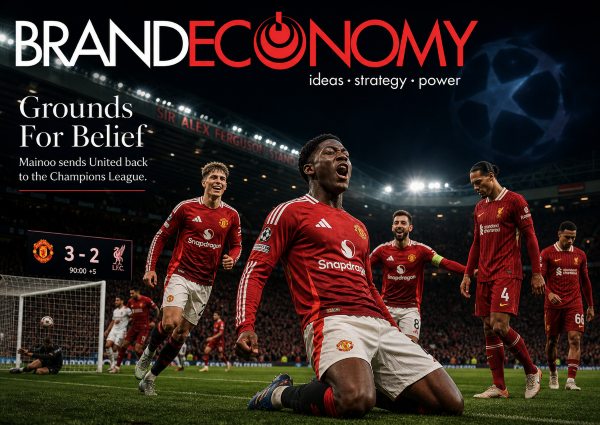 Manchester United nearly turned a statement victory into another Old Trafford collapse. Two goals up inside the opening quarter-hour, they allowed Liverpool to claw their way back after the interval before Kobbie Mainoo delivered the decisive moment with a late strike worthy of the fixture’s history. The 3–2 win did more than settle a rivalry; it strengthened United’s grip on third place and sealed a return to next season’s UEFA Champions League.
Old Trafford Gets Its Drama, United Get Their Prize
There are victories that count for three points, and there are victories that reset the emotional temperature of a football club. Manchester United’s 3–2 win over Liverpool at Old Trafford belonged firmly in the second category.




This was not a tidy victory. It was not a controlled procession. It was a game of surges, errors, nerve and recovery. United raced into a 2–0 lead, lost it within a chaotic second-half spell, and then found salvation through one of their brightest young symbols: Kobbie Mainoo.
His late winner did not merely beat Liverpool. It delivered Champions League qualification, pushed United six points clear of their old rivals in third place, and gave Michael Carrick the kind of defining afternoon that managers often need to convince players, fans and investors that a project has substance.
For a club that has spent too many seasons oscillating between hope and dysfunction, this was a precious kind of chaos: dramatic, flawed, but ultimately profitable.
United’s Fast Start: Cunha and Sesko Strike Early
Manchester United began as though they had no intention of letting Liverpool breathe.
Within six minutes, Matheus Cunha reacted quickest to a loose ball on the edge of the penalty area and drove a low shot through traffic into the net. It was the kind of early goal that changes the geometry of a match. Liverpool suddenly had to chase. United suddenly had space.
Before Liverpool could properly reset, United doubled the lead. Benjamin Sesko forced the first save after Liverpool failed to manage a transition, but the striker stayed alive inside the box and bundled home the rebound from close range.
Old Trafford erupted. Liverpool were rattled. United, for once, looked sharp, ruthless and structurally clear.
The first half belonged to Carrick’s team. Liverpool had possession in spells, but possession without incision can become decorative. Their attacks lacked depth, and when they lost the ball, United looked dangerous on the counter. Cody Gakpo came closest for the visitors with a curling effort that drifted wide, but Liverpool entered the break looking like a side that had been ambushed.
Liverpool’s Response: Szoboszlai and Gakpo Punish United Errors
The second half was a different contest.
Liverpool returned with greater urgency and quickly halved the deficit. Dominik Szoboszlai seized on a loose United pass, drove forward and finished with conviction. Suddenly, the game that United had appeared to control became fragile.
Just before the hour mark, Liverpool completed the comeback. Another Manchester United error in possession allowed Alexis Mac Allister to recover the ball high up the pitch. The move developed quickly, and Gakpo finished from close range to make it 2–2.
At that point, the match became a referendum on United’s mentality.
Old Trafford has seen too many games in which momentum turned against United and never returned. Liverpool sensed it. Their press became sharper. Their belief grew. United were forced deeper, and Carrick’s side looked in danger of transforming a dream start into another lesson in self-harm.
But this time, United did not fold.
Mainoo’s Moment: Youth, Nerve and the Old Trafford Script
With just over ten minutes remaining, the decisive moment arrived.
A cross from the left was only partially cleared, and Mainoo reacted with the instinct of a player who understands big moments before he has fully lived a career’s worth of them. From the edge of the area, he struck first time with power and precision, sending the ball past the goalkeeper and into the net.
It was a goal with theatre. The academy boy. The old enemy. The late winner. The Champions League place. The roar.
Mainoo later admitted that he had dreamt of moments like this as a younger player. He also credited Carrick for trusting him and the squad, saying the manager’s belief made players want to fight for him on the pitch.
That matters. In modern football, young players are not merely tactical pieces; they are emotional assets. Mainoo represents continuity, identity and promise. In a club often accused of buying solutions without building them, his rise offers a different kind of value.
Carrick’s United: Still Imperfect, But Growing
Carrick will know that this performance contained both encouragement and warning.
The encouragement is obvious. United started aggressively, scored early, showed attacking incision, recovered from a damaging Liverpool comeback and finished the game with character. The warning is equally clear: elite teams cannot repeatedly give opponents a route back through avoidable mistakes.
United’s Champions League qualification is significant in sporting and commercial terms. It restores the club to Europe’s most lucrative competition, strengthens recruitment appeal, protects revenue projections and gives Carrick more authority in the summer market.
For Manchester United, Champions League football is not a luxury. It is part of the operating model.
Sponsors expect it. Investors price it. Players demand it. Supporters measure the club against it. Missing out damages prestige and cash flow. Returning to it gives the Carrick era a stronger platform.
Liverpool’s Pain: Fightback Without Finish
Liverpool will leave Old Trafford furious with their first-half vulnerability and frustrated by their inability to convert second-half momentum into victory.
Their fightback showed character. Szoboszlai’s goal lifted them. Gakpo’s equaliser briefly shifted the game. Mac Allister’s pressing intelligence helped destabilise the Manchester United build-up.
But Liverpool’s problem was that they gave themselves too much work to do. Against rivals at Old Trafford, conceding twice so early is expensive. They recovered the scoreline, but not the match.
The defeat also leaves them six points behind third-place United, a gap that adds pressure to the final stretch of the season.
Ferguson Taken to Hospital: A Sobering Old Trafford Subplot
Beyond the match itself, Old Trafford was also touched by concern after reports that Sir Alex Ferguson was taken to hospital after feeling unwell before kick-off.
The development was described as precautionary, with the legendary former Manchester United manager expected to recover at home. Ferguson remains one of the most enduring figures in the club’s modern history, and any health concern involving him inevitably carries emotional weight for the United community.
His presence at matches continues to symbolise the standards United are still trying to recover: authority, winning culture, academy faith, ruthless mentality and European relevance.
On this afternoon, as United fought back from the edge of another collapse, Mainoo’s winner felt like the kind of moment that would have pleased the old master.
BRANDECONOMY Insight
Manchester United’s victory over Liverpool was more than a football result. It was a business, brand and belief result.
Champions League qualification restores revenue strength, improves recruitment leverage, strengthens commercial appeal and gives Carrick’s project credibility. For a club of United’s scale, Europe’s top competition is not merely a sporting ambition; it is a financial necessity and a brand obligation.
But the bigger message lies in the identity of the match-winner.
Kobbie Mainoo’s late goal is valuable beyond the scoreboard. Football clubs spend fortunes searching for players who can carry tactical responsibility and emotional meaning. Academy graduates who win rivalry matches are powerful brand assets because they connect past, present and future. They remind supporters that the club still has a soul.
United are not yet complete. Their second-half wobble showed lingering structural and psychological weaknesses. But the response showed something important: this team can absorb damage and still find a decisive act.
Liverpool, meanwhile, will worry about how cheaply they surrendered control early. Their comeback showed resilience, but elite football punishes late corrections. You cannot keep turning matches into rescue missions and expect to leave Old Trafford with reward.
For United, this was a night of relief and renewal.
For Carrick, it was evidence.
For Mainoo, it was arrival.
For the club’s balance sheet, it was Champions League oxygen.
Key Takeaways
Manchester United’s prize:
The win sealed Champions League qualification and strengthened their grip on third place.
Mainoo’s value:
His winner reinforced his status as one of United’s most important young players and a symbol of the Carrick project.
Liverpool’s flaw:
The visitors showed fight after the break but paid heavily for a poor start.
Carrick’s lesson:
United must learn to protect leads better, but their late response showed competitive maturity.
Commercial importance:
Champions League football boosts United’s revenue outlook, transfer-market appeal and global brand positioning.