Clean Energy: NASENI Lifts 2,000 Kano Households in New Economics of Domestic Innovation

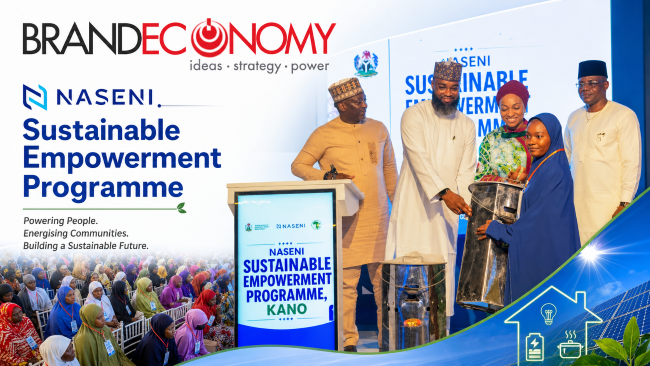 NASENI’s Sustainable Empowerment Programme in Kano has delivered clean cookstoves, solar home systems and practical energy tools to more than 2,000 households, placing indigenous technology at the centre of Nigeria’s clean-energy, industrialisation and climate-resilience agenda. Beyond household relief, the initiative speaks to a larger national question: can Nigeria turn local engineering into scalable solutions for energy poverty, productivity, jobs and sustainable trade?
Clean Energy Meets Household Empowerment
Nigeria’s clean-energy transition will not be judged only by large solar farms, grid reforms or billion-dollar infrastructure announcements. It will also be judged by what reaches the kitchen, the shop, the small workshop, the rural household and the semi-urban trader.




That is the significance of the National Agency for Science and Engineering Infrastructure’s Sustainable Empowerment Programme in Kano State, where more than 2,000 households have been provided with clean and reliable energy solutions.
At the event held at Fabs Event Centre, Kano, beneficiaries received NASENI clean cookstoves, solar home systems and other practical tools designed to improve access to safer, cleaner and more dependable energy. The programme targets households in rural and semi-urban communities, where energy poverty remains one of the quietest but most persistent barriers to health, productivity and income growth.
For many families, clean energy is not an abstract climate slogan. It means less smoke in the kitchen. It means reduced fuel consumption. It means lighting after sunset. It means children can study. It means small businesses can extend working hours. It means women and households can spend less time and money battling inefficient energy options.
This is where the policy becomes personal.
Why Kano Matters
Flagging off the programme, the Minister of Industry, Trade and Investment, Dr Jumoke Oduwole, described the initiative as a practical demonstration of how Nigeria’s industrial, trade and investment agenda can translate into real benefits for citizens.
Her emphasis on Kano was important. Kano is not just a beneficiary state; it is one of Nigeria’s great commercial memory banks. For centuries, the city has functioned as a hub of trade, manufacturing, textiles, agro-processing and enterprise. It remains one of the most important northern markets and a strategic gateway for regional commerce.
By launching the programme in Kano, NASENI is linking clean energy to a wider industrial story. The intervention is not only about distributing equipment. It is also about supporting productivity in a state where households, traders, artisans and small enterprises depend heavily on affordable energy.
Oduwole also connected the initiative to President Bola Tinubu’s Renewed Hope Agenda, particularly its priorities around industrialisation, job creation, local productivity and inclusive growth. In her view, NASENI’s intervention reflects the logic of Nigeria First: using Nigerian-made solutions to solve Nigerian problems while strengthening domestic industrial capacity.
That is the policy sweet spot Nigeria has too often missed.
Nigerian-Made Solutions for Nigerian Realities
NASENI’s Executive Vice Chairman, Mr Khalil Suleiman Halilu, framed the programme as part of the agency’s broader mission to deploy technology that works in real Nigerian conditions.
According to him, the cookstoves are designed to reduce smoke and save fuel, while the solar home systems provide more reliable household electricity. His message was simple but strategic: these are Nigerian-made solutions built for Nigerian realities.
That distinction matters.
Imported technologies can be useful, but Nigeria’s development challenge requires local adaptation, local maintenance capacity, local manufacturing, local skills and local market intelligence. A clean cookstove designed without understanding household cooking habits may fail. A solar solution without after-sales support may become useless within months. A climate technology that people cannot afford will remain decorative.
NASENI’s task is therefore not only to innovate. It must produce solutions that can survive Nigerian price sensitivity, usage patterns, maintenance realities and distribution challenges.
If it succeeds, the agency can help build a local clean-technology market rather than merely distribute gadgets.
The ZeCo Logic: Climate, Health and Productivity
Halilu linked the programme to NASENI’s broader Zero Carbon Project, or ZeCo, which focuses on reducing carbon emissions, protecting the environment and promoting cleaner, safer energy for Nigerians.
This is a crucial framing. Clean cookstoves and solar home systems sit at the intersection of climate policy, public health and household economics.
Traditional cooking methods often expose families, especially women and children, to smoke and indoor air pollution. Inefficient fuel use also increases household expenses and environmental pressure. Solar home systems, meanwhile, can reduce dependence on kerosene, small generators and unstable grid supply.
The gains may look small at the unit level, but at scale they become powerful. If thousands of households shift to cleaner cooking and basic solar power, the cumulative effect touches emissions, health outcomes, household savings, education, micro-enterprise productivity and community resilience.
That is why clean energy should be treated as development infrastructure, not merely an environmental intervention.
AfCFTA and the Trade Opportunity
The programme also carries continental implications.
Oduwole noted that the NASENI clean energy intervention aligns with the African Continental Free Trade Area by localising technology deployment and expanding productive assets for households and businesses. This is an important point because Africa’s trade future will not depend only on exporting raw commodities. It will depend on building competitive local manufacturing ecosystems.
If Nigeria can manufacture affordable clean cookstoves, solar systems, batteries, small energy appliances and related components at scale, it can serve both domestic and regional markets. Kano’s historic trade networks make this especially relevant. A strong local clean-energy value chain could support jobs, small factories, distribution networks, technicians, installers and after-sales service providers.
The real prize is not one empowerment event. The prize is an industrial platform.
From Empowerment to Enterprise
Nigeria has seen many empowerment programmes. Some produce durable impact. Others become ceremonial distributions with little follow-up. The difference lies in design.
For NASENI’s Kano intervention to become a model, it must be supported by training, maintenance, monitoring, local agents, user feedback, spare parts, financing pathways and scale-up discipline.
Beneficiaries must know how to use and maintain the tools. Local technicians should be trained to support repairs. Data should be collected on household savings, health improvements, usage frequency and business impact. Women-led households and micro-enterprises should be tracked to measure income gains. Local manufacturers should be connected to future procurement opportunities.
Empowerment should not end at distribution. It should begin there.
BRANDECONOMY Insight
NASENI’s clean-energy programme in Kano is important because it points to the kind of development model Nigeria urgently needs: local technology solving household problems while also building industrial capacity.
Energy poverty remains one of Nigeria’s most stubborn barriers to inclusive growth. Millions of households still depend on expensive, unsafe or unreliable energy sources. Businesses lose productive hours. Women bear the burden of inefficient cooking systems. Children study under poor lighting. Small traders and artisans face energy costs that weaken income.
Clean cookstoves and solar home systems may appear modest compared with national grid projects, but they can deliver immediate relief where the grid is weak and incomes are strained.
The deeper opportunity is industrial. If NASENI can convert these interventions into a scalable domestic clean-tech value chain, Nigeria can create jobs, reduce imports, support climate goals and strengthen its position under AfCFTA. That will require moving from pilot distribution to manufacturing depth, product standards, financing models and after-sales ecosystems.
The Kano launch also reinforces an important policy lesson: climate action must speak the language of ordinary people. It must reduce cost, improve health, power homes, support businesses and protect dignity.
A cleaner Nigeria will not be built only in conference halls or policy papers. It will be built when local technology reaches the people who need it most.
NASENI has taken another step. The next test is scale.
Strategic Takeaways
For NASENI:
The NASENI clean energy initiative must evolve from distribution to a full clean-energy ecosystem involving training, maintenance, manufacturing and measurable impact.
For government:
Clean energy should be treated as a household productivity tool and an industrialisation pathway, not only a climate intervention.
For beneficiaries:
Cookstoves and solar home systems can reduce household costs, improve safety and support small business activity when properly used and maintained.
For investors:
Nigeria’s clean-energy market offers opportunities in solar home systems, cookstoves, batteries, components, distribution and after-sales services.
For AfCFTA positioning:
Locally made clean-energy solutions can become exportable products if quality, scale and pricing are competitive.