Harvard Team Hails NASENI-Troment Factory as Nigeria Pushes Healthcare Manufacturing Sovereignty
Reaffirms Commitment to Healthcare Innovation


The new diagnostic-kit factory signals a strategic shift from import dependence to local health-technology production, with potential implications for malaria control, infectious-disease surveillance, industrial capacity, public procurement and Africa’s medical supply-chain resilience.
A delegation of about 85 global medical professionals, scientists and policymakers participating in Harvard University’s Science of Defeating Malaria leadership development programme has commended the establishment of the NASENI-Troment Biotechnologies Factory, describing it as a major step toward strengthening Nigeria’s capacity to combat malaria and other infectious diseases.
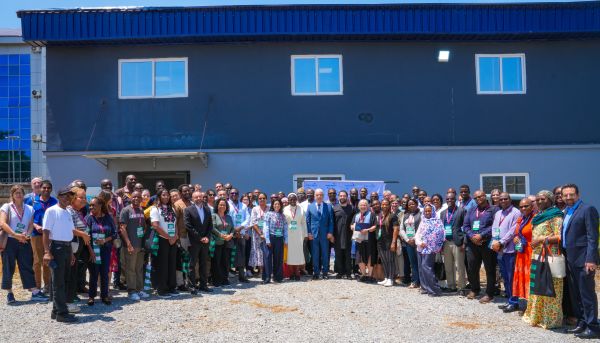
The team, led by Professor Dyann F. Wirth of Harvard University, one of the world’s leading malaria experts, toured the facility in Abuja as part of the programme, which brought together global health leaders focused on malaria elimination and stronger public-health systems.




The visitors were taken through the factory’s production lines for rapid diagnostic tests and PCR-related diagnostic products, with the delegation describing the facility as a significant contribution to disease detection, public-health preparedness and Africa’s long-term medical self-reliance.
Professor Wirth said the facility was impressive and would add value to the fight against malaria and other public-health diseases in Nigeria and across the continent.
The commendation comes at a time when Nigeria and many African countries are rethinking the vulnerability of their healthcare supply chains, especially after years of dependence on imported medical products, foreign diagnostic technologies and externally controlled supply systems.
A Nigerian-Owned Diagnostic Manufacturing Play
The NASENI-Troment Biotechnologies Factory is a strategic partnership between the National Agency for Science and Engineering Infrastructure and Troment Nigeria Limited.
According to the Chief Executive Officer and Co-Founder of NASENI-Troment Biotechnologies, Selim Hani, the facility was built from the ground up within 18 months to strengthen Nigeria’s healthcare sovereignty through local production of diagnostic technologies.
The plant is designed to manufacture rapid diagnostic tests and in-vitro diagnostic products under the N-CheckUP brand.
The products are expected to cover tests for malaria, hepatitis B and C, HIV, pregnancy, COVID-19 antigen, typhoid, syphilis and blood glucose, among others.
Hani said the factory is designed to produce up to 600 million diagnostic kits annually, a scale that could significantly reduce Nigeria’s and West Africa’s dependence on imported medical diagnostics while improving accessibility and affordability.
The technical partner, Dr Engin Narinc, described the facility as Africa’s first fully localised rapid diagnostic test-kit factory, with an end-to-end production process designed to deliver diagnostic solutions built in Africa for African health realities.
NASENI: Healthcare Innovation as Industrial Policy
At a closing dinner hosted for participants of the Harvard-led programme in Abuja, the Executive Vice Chairman and Chief Executive Officer of NASENI, Khalil Suleiman Halilu, said the facility reflects the agency’s commitment to strengthening Nigeria’s healthcare sovereignty through local manufacturing.
Halilu said the commendation by the Harvard-led delegation validated the vision behind the project, which was conceived to reduce dependence on imported diagnostic kits and build local capacity in health technology manufacturing.
He noted that the factory’s projected output could meet about 80 per cent of Nigeria’s diagnostic testing needs, while creating opportunities for export to other African countries and global markets.
For NASENI, the project fits into a broader mandate: using science, engineering and innovation to solve national problems, create jobs, reduce import dependence and build industrial capacity.
This is where the story becomes bigger than healthcare. It is also about industrialisation.
Medical diagnostics represent a high-value manufacturing segment. A country that can produce reliable test kits locally gains more than public-health advantage. It builds technical capability, creates skilled jobs, strengthens quality systems, supports research and development, and reduces foreign-exchange pressure from imports.
Why Diagnostics Matter in the Malaria Fight
Malaria remains one of Africa’s most persistent public-health and economic burdens. Beyond the human cost, the disease affects productivity, school attendance, household income, healthcare spending and workforce efficiency.
Fast and accurate diagnosis is central to malaria control. Without reliable diagnostic tools, health systems risk over-treatment, delayed treatment, poor disease tracking and inefficient use of medicines.
Local production of diagnostic kits can therefore strengthen surveillance, improve access, reduce costs and help health authorities respond faster to disease patterns.
The NASENI-Troment facility also matters beyond malaria. Nigeria faces recurring public-health threats, including viral infections, maternal-health challenges, antimicrobial resistance concerns and outbreaks that require rapid testing capacity. A local diagnostic manufacturing base gives the country a stronger platform for health security.
Policy Implications: From Import Substitution to Health Sovereignty
The establishment of the factory raises important policy questions for Nigeria.
First, public procurement must support credible local manufacturers without compromising quality. If locally produced diagnostic kits meet required standards, government health agencies, hospitals and donor-supported programmes should create procurement pathways that help scale production.
Second, regulation must be rigorous. Diagnostic products require high quality, accuracy and consistency. Local manufacturing will succeed only if standards agencies, health regulators and procurement bodies enforce quality while supporting innovation.
Third, Nigeria must connect health manufacturing with research institutions, universities and teaching hospitals. Factories should not operate in isolation. They should be linked to testing validation, product development, field research and continuous improvement.
Fourth, local production must be backed by market access. A factory with capacity to produce hundreds of millions of kits needs predictable demand from Nigeria and across Africa.
Brand Implications: NASENI Moves Into Visible Innovation
For NASENI, the factory strengthens its emerging brand as an execution-focused agency moving beyond policy language into visible industrial projects.
The agency has often been associated with engineering infrastructure, but this project expands its relevance into health technology, biotechnology and national resilience.
For Troment and the N-CheckUP brand, the opportunity is to build trust. In diagnostics, brand credibility is not driven by advertising. It is driven by accuracy, regulatory approval, reliability, affordability, distribution and acceptance by healthcare professionals.
For Nigeria, the facility supports a broader national brand narrative: that the country can build sophisticated industrial capacity when public-sector institutions and private technical partners align properly.
Investor Relevance and Market Consequences
For investors, the diagnostic-kit market offers strong long-term relevance.
Africa’s demand for affordable diagnostics is growing as governments, hospitals, laboratories, donor agencies, private clinics and community-health systems expand testing needs. Local production can reduce logistics delays, foreign-exchange exposure and supply disruption.
The NASENI-Troment model could attract interest from development-finance institutions, health-impact investors, pharmaceutical distributors, laboratory networks and regional health procurement agencies.
However, investors will watch quality certification, regulatory compliance, pricing, procurement contracts, export readiness, production efficiency and the strength of distribution networks.
If the factory achieves scale and trust, it could alter Nigeria’s diagnostics market by reducing dependence on imported kits, improving local availability and positioning Nigeria as a regional health-manufacturing hub.
BRANDECONOMY Insight
Nigeria’s Health Security Will Depend on What It Can Produce
The NASENI-Troment Biotechnologies Factory is important because it confronts one of Africa’s most dangerous vulnerabilities: dependence on imported healthcare essentials.
The COVID-19 era exposed the weakness of countries that could not produce basic medical products at scale. Malaria, hepatitis, HIV, typhoid and other diseases make the lesson even more urgent.
Diagnostics are the front door of healthcare. Without accurate testing, health systems operate blindly. With local production, Nigeria can improve access, lower costs, strengthen disease surveillance and build industrial competence.
But the promise will depend on execution.
The factory must deliver products that healthcare professionals trust. Regulators must enforce standards. Government must support local procurement where quality is proven. Investors must see a credible pathway to scale. Universities and laboratories must be connected to innovation.
Nigeria should not see this facility as a one-off achievement. It should be treated as the beginning of a health-manufacturing ecosystem covering diagnostics, reagents, medical devices, vaccines, laboratory equipment and biomedical engineering.
The deeper point is simple: healthcare sovereignty is not a slogan. It is built in factories, laboratories, supply chains and standards systems.
If Nigeria gets this right, NASENI-Troment could become more than a factory. It could become a platform for Africa’s diagnostic independence.