 A United States-based Nigerian medical doctor, identified by police as Dr Afolabi, narrowly escaped mob violence in Ibadan after a routine encounter at a checkpoint spiralled into a false kidnapping allegation. His vehicle was destroyed before police intervention, while two teenage girls found in the car were later confirmed, according to investigators, not to have been abducted. The incident has reopened urgent questions about jungle justice, social-media panic, child-safeguarding concerns and the fragility of due process in a country living under the shadow of insecurity.
A Routine Moment, a Dangerous Misreading
What began as a moment of suspicion on a busy Ibadan road almost ended in tragedy.




The Oyo State Police Command says it rescued a United States-based Nigerian medical doctor from an angry crowd after he was falsely accused of kidnapping two young girls in the Ologuneru area of Ibadan on Monday afternoon.
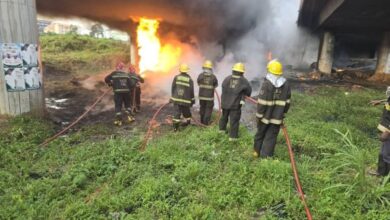
According to the police account, the incident occurred around 2:30 p.m. near the 2nd Powerline Area, Ologuneru, along Eleyele–Ido Road. Officers responded to a distress call that a suspected kidnapper was about to be attacked by a mob. By the time they arrived, the man’s Lexus RX 330 SUV had already been set ablaze, while the two girls in the vehicle had been taken into protective custody.
The doctor, identified only as Dr Afolabi, was rescued and later placed under medical care, with police saying he was responding to treatment.
It was the sort of scene that has become disturbingly familiar in parts of Nigeria: suspicion hardening into certainty within minutes, bystanders becoming accusers, and a crowd assuming the role of investigator, prosecutor and punisher before law enforcement has established the facts.
What Police Say Actually Happened
Preliminary police findings sharply contradicted the kidnapping narrative that reportedly spread during the commotion and later circulated on social media.
The command said Dr Afolabi, a medical practitioner based in the United States, was not a kidnapper, as alleged. Investigators said the two girls found in his vehicle — identified as Deborah, 15, and Rebecca, 12 — had been taken from a woman identified as Mrs Idowu Abimbola in the Eleyele area of Ibadan and were allegedly being conveyed to the doctor’s mother to assist with household chores.
Police said Mrs Abimbola was invited for questioning and confirmed the arrangement, while the girls also reportedly corroborated that account.
The command’s false kidnapping account suggests that the trigger for the suspicion was a misunderstanding during an attempted passage through a checkpoint around the Polytechnic Ibadan gate. Police said that when the doctor lowered his vehicle window for inspection, the girls’ appearance raised concern among security personnel and bystanders. His reported inability to immediately provide answers considered satisfactory at the scene, coupled with his decision to turn away from the checkpoint, intensified suspicion.
The situation worsened because, according to the police, the girls were unable to communicate clearly in either the local language or fluent English at the scene, further inflaming the false alarm.
That sequence matters. It shows how quickly ambiguous facts can be interpreted through a climate of fear — and how fast fear can become violence.
The Lawless Logic of Jungle Justice
The Commissioner of Police in Oyo State, Mr Abimbola Olugbenga, condemned the mob action and the spread of unverified claims capable of creating public tension and undermining security gains in the state. Police said efforts were underway to identify those involved in the attack and destruction of property.
Legally, the false kidnapping incident raises serious concerns.
No citizen has the right to assault another person, burn property or impose punishment based on suspicion. Even where a crime is genuinely suspected, the proper course is to alert law enforcement, preserve evidence and allow investigation to proceed. Mob action substitutes emotion for law and often produces irreversible injustice.
Nigeria’s criminal justice system may suffer from delays, public distrust and uneven policing, but jungle justice is not a corrective. It is another form of criminality.
The legal danger is twofold. First, an innocent person may be grievously harmed or killed. Second, genuine criminal investigations can be compromised by crowd interference, destruction of evidence and social-media distortion.
This case appears to illustrate both risks.
A Country on Edge
The crowd’s reaction cannot be separated from the wider national atmosphere.
Kidnapping fears remain intense across Nigeria, and communities are increasingly hyper-alert to anything that appears unusual around children, vehicles and unfamiliar adults. That vigilance is understandable. But vigilance without restraint can become dangerous.
In this case, the police account suggests that a real concern about child safety collided with incomplete information and poor crowd control. What the crowd thought it had discovered was, according to investigators, not what had actually occurred.
That distinction is crucial.
A society threatened by insecurity still needs law. In fact, the more insecure a society feels, the more it needs reliable procedure, verified information and trusted enforcement. Otherwise, every rumour becomes a matchstick.
Questions the Incident Still Raises
Although police have said the doctor was not a kidnapper, the episode raises broader child-protection questions that should not be brushed aside.
The reported arrangement for the two girls to assist with domestic chores will understandably attract scrutiny. Nigeria’s laws and child-protection norms require particular care whenever minors are moved, placed in domestic settings or separated from their immediate family structures. The police statement focused on dispelling the kidnapping allegation, but the wider circumstances around the girls’ welfare, consent, guardianship and safety may still require careful review by relevant authorities. This is an inference from the police account and the ages of the children involved.
That distinction must be maintained:
False kidnapping allegation does not automatically erase every safeguarding question.
But equally, safeguarding questions do not justify mob violence.
A lawful society must be capable of holding both truths at once.
Social Media’s Role in Escalating Panic
Police also warned against misleading and unverified social-media reports. This warning is timely.
In contemporary Nigeria, allegations can travel faster than facts. A short video, a cropped image or a breathless caption can frame a person as guilty before any official verification exists. By the time clarification emerges, reputational damage may already be done, and physical violence may already have occurred.
The Ibadan case is a reminder that digital virality now has real-world consequences. False or premature claims do not remain on screens. They can mobilise crowds, ruin lives and obstruct justice.
For journalists, influencers and ordinary citizens, the obligation is clear: verify before amplifying. In moments of public alarm, careless sharing is not harmless participation. It can become fuel.
BRANDECONOMY Insight
The near-fatal mob attack on Dr Afolabi is not only a crime story. It is a portrait of a society strained by insecurity, distrust and the erosion of due process.
The public fear of kidnapping is real. The instinct to protect children is legitimate. But when suspicion becomes instant conviction and crowds impose punishment before facts are established, society moves from vigilance into lawlessness.
That is the deeper danger.
Police intervention reportedly saved a man’s life in Ibadan. But the episode should not end with relief. It should provoke a broader national conversation about jungle justice, misinformation, crowd psychology and trust in institutions.
Nigeria needs faster police response, stronger community engagement and better public education on how to report suspicious activity without triggering violence. It also needs more responsible social-media conduct. In a country already wrestling with insecurity, false alarms can be almost as destabilising as real threats.
At the same time, authorities should use this case to examine child-protection processes around informal domestic-help arrangements involving minors. The kidnapping allegation may have been false, but the welfare of vulnerable children deserves careful institutional attention.
The rule of law is tested most sharply in moments of panic. Anyone can respect procedure when facts are calm. A mature society protects procedure when fear is loud.
Ibadan came dangerously close to a tragedy built on misunderstanding. The lesson must be unmistakable:
suspicion is not proof, crowds are not courts, and justice cannot survive when outrage outruns evidence.