
Customs Extends AEO Migration Deadline as Nigeria Aligns with Global Trade Standards

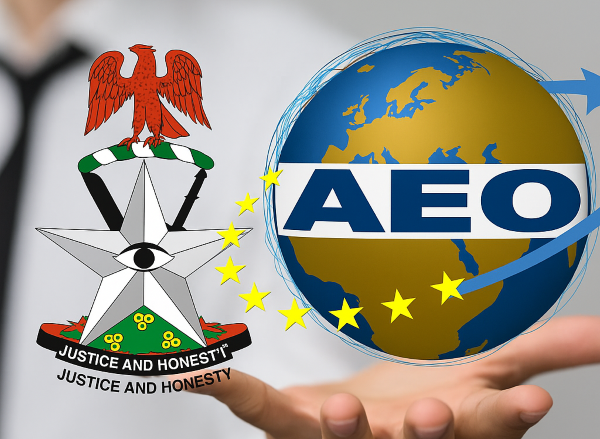
Nigeria Customs Service (NCS) has extended the migration deadline from the legacy Fast Track Scheme to the Authorised Economic Operator (AEO) Programme, shifting the cut-off date from December 31, 2025 to January 31, 2026—a move that underscores Nigeria’s accelerating alignment with global trade facilitation standards.
Beyond administrative relief, the extension signals a strategic recalibration of Nigeria’s cargo clearance ecosystem as the country deepens its integration into the World Customs Organisation (WCO) SAFE Framework of Standards, a cornerstone of modern, secure, and predictable global trade.



Why the AEO Transition Matters
At its core, the AEO Programme represents a shift from discretionary facilitation to trust-based, compliance-driven trade governance. Under this globally recognised framework, companies that demonstrate strong internal controls, transparent records, and secure supply chains are rewarded with tangible trade advantages—faster cargo release, reduced inspections, lower documentation burden, and greater certainty in port operations.
For Nigeria, the transition is not cosmetic. It is structural.
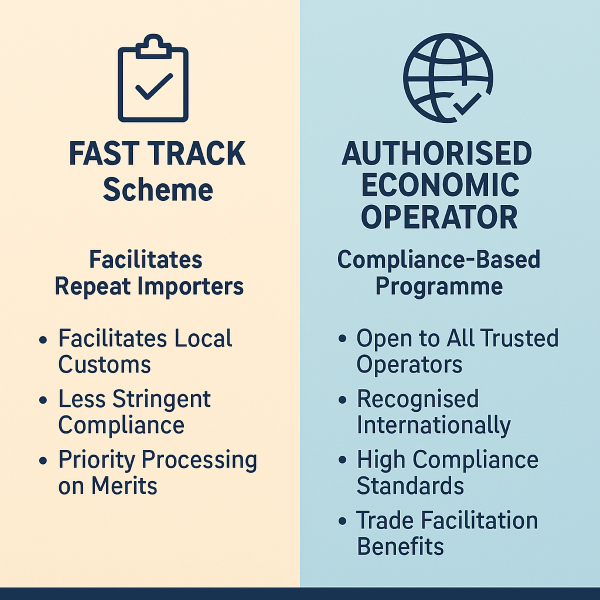
The Fast Track Scheme, while beneficial in its time, operated within a more limited compliance architecture. The AEO model, by contrast, embeds Nigeria firmly within a mutual recognition ecosystem, enabling trusted Nigerian operators to enjoy reciprocal trade privileges in partner countries.
In a world where port efficiency, predictability, and supply chain security increasingly determine competitiveness, the AEO Programme is fast becoming a non-negotiable passport for serious global traders.
A Grace Period with Strategic Intent
Customs authorities describe the extension as a deliberate effort to ensure inclusive, disruption-free onboarding for operators yet to complete their transition. The additional month offers businesses time to finalise documentation, strengthen compliance systems, and secure certification without operational shocks.
However, the message from Customs is clear:
Post-January 31, 2026, only AEO-certified operators will retain facilitation privileges previously enjoyed under Fast Track.
This marks a decisive end to transitional ambiguity.
Trade Facilitation Meets Supply Chain Security
From a Blue Economy and maritime logistics perspective, the AEO Programme is central to Nigeria’s ambition to reposition its ports as efficient, secure gateways for regional and continental trade—especially as AfCFTA deepens intra-African commerce.
By reducing inspection bottlenecks and prioritising trusted operators, Customs can redirect enforcement resources toward high-risk consignments, strengthening both national revenue protection and border security.
This dual outcome—speed for compliant traders and scrutiny for risk-prone cargo—is precisely what modern customs administrations are built to deliver.
Stakeholder Engagement as a Policy Tool
Recognising the complexity of the AEO migration, NCS has scheduled a comprehensive stakeholder engagement forum in Lagos on December 18, designed to provide hands-on guidance, clarify compliance requirements, and address operator concerns.
Such engagement reflects a broader institutional shift within Customs—from command-and-control enforcement to collaborative compliance, where regulators and the private sector co-create efficiency.
The Bigger Picture: Competitiveness, Not Convenience
Ultimately, the AEO Programme is not about preferential treatment—it is about earned trust.
For Nigerian exporters, importers, logistics providers, and port operators, AEO certification is fast becoming a commercial signal to global partners:
This is a credible, compliant, and predictable trading entity.
As Nigeria pursues trade diversification, non-oil exports, and deeper participation in global value chains, programmes like AEO will determine whether the country competes on speed, reliability, and confidence—or remains trapped in transactional inefficiency.
The grace period may be temporary, but the transformation it supports is permanent.
BRANDECONOMY INSIGHT
The AEO migration extension is less about accommodation and more about institutional readiness. Nigeria Customs is quietly executing one of the most consequential reforms in the country’s trade architecture—shifting from facilitation by discretion to facilitation by design.
For businesses still hesitating, the real risk is not compliance cost—it is strategic exclusion from a future where trusted trade status defines access, speed, and profitability.