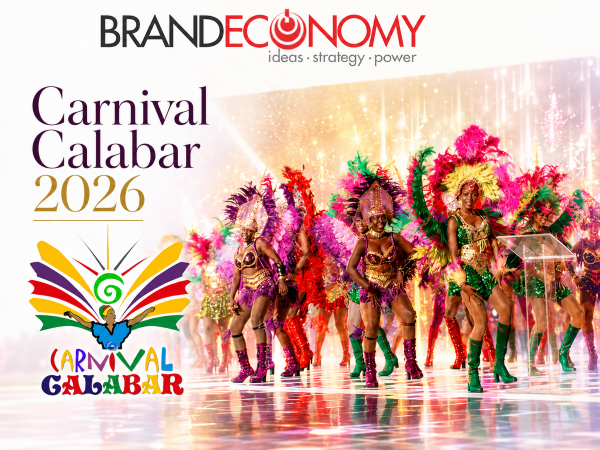
Otu Unveils “Rethinking Our Collective Destiny” as Carnival Calabar 2026 Theme

 With “Rethinking Our Collective Destiny” as its theme, the 2026 Carnival Calabar is being positioned not merely as a cultural procession, but as a bigger creative-economy platform for tourism, jobs, digital engagement and destination marketing.
 With “Rethinking Our Collective Destiny” as its theme, the 2026 Carnival Calabar is being positioned not merely as a cultural procession, but as a bigger
 Governor Bassey Otu of Cross River State has unveiled “Rethinking Our Collective Destiny” as the official theme for Carnival Calabar 2026, promising a more participatory, innovation-driven and economically expansive edition of Africa’s celebrated street party.
The theme was unveiled in Lagos at an event that formally opened the build-up to the carnival’s 21st anniversary edition, attracting tourism operators, diplomats, cultural enthusiasts, government officials, creative-industry players and other stakeholders.




Otu said the 2026 theme reflects a deliberate effort to reimagine the future of the carnival as a stronger platform for cultural pride, economic growth, youth opportunity and global tourism visibility.
“We are not just unveiling a theme; we are unveiling a vision,” the governor said. “‘Rethinking Our Collective Destiny’ challenges us to look beyond where we are today and imagine what we can achieve together as a people through culture, tourism and creativity.”
The governor noted that Carnival Calabar had grown beyond spectacle into a major cultural and economic asset for Cross River State. According to him, the festival has become a platform for showcasing the state to the world, while creating opportunities for performers, costume makers, artisans, vendors, logistics providers, hotels, restaurants, media professionals and young creatives.
“We must continue to innovate, expand participation and ensure that the benefits of the carnival are felt by our communities,” he said. “This carnival belongs to all of us, and its success depends on our collective commitment.”
Online Voting to Deepen Public Participation
Chairman of the Carnival Calabar Commission, Gabe Onah, said the 2026 edition would introduce online voting as part of efforts to give communities, audiences and carnival followers a more active role in the event.
According to him, the innovation will move the public from being passive spectators to active participants in the carnival experience.
Onah said the carnival is being repositioned to generate jobs and business opportunities for young people through the commercialisation of its various products, experiences and creative assets.
He disclosed that organisers had also engaged creative partners to develop movies inspired by the carnival, as well as digital platforms that would allow audiences across the world to connect to the festival in real time.
This is significant. In the global entertainment economy, festivals no longer compete only on physical attendance. They compete through content, storytelling, streaming, social-media amplification, tourism packages, merchandising, licensing and brand partnerships. The 2026 Carnival Calabar appears to be moving in that direction.
Multichoice: Tell the Stories Behind the Costumes
Busola Tejumola, Executive Director, General Entertainment at Multichoice, said Carnival Calabar has evolved significantly over the past 15 years and should now place greater emphasis on the stories behind its elaborate costumes, choreography and cultural expressions.
She said the introduction of audience voting would elevate participation and give viewers a more meaningful role in shaping the carnival experience.
Her intervention points to one of the most important gaps in African cultural tourism: storytelling. Spectacle attracts attention, but story builds emotional attachment. The more Carnival Calabar explains the meaning behind its themes, costumes, dances and bands, the more it can appeal to global audiences seeking authentic cultural experiences.
Portugal Sees Global Cultural Value
Portuguese Ambassador to Nigeria, Paulo Santos, described Carnival Calabar as a unique cultural platform comparable to carnivals in Europe, the Americas and Brazil.
“Culture is the easy way for countries to come together, get closer,” he said.
Santos praised the carnival’s scale, professionalism and diversity, including segments dedicated to children and bikers. He said his visit to museums in Calabar deepened his appreciation of the state’s cultural assets and noted that the festival has strong potential to connect with international audiences while strengthening people-to-people relations.
His remarks reinforce the soft-power value of Carnival Calabar. Beyond entertainment, the festival functions as cultural diplomacy — a way of introducing Cross River and Nigeria to the world through music, colour, history, performance and hospitality.
Carnival as Exportable Cultural Product
Chief Edem Duke, leader of the CalasVegas Band, announced that the band had been selected to represent Nigeria at a carnival in India. That development underscores the growing international recognition of Carnival Calabar’s creative output.
For Cross River, this is important. The export of carnival bands, performances, costume designs and creative talent can extend the festival’s value beyond December. It can create touring opportunities, cultural exchange, merchandising and international partnerships.
A carnival that travels becomes more than an event. It becomes a brand.
Tourism Operators Urged to Sell Cross River for Detty December
Tourism promoter and Convener of Akwaaba African Travel Market, Ikechi Uko, urged tour operators, travel agencies, tourism associations and media practitioners to package and market Cross River as a destination for the “Detty December” Christmas season.
He said Carnival Calabar has given Nigeria a world-class tourism product capable of attracting visitors from across the globe, adding that tour packages must now be built around the festival to increase visitor arrivals.
Uko challenged tourism practitioners to help double attendance for the 2026 edition through proper destination marketing, coordinated travel packages, hotel partnerships, transport planning and media amplification.
His point is commercially sound. Carnival Calabar cannot fully maximise its potential if it remains only a state-organised festival. It needs a tourism value chain around it — airlines, hotels, restaurants, travel agents, influencers, tour guides, creative vendors, event producers and media platforms working in coordination.
FTAN Pledges Tourism Industry Support
President of the Federation of Tourism Associations of Nigeria, Aliyu Badaki, commended the organisers for sustaining a festival that continues to generate economic value for Cross River State and its people.
He pledged the support of tourism practitioners, including travel agencies and tour operators, noting that the carnival has become a model for cultural tourism in Nigeria.
Badaki said the festival creates opportunities for local businesses, costume makers, hospitality operators and service providers, while bringing visitors from different parts of the world together.
That is the real economic story of Carnival Calabar. Its impact is measured not only by the parade itself, but by hotel occupancy, restaurant sales, transport demand, vendor income, creative commissions, media exposure and the broader destination appeal it creates for Cross River.
BRANDECONOMY Insight
Carnival Calabar Must Now Become a Full Creative-Economy Machine
Carnival Calabar has long been one of Nigeria’s most recognisable tourism brands. But the 2026 theme, “Rethinking Our Collective Destiny,” suggests a necessary shift: the carnival must now evolve from annual spectacle to year-round creative-economy platform.
That evolution is overdue.
The world’s most successful carnivals and cultural festivals are not just parades. They are tourism engines, content factories, export platforms, community enterprises, youth-employment pipelines and destination-marketing tools. They sell music, fashion, food, heritage, performance, hospitality and emotion.
Cross River already has the asset. What it now needs is deeper commercial architecture.
The introduction of online voting is a smart step because it expands participation and digital engagement. But the opportunity is bigger: live streaming, behind-the-scenes documentaries, costume-design competitions, band merchandise, school culture programmes, influencer partnerships, diaspora packages, international band exchanges and branded tourism itineraries.
For Nigeria, Carnival Calabar offers a practical lesson. Culture is not charity. It is business. Properly packaged, it can create jobs, attract visitors, strengthen local enterprise, build soft power and project a more compelling national image.
The challenge for Cross River is execution. The carnival must be professionally marketed, transparently managed, digitally amplified and commercially structured so that communities, creatives and businesses benefit more directly.
If that happens, Carnival Calabar 2026 will not merely celebrate culture. It will prove that culture can be converted into economic destiny.