Nollywood Wins, Afrobeats Goes Global and BBNaija Season 11 Builds Anticipation

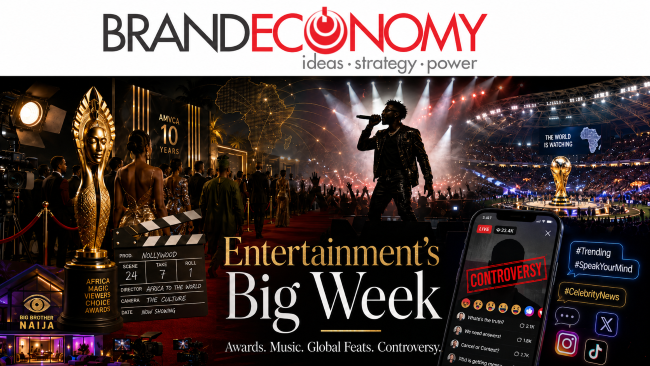 Nigeria’s entertainment scene has again proved why it remains one of Africa’s most restless cultural engines. From the glamour of the Africa Magic Viewers’ Choice Awards to the controversy around Ilebaye Odiniya, from Rema’s FIFA World Cup billing to Burna Boy’s reported Shakira collaboration, the week delivered a full spectrum of celebrity, cinema, music, reality television and social debate.
Nigeria’s entertainment industry rarely moves in a straight line. It dazzles, shocks, provokes, celebrates and exports culture at a speed few sectors can match.




In recent days, the spotlight has swung from the glittering stage of the Africa Magic Viewers’ Choice Awards to the emotional storm surrounding former Big Brother Naija winner Ilebaye Odiniya, while Nigerian music continued its march across the global stage with major developments involving Rema and Burna Boy.
It was a week that captured the full personality of the Nigerian entertainment ecosystem: glamour, controversy, ambition, global recognition and the endless social-media conversations that now shape celebrity culture.
At the AMVCA, Nollywood again took centre stage, affirming its evolution from a volume-driven film industry into a more layered creative economy built around acting craft, technical sophistication, streaming visibility and increasingly ambitious storytelling.
Linda Ejiofor emerged as Best Lead Actress, while Uzor Arukwe clinched Best Male Lead for his performance in “Colours of Fire.” The wins reflected the continued rise of screen performances that combine emotional depth, commercial appeal and critical recognition.
The evening also honoured veterans whose careers have helped define the character and staying power of Nigerian cinema. Nkem Owoh, Sanni Mu’azu and Richard Mofe-Damijo received Industry Merit Awards, a fitting tribute to artists whose work has shaped generations of viewers and expanded Nollywood’s cultural footprint.
Their recognition was more than ceremonial. It served as a reminder that the new Nollywood stands on the shoulders of performers who built credibility in an era when the industry had fewer resources, limited technology and far less global visibility.
Several films dominated the conversation across categories, including “Colours of Fire,” “My Father’s Shadow,” “The Herd,” “Gingerrr” and “To Kill a Monkey.” Their strong showing points to an industry widening its creative range: from intimate family stories and psychological drama to social commentary, suspense, comedy and prestige filmmaking.
The AMVCA has become more than an award show. It is now a cultural marketplace where fashion, film, celebrity branding, streaming economics and audience power converge. For actors, producers and directors, winning or even earning strong visibility at the awards can translate into more bankable profiles, stronger distribution interest and larger audiences.
Yet the same entertainment cycle that delivered glamour also produced a disturbing public conversation.
Former Big Brother Naija All Stars winner Ilebaye Odiniya became the subject of widespread concern after an emotional Instagram live session allegedly showed a troubling family confrontation. The video drew strong reactions from fans and observers, pushing issues of domestic safety, celebrity vulnerability and public accountability into the national conversation.
The Nigeria Police Force later confirmed the arrest of her father and said investigations were ongoing. The matter has since intensified debate around domestic violence, family boundaries and the pressures faced by public figures whose private crises can quickly become national spectacle.
For the entertainment industry, the episode is a sobering reminder that fame does not shield anyone from trauma, family conflict or emotional distress. It also raises questions about how online audiences respond to sensitive personal situations. In the age of live video, pain can become content before it becomes a case file.
On the global stage, Nigerian music continued to travel with force.
Rema is billed to perform at the 2026 FIFA World Cup opening celebration in Los Angeles on June 12, placing him among international stars including Katy Perry, Future, Anitta, LISA and Tyla.
For Rema, this represents another major career milestone. For Afrobeats, it is another signal that Nigerian music is no longer knocking on the doors of global culture. It is already inside the arena.
The World Cup is not merely a football tournament. It is one of the biggest entertainment platforms on earth, where music, sport, tourism, broadcast rights, sponsorship and national branding meet. Rema’s presence on that stage strengthens Nigeria’s soft-power credentials and confirms the commercial reach of Afrobeats in the global attention economy.
Meanwhile, Burna Boy is again linked to another major international moment, with reports of a collaboration with Colombian superstar Shakira on a World Cup-themed anthem titled “Dai Dai,” expected to be released on May 14.
If delivered as projected, the collaboration would underline Burna Boy’s status as one of Africa’s most internationally visible artists. His brand already sits at the intersection of Afrofusion, stadium performance, global touring and cultural confidence. A Shakira partnership tied to the World Cup would further deepen the relationship between African pop and global sports entertainment.
Together, the Rema and Burna Boy developments reinforce a wider point: Nigerian music has become a strategic export. It is driving streams, concerts, brand partnerships, tourism interest, fashion trends, dance culture and international media attention.
In reality television, Big Brother Naija is preparing for another cycle of cultural dominance. Organisers have confirmed that auditions for Season 11 are imminent, sparking anticipation among fans, aspiring housemates and online commentators.
Although official audition dates have not been announced, social media speculation has already intensified, with many fans expecting a May audition window based on previous seasons. The show remains one of Nigeria’s most powerful reality-TV franchises, capable of turning unknown personalities into influencers, brand ambassadors, entertainers and entrepreneurs almost overnight.
Big Brother Naija’s enduring power lies in its fusion of drama, aspiration, youth culture, fan communities and brand monetisation. It is television, but also business: advertising, sponsorship, social engagement, influencer marketing, fashion, music promotion and digital conversation.
What connects all these stories is the scale of Nigeria’s entertainment economy.
The AMVCA celebrates the industry’s creative maturity. Ilebaye’s controversy reveals the human vulnerability behind celebrity culture. Rema’s World Cup billing shows the international demand for Nigerian sound. Burna Boy’s reported global collaboration highlights the export value of Nigerian artistry. Big Brother Naija’s coming auditions remind the market that reality television remains a powerful factory for fame and influence.
Nigeria’s entertainment industry is no longer operating at the margins of the economy. It is shaping consumer behaviour, exporting culture, creating jobs, building brands and influencing national image.
But as the industry grows, it must also mature. It needs stronger welfare systems for talent, better legal protection, professional management, mental-health awareness, content ethics, intellectual-property enforcement and deeper investment in production infrastructure.
The glamour is real. The business is growing. The controversies are inevitable.
But the message is clear: Nigeria’s entertainment industry remains one of the country’s most powerful engines of visibility, identity and soft power.
BRANDECONOMY Insight
The week’s entertainment headlines show the many faces of Nigeria’s creative economy.
At one end is Nollywood’s rising artistic confidence, reflected in the AMVCA wins and the recognition of veteran actors who helped build the industry’s foundation. At another end is the globalisation of Afrobeats, with Rema and Burna Boy occupying spaces once considered unreachable for African pop stars. Between both is the emotional volatility of celebrity culture, where reality television fame, social media exposure and personal crisis can collide in public.
The lesson is that entertainment is no longer just entertainment. It is business, diplomacy, youth employment, export branding and cultural infrastructure.
Nigeria’s creative sector is one of the few national industries already competing globally without waiting for perfect conditions. It has done so through talent, hustle, digital platforms and audience loyalty. But the next phase requires structure.
Artists need better protection. Filmmakers need financing and distribution support. Reality-TV stars need post-show career management. The music industry needs stronger publishing systems. The country needs more arenas, studios, festivals, talent academies and global marketing platforms.
The world is watching Nigeria. The challenge is to convert attention into sustainable value.