The United States has escalated its counter-terror posture in West Africa with precision air strikes on ISIS-linked targets in north-west Nigeria, a move President Donald Trump framed in characteristically blunt terms as a warning to extremist groups—and a signal of Washington’s readiness to act.
Announced on Christmas Day, the strikes targeted foreign ISIS elements operating in Nigeria’s North-West, with United States Africa Command (AFRICOM) confirming that multiple militants were neutralised. While casualty figures were not disclosed, Pentagon-released visuals indicated a high-confidence, precision operation.



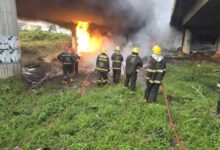
Rhetoric Meets Kinetics
Trump’s language was unmistakably hardline, underscoring a zero-tolerance stance toward terrorism and projecting resolve to domestic and international audiences alike. The messaging, aimed as much at deterrence as disruption, reflects a broader U.S. approach that pairs forceful rhetoric with selective kinetic action when intelligence thresholds are met.
Nigeria Confirms Joint Action
Abuja swiftly confirmed the operation, emphasising that the strikes were conducted within a framework of structured security cooperation and with federal approval. Nigeria’s Ministry of Foreign Affairs said the action followed credible intelligence and careful operational planning, consistent with international law and respect for sovereignty.
Nigerian defence authorities stressed that the objective remains the protection of civilians and national unity, noting that terrorist violence in the country affects communities across faiths and regions.
Why the North-West Matters
The identification of Sokoto State as the area of operations points to concerns about transnational ISIS infiltration rather than a purely local insurgency dynamic. Security analysts argue the North-West has become a corridor for cross-border movement, financing, and logistics—making it a priority for disruption before networks entrench.
A Broader Strategic Signal
The strikes arrive amid heightened U.S. attention to Nigeria’s security environment, including expanded surveillance and closer intelligence coordination. Strategically, the action signals:
- A renewed U.S. willingness to conduct precision strikes in West Africa;
- Nigeria’s role as a front-line partner against transnational jihadist spillover;
- A shift from advisory support to targeted joint operations where risks escalate.
U.S. Defence Secretary Pete Hegseth publicly thanked Nigerian authorities for cooperation, reinforcing the joint nature of the mission.
Balancing Force and Narrative
While Washington’s framing leaned heavily on deterrence, Nigerian officials reiterated that the country’s security challenge is complex and multi-causal, involving banditry, criminality, and extremist networks that cut across religious lines. The government cautioned against reductive narratives, insisting that durable security will depend on local capacity, intelligence integration, and border control, alongside partner support.
BRANDECONOMY Insight
The air strikes mark a decisive moment in U.S.–Nigeria security ties—where talk translated into action. Precision force can disrupt cells and signal resolve, but lasting gains hinge on Nigeria’s ability to institutionalise intelligence, secure borders, and undercut the economic pathways terrorists exploit.
Trump’s tough talk may dominate headlines; the real test will be whether sustained cooperation converts tactical success into strategic stability.