

How a UK-Funded Climate-Smart Innovation Is Transforming Rural Animal Health, Agrovet Businesses, and Nigeria’s $9bn Livestock Economy

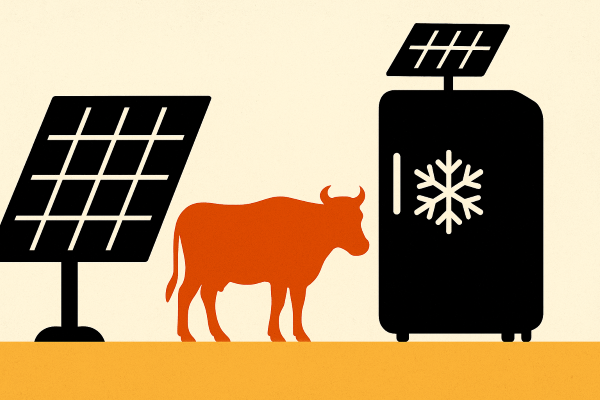
Nigeria’s livestock industry loses an estimated $9 billion annually to preventable diseases — a staggering figure driven largely by poor vaccine availability and unreliable cold storage across rural communities.
But a new climate-smart innovation, introduced by the UK-funded Propcom+ programme, is poised to change the trajectory of livestock health, rural enterprise growth, and vaccine reliability.
Propcom+ has deployed solar-powered cold chain systems to off-grid communities, offering a technologically superior, financially viable, and environmentally sustainable solution to one of Nigeria’s longest-standing agricultural challenges.




This innovation is not merely a pilot — it is a blueprint for national livestock resilience, agribusiness expansion, and climate-smart rural transformation.
Closing a Critical Gap: Solar-Powered Refrigeration for Vaccine Integrity
At the learning event themed “Unlocking Cold Chain Innovation”, Propcom+ Strategy Director Olumide Ojo highlighted a systemic gap: traditional cold chain systems fail in rural areas due to inconsistent electricity and high operational costs.
The newly introduced solar refrigerators, tested over a 6–12 month pilot period, provide:
- Reliable temperature control
- Lower energy and maintenance costs
- Consistent vaccine potency
- Expanded reach for agrovet businesses
- Improved livestock survival rates
By eliminating the cold chain bottleneck, the innovation strengthens herd immunity and secures farmers’ income streams.
A Pilot That Proves Scalability — Technically, Financially, Commercially
According to Commercial Viability Lead Dr. Babatunde David, the solar cold chain model has passed all major tests:
✔ Technically Sound
Solar units maintained optimal temperatures even under harsh weather and poor grid conditions.
✔ Financially Viable
Engagement of 42 agrovet operators yielded strong financial performance and short breakeven periods.
✔ Commercially Scalable
The model is bankable, opening pathways for both development partners and private financiers.
Blended financing — combining donor support with commercial credit — is expected to accelerate adoption among small and medium agrovet businesses.
Why Solar Power Changes Everything
In rural Nigeria, electricity outages cripple refrigeration. Standard refrigerators depend on erratic grid power and frequently break down.
Veterinary expert Dr. Khadija Shuaibu, CEO of Bami Veterinary, emphasised:
“Traditional cold storage fails the moment power becomes unreliable. Solar offers the stability that vaccine integrity requires.”
Mr. Eghosa Ogedebe, Managing Director of Inter Trade Nigeria Ltd., added that solar refrigerators experience fewer mechanical failures because they operate on regulated DC power, avoiding damage caused by voltage fluctuations.
The technical superiority of solar cold chain units dramatically reduces:
- Equipment downtime
- Vaccine wastage
- Cold chain interruptions
- Operating costs for rural businesses
Strengthening Livestock Food Systems and Rural Businesses
The Propcom+ solar cold chain model delivers triple-impact outcomes:
1. For Smallholder Farmers
- Improved access to potent vaccines
- Higher livestock survival rates
- Reduced disease outbreaks
- Increased household income stability
2. For Agrovet Operators
- Expanded geographic coverage
- Higher sales volume
- Better inventory management
- Faster business growth
3. For Nigeria’s Livestock Economy
- Lowered national disease burden
- More resilient food systems
- Increased productivity across poultry, goats, cattle, and sheep
This is climate-smart agriculture in action — combining renewable energy, digital innovation, and rural enterprise development.
BRANDECONOMY Insight
The success of Propcom+’s solar cold chain initiative marks a pivotal turn in Nigeria’s agriculture digitalisation journey. It demonstrates how low-cost, high-impact innovation can unlock productivity in rural markets where infrastructure gaps have historically limited progress.
The model’s national scalability offers a pathway for:
- Reducing Nigeria’s multibillion-dollar livestock losses
- Strengthening rural economies
- Enhancing food security
- Empowering agrovet entrepreneurs
- Meeting climate resilience goals
In a country where livestock farming is central to livelihoods, nutrition, and rural commerce, this innovation is more than a technology intervention — it is a market system disruptor.
The future of Nigerian livestock health may well depend on how quickly policymakers, financiers, and development partners rally behind solar cold chain expansion.
BRANDECONOMY will continue to track this transformative shift and its wider implications for Africa’s agriculture and food systems.