

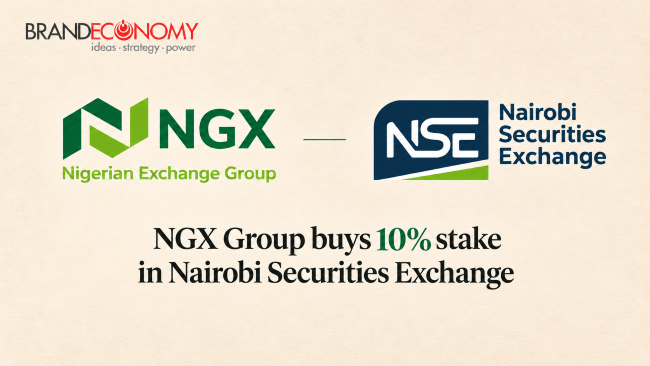
 Nigerian Exchange Group Plc has acquired a 10 per cent stake in the Nairobi Securities Exchange, extending a pan-African expansion that already includes a strategic investment in the Ethiopian Securities Exchange. The deal gives NGX Group exposure to Kenya’s capital market and broadens its sources of potential investment returns beyond Nigeria.
The Kenyan investment builds on NGX Group’s stake in Ethiopia’s exchange. It gives the Nigerian operator a second foothold in East Africa and a test of whether shared ownership can make it easier to raise and invest capital across borders. NGX Group Nairobi stake will be closely watched.



Announcing the acquisition on Monday, NGX Group said the investment serves three priorities: closer integration of African capital markets, portfolio diversification and long-term shareholder value. It described the stake as a disciplined use of capital intended to strengthen financial links between West and East Africa.
Group Chairman Dr Umaru Kwairanga said African capital-market integration was beginning to take institutional form. He argued that exchange operators willing to commit patient capital to market infrastructure could help shape how investment moves across the continent. He cast the Nairobi stake as a long-term investment in that process.
Temi Popoola, Group Managing Director of NGX Group, described Kenya as central to East Africa’s financial ecosystem. He said closer cooperation between the Nigerian and Kenyan markets had already demonstrated potential benefits for issuers and investors, and that an ownership stake gave the relationship a more durable footing.
What NGX Group gains from a minority stake
The acquisition adds a new source of potential returns to NGX Group’s portfolio. It also creates a commercial reason for the two exchange operators to work together over time. For NGX Group shareholders, those are two distinct sources of value. One comes from the financial performance of the Nairobi Securities Exchange. The other depends on whether cooperation produces services that issuers, brokers and investors can use.
There is also a brand dividend to earn. A sustained presence in Kenya and Ethiopia positions NGX Group to be seen as a regional exchange operator with capital committed across markets. Its credibility will depend on execution. An issuer will judge the relationship by whether it reaches a broader pool of investors. A broker will judge it by whether serving a client in another market becomes simpler and commercially viable.
The balance matters because a 10 per cent holding is a minority position. Its influence will depend on the rights attached to the stake and the willingness of both exchanges to agree on commercial priorities. The announcement did not disclose the purchase price, governance rights or expected financial contribution, leaving shareholders without enough information to assess the likely return on the capital deployed.
Where cross-border investors could see a difference
A shareholding relationship can help sustain cooperation, but investors experience market integration through everyday transactions. A fund manager in Lagos considering a security listed in Nairobi still needs a workable route to trade, settle, hold and ultimately sell it. Brokerage access, custody, foreign-exchange conversion and the ability to move proceeds all affect the cost and practicality of that decision.
The opportunity for issuers is equally specific. A business considering raising capital outside its home market needs to know whether it can attract investors and sustain trading interest after the transaction. A wider investor base could improve access to funding, but the benefit depends on demand and the ongoing costs of serving investors in another jurisdiction.
For African businesses seeking long-term capital, a more connected exchange network could widen the pool of buyers for equity and debt. For exchange shareholders, a successful connection could support new listings, trading activity or market services. Each outcome depends on regulators, brokers and market infrastructure providers turning institutional cooperation into a process that works at a reasonable cost.
BRANDECONOMY Insight
The first hard test of the Nairobi investment is whether it makes the next cross-border transaction easier. A shorter settlement process, clearer access for brokers or an issuer reaching investors in both markets would make the value of cooperation visible. Any initiative announced off the back of the deal should be judged by how often market participants use it and how much it saves them in time or cost.
For NGX Group shareholders, the near-term questions concern what the group paid, what rights it acquired and how it will measure returns. The longer-term question of the NGX Group Nairobi stake is whether its investments in Kenya and Ethiopia can create business that would have been harder to win from Nigeria alone. That is where a portfolio of exchange stakes can become an operating advantage.