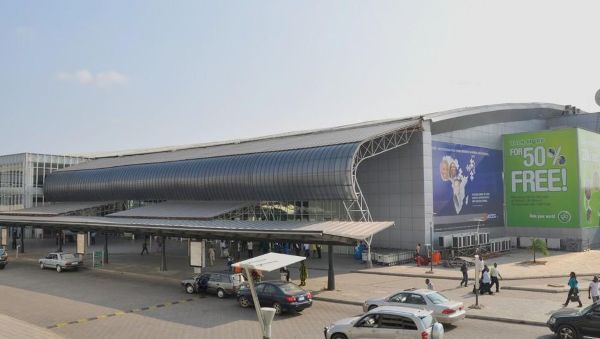
 At Lagos’ Murtala Muhammed Airport Terminal 2 (MMA2), congestion has become as much a ground-side challenge as an airside one. In response, terminal operator Bi-Courtney Aviation Services has revised parking tariffs—arguing the move is less about revenue and more about restoring operational efficiency in a facility strained by long-stay vehicles.
In a statement, the operator said the multi-storey car park has increasingly been used for extended parking—sometimes stretching into weeks or even months—thereby crowding out short-term users and disrupting passenger flow.

When Parking Becomes a Bottleneck
Airports are finely tuned ecosystems. While runways and terminals draw the most attention, the efficiency of landside infrastructure—roads, drop-off zones, and parking—often determines the passenger experience.
At MMA2, that balance appears to have tilted.
Passengers, according to the operator, now spend upwards of 30 minutes searching for available parking spaces, with knock-on effects ranging from missed flights to traffic build-up at drop-off and pick-up points. What should be a transient facility has gradually morphed into a quasi-storage space for vehicles.
The tariff adjustment is therefore designed as a behavioural nudge—discouraging long-term parking and improving turnover.
The Economics of Space Management
The revised pricing structure reflects a shift toward demand management:
- Saloon cars: ₦3,500 for the first hour (up from ₦2,500), ₦2,500 for subsequent hours
- SUVs: ₦4,000 for the first hour, ₦2,500 thereafter
- Buses: ₦20,000
- Overnight parking: ₦50,000
- Lost ticket: ₦25,000
While steep at the margins, the structure aligns with a broader global practice: using pricing to optimise scarce airport real estate.
In high-traffic terminals worldwide, parking tariffs are calibrated not merely to generate income, but to regulate usage patterns—ensuring that space is allocated efficiently to active travellers rather than idle vehicles.
Security, Safety and System Integrity
Beyond congestion, the operator points to a more sensitive concern: security.
Extended parking increases monitoring complexity and heightens risks within a critical infrastructure environment. By reducing long-term occupancy, the terminal can tighten surveillance, improve access control, and maintain operational integrity.
This is particularly relevant in a country where aviation infrastructure is increasingly being treated as strategic national assets.
A Symptom of Wider Urban Pressure
The MMA2 situation also reflects a broader Lagos reality: limited urban parking infrastructure combined with high vehicle density. In the absence of alternative long-term parking solutions, airport facilities often absorb excess demand.
Without complementary investments—such as off-site parking hubs, shuttle systems, or improved public transport access—the pressure on terminal facilities is likely to persist.
BRANDECONOMY Insight
MMA2’s tariff revision is a microcosm of a larger infrastructure challenge: how to manage scarcity in high-demand urban systems.
- Pricing as a Policy Tool
Tariffs are being deployed not just for revenue, but as instruments of behavioural change—shaping how users interact with limited infrastructure. - Airports as Integrated Systems
Efficiency is no longer defined solely by flight operations. Landside logistics—parking, access roads, passenger flow—are now central to competitiveness. - The Lagos Factor
Urban congestion spills into airport ecosystems. Without broader city-level mobility solutions, terminal-level interventions will have limited impact. - Opportunity for Private Investment
The congestion points to a gap—and an opportunity—for private sector investment in structured parking, mobility services and airport-adjacent logistics infrastructure. - Passenger Experience as Economic Variable
Delays, missed flights and inefficiencies carry real economic costs. Improving ground operations is as critical as expanding air capacity.
In essence, MMA2’s pricing reset is an attempt to restore equilibrium—but it also highlights the urgent need for a more holistic approach to airport and urban mobility planning.