Lagos to Abidjan: Traversing West Africa’s busiest but broken highway

 By Gabriel Agbeja
Lagos to Abidjan is a strategic highway linking five West African nations, carrying millions of travellers and billions of dollars in trade annually.




The route forms the backbone of the Lagos-Abidjan Corridor, connecting Nigeria, Benin, Togo, Ghana and Côte d’Ivoire while serving more than 400 million people.
As part of the Climate Beyond Borders Caravan, a News Agency of Nigeria (NAN) correspondent travelled the corridor, assessing mobility, trade opportunities and regional integration challenges..
Available data reveals that the Lagos-Abidjan Corridor spanning 1,028 km generates 42 per cent of West Africa’s GDP along its coastal urban belt.
The corridor also forms the region’s densest economic zone, accounting for 75 per cent of ECOWAS trade flows and concentrated industrial activity.
In spite of the economic significance, the journey is slowed by poor roads, congestion, border delays and administrative bottlenecks.
The Climate Beyond Borders Caravan (CBBC) is a youth-led initiative of the People Planet and Peace Foundation promoting climate justice and cross-border cooperation across Africa.
NAN reports the CBBC journey, primarily aimed to promote environmental sustainability, climate awareness, and stronger cross-border collaboration across West Africa.
Beyond the objectives, however, the NAN correspondent assessed road conditions and their impact on economic and regional development across the sub-region.
The expedition revealed a region of contrasts where infrastructure improvements coexist with persistent barriers to seamless movement.
Beginning in Nigeria, the team travelled through Badagry towards the Seme border, encountering stretches of rehabilitation works, potholes and traffic bottlenecks.
At Porto-Novo, Caravan Secretary, Miss Kumuyi Olabisi, described road travel across parts of Africa as stressful due to infrastructure deficiencies.
She said journeys along the approximately 1,000-kilometre corridor often take much longer than expected because of avoidable delays.
According to her, these delays increase transport costs and reduce the competitiveness of businesses operating across the region.
“Heavy-duty trucks often spend hours navigating congested roads before reaching the border. During peak periods, queues extending several kilometres are common.
“Despite ECOWAS protocols on free movement, travellers often experience lengthy delays before crossing into neighbouring countries,” Olabisi said.
She noted that customs procedures, immigration checks and multiple security agencies frequently slowed movement at the Seme border.
Crossing into Benin Republic, the team observed better-maintained highways stretching from Seme through Cotonou to Grand-Popo.
The police checkpoints existed in Benin but were fewer than those encountered on the Nigerian side.
NAN observed that the better road conditions reduce vehicle wear and fuel consumption, making Benin one of the easiest segments of the corridor.
In Lomé, the roads around the city were generally in good condition, although urban congestion occasionally slowed traffic.
A luxury bus driver Michael Kojo described Togo as a short but strategically important section linking Benin and Ghana.
“Efficient customs operations have improved cross-border movement, but delays still occur during busy periods,” Kojo said.
Moving into Ghana, the caravan encountered some of the best-maintained roads along the corridor.
NAN observed that the highways linking Aflao, Accra, Cape Coast and Elubo were largely paved and motorable.
However, the heavy traffic around Accra significantly increased travel time for transport operators.
There were occasional delays at security checkpoints and toll stations, despite overall improvements in infrastructure.
NAN reports that the final leg led into Côte d’Ivoire through Noé, where travellers noticed a significant improvement in road quality.
Miss Sabine Kouakou, Vice-President for Women’s Affairs at E LAFI OU Foundation, said the highway to Abidjan ranked among West Africa’s best.
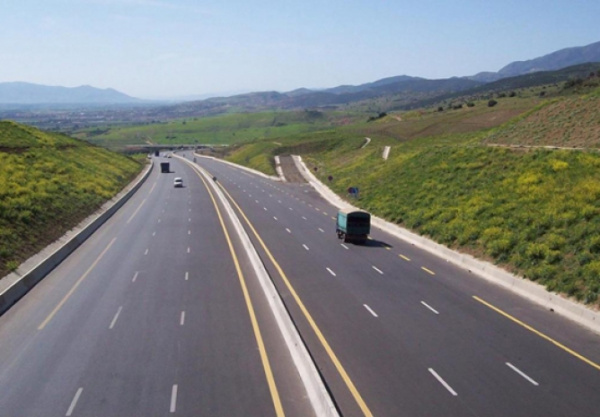
“Modern dual carriageways, efficient traffic management and continuous maintenance have made Côte d’Ivoire a benchmark for transport infrastructure,” she said.
Kouakou added that the Port of Abidjan strengthened the country’s position as a major regional logistics hub.
She said the corridor facilitated the movement of agricultural products, manufactured goods, petroleum products and consumer goods worth billions of dollars annually.
“It supports regional commerce under the ECOWAS Trade Liberalisation Scheme and complements the African Continental Free Trade Area,” she said.
According to Kouakou, improving road conditions would reduce transportation costs, lower food prices, stimulate tourism and create jobs.
At Abidjan, Caravan Lead, Mr Olatunji Francisco, highlighted challenges still undermining the corridor’s efficiency.
He identified deteriorating road sections, especially in Nigeria, multiple checkpoints and unofficial roadblocks as major concerns.
Francisco also cited lengthy customs procedures, congestion around Lagos and Accra, and high transport costs.
“Occasional security concerns further affect cargo movement, increasing travel time and reducing business competitiveness,” he said.
Despite these obstacles, regional governments are investing heavily in infrastructure upgrades along the corridor.
Civil engineer Karamoko Koffi said ongoing projects included road rehabilitation, modern border posts and digital customs systems.
He added that plans for a regional highway and railway network could significantly transform transportation across ECOWAS countries.
“The proposed Abidjan-Lagos Highway aims to reduce travel time and boost trade among member states.
“While progress is evident in Ghana and Côte d’Ivoire, infrastructure gaps and administrative bottlenecks still impede seamless movement,” Koffi said.
According to him, the corridor symbolises both the promise and challenges of regional integration in West Africa.
Koffi stressed that achieving a world-class transport corridor would require sustained political commitment and coordinated regional action.
He also called for continued investments in roads, border facilities and security infrastructure.
The Lagos-Abidjan corridor remains West Africa’s economic backbone, linking five nations and driving trade, yet revealing stark contrasts in infrastructure quality and efficiency.
Despite progress in some countries, the route is slowed by poor roads, congestion, border delays, and multiple checkpoints that increase costs and travel time.
With sustained investment, regional cooperation, and streamlined border systems, the corridor could become a seamless trade artery driving integration and prosperity across West Africa.
News Agency of Nigeria.