Lagos Revives Monthly Environmental Sanitation to Reinforce Civic Responsibility
To Commence in April

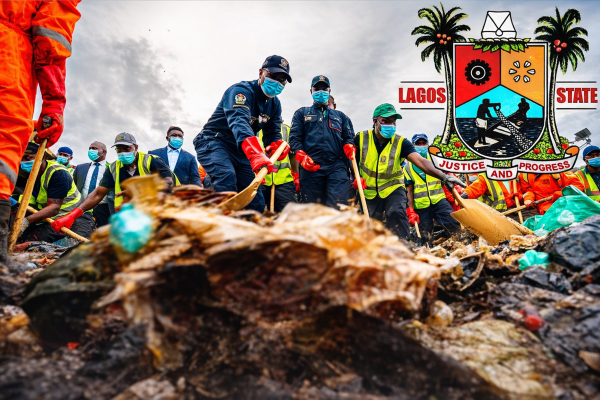
The government of Lagos State has announced the reintroduction of its monthly environmental sanitation exercise, marking a renewed push to strengthen public hygiene and civic responsibility across Nigeria’s largest city.
Governor Babajide Sanwo-Olu said the exercise will begin in April and will be held on the last Saturday of every month between 6:30 a.m. and 8:30 a.m.




Speaking during a stakeholders’ engagement on environmental sanitation in Lagos, the governor emphasised that the initiative is not political but a collective public health responsibility aimed at promoting a cleaner and healthier urban environment.
“This exercise is about our shared responsibility as Lagosians,” Sanwo-Olu said. “It is not about politics or rivalry. It is about keeping our environment safe, clean and healthy for everyone.”
Rebuilding a Culture of Environmental Responsibility
The sanitation exercise was once a defining civic routine across Nigeria, where residents set aside time monthly to clean their neighbourhoods, markets and drainage systems.
However, in 2016 the Lagos State Government suspended the mandatory programme after a Federal High Court ruling held that the restriction of human movement during sanitation hours violated citizens’ constitutional rights to freedom of movement.
Despite the suspension of movement restrictions, the state government says the responsibility for maintaining environmental cleanliness remains unchanged.
Sanwo-Olu noted that the revived initiative will focus more on voluntary participation, public awareness and community engagement rather than enforcement mechanisms that restrict movement.
“A clean city cannot be achieved by government alone,” the governor said. “It depends on the daily habits of residents in their homes, markets and communities.”
Drainage Blockage and Flooding Concerns
A key motivation behind the initiative is the growing problem of indiscriminate waste disposal across Lagos, particularly the dumping of plastic bottles, sachet water nylons and other refuse into drainage channels.
According to the governor, blocked drainage systems have contributed to persistent flooding and repeated road failures across parts of the city.
“When drainage systems are clogged with waste, roads will continue to deteriorate even after repairs,” he warned.
He noted that several roads previously repaired by contractors have deteriorated again because stormwater channels designed to protect the infrastructure were obstructed by waste.
Stakeholders Mobilised Across Communities
The governor called on community development associations, market leaders, youth groups, religious organisations and local political structures to mobilise residents to support the sanitation initiative.
He stressed that environmental cleanliness must be seen as a civic culture rather than a government campaign.
“Clean Lagos begins with everyday choices,” he said. “Our markets, communities and institutions must take ownership of this responsibility.”
Waste Management Reform Underway
Also speaking at the event, Tokunbo Wahab described the reintroduction of the sanitation programme as part of a broader environmental management reform in the state.
Wahab explained that the government had spent more than a year consulting stakeholders before relaunching the exercise.
“This decision followed extensive consultations and engagements to ensure the exercise returns in a lawful and practical manner supported by residents,” he said.
He also disclosed that Lagos is transitioning from a linear waste management system to a circular waste economy, where waste materials are converted into valuable resources.
Under the emerging system, waste will increasingly be processed into:
- recyclable materials
- compost and fertiliser
- energy resources
This approach, he said, could transform waste from an environmental burden into an economic opportunity.
Toward a Cleaner Megacity
With Lagos continuing to grow as one of Africa’s largest megacities, the success of the sanitation initiative may depend on whether behavioural change accompanies government policy.
Sanwo-Olu said leadership may be temporary, but the health and wellbeing of communities must remain a permanent priority.
“This initiative must be bigger than speeches and bigger than any individual,” he said.
BRANDECONOMY Insight
The revival of Lagos’ monthly environmental sanitation reflects a deeper urban governance challenge facing rapidly expanding megacities.
Three structural issues make the initiative particularly important.
First, urban population growth is intensifying waste generation.
Lagos produces thousands of tonnes of waste daily, placing enormous pressure on collection and disposal systems.
Second, infrastructure resilience depends heavily on environmental behaviour.
Blocked drainage channels not only cause flooding but also accelerate road deterioration and increase public infrastructure costs.
Third, cities are moving toward circular waste economies.
Progressive urban governments now treat waste as an economic resource capable of generating energy, recycling materials and creating green jobs.
If Lagos successfully embeds sanitation into everyday civic culture, it could significantly strengthen its environmental resilience and set a model for other rapidly urbanising African cities.