
From Prize to Patient: NLNG-Backed GenScan AI Targets 90% Faster MRI Scans in Nigeria

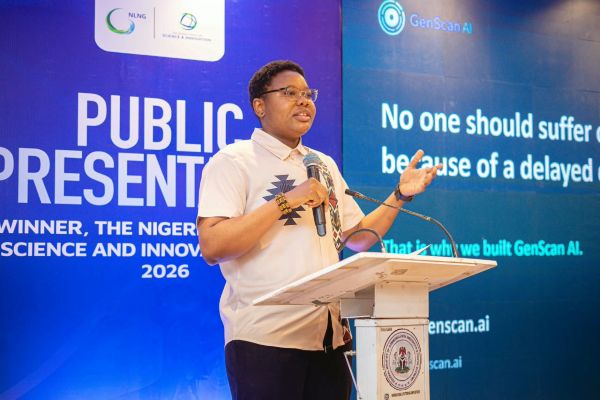
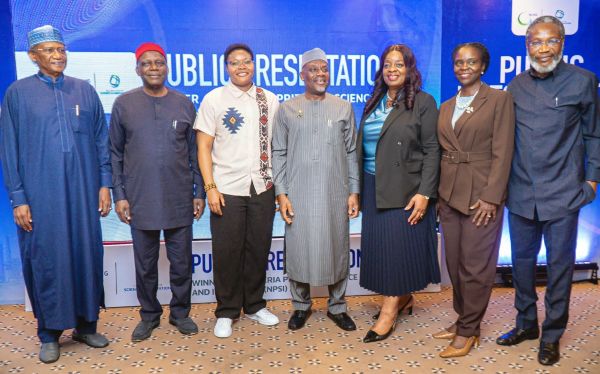
Nigeria LNG Limited (NLNG) has moved its 2026 science-prize winner closer to the healthcare marketplace, presenting GenScan AI to medical, research and policy stakeholders in Abuja as a potentially transformative solution to Nigeria’s diagnostic-imaging constraints.
Developed by Nigerian artificial-intelligence researcher Mary-Brenda Akoda, GenScan AI is designed to shorten magnetic resonance imaging acquisition times while preserving—or potentially improving—the quality of reconstructed images.




Its core technology, known as C-MORE, uses a one-step artificial-intelligence framework to reconstruct MRI images from reduced scan data. According to the Advisory Board of The Nigeria Prize for Science and Innovation, the system could cut MRI acquisition time by as much as 90% without requiring hospitals to replace their existing scanners.
That qualification is important. GenScan AI does not manufacture new MRI machines or solve every infrastructure problem affecting diagnostic medicine. Its immediate proposition is more focused: make compatible machines work faster and process more patients within the same operating period.
In a country where advanced diagnostic equipment is scarce, expensive and concentrated in major cities, that could represent a significant productivity gain.
Turning scarce equipment into greater capacity
MRI is essential to diagnosing and managing neurological disorders, cancers, musculoskeletal conditions and several other complex diseases. Yet scanners are expensive to purchase, install, power, cool and maintain. Their operation also depends on skilled radiographers, radiologists, medical physicists and reliable digital infrastructure.
Long examination times compound these limitations. When one patient occupies a scanner for an extended period, fewer people can be examined during the working day. Delays increase, hospital revenue per machine is constrained and patients may be forced to travel or wait longer for diagnosis.
If GenScan AI performs in Nigerian clinical settings as strongly as its research results suggest, hospitals could potentially extract more diagnostic capacity from equipment they already own. Faster scans could also reduce patient discomfort and movement, particularly among children, older people and patients who struggle to remain still inside an MRI machine.
The development-economics significance lies in this asset-productivity effect. Nigeria’s health system cannot always purchase its way out of scarcity. Technologies that improve the output of existing infrastructure may sometimes produce faster returns than another cycle of expensive equipment procurement.
But faster imaging will improve healthcare only if the reconstructed images remain consistently reliable across patients, diseases, scanner manufacturers, magnetic-field strengths and hospital environments.
The clinical test begins after the prize
Sophia Horsfall, NLNG’s General Manager for External Relations and Sustainable Development, said the company’s interest extended beyond recognising an impressive scientific idea.
She described accurate diagnosis as the foundation of effective treatment, noting that medical teams depend on diagnostic imaging to identify conditions and make informed decisions about patient care.
According to Horsfall, the Abuja presentation was intended to begin a practical conversation about what would be required to move GenScan AI from scientific promise to real-world application.
That transition will be considerably more demanding than winning an innovation prize.
GenScan AI will require prospective clinical validation, engagement with radiologists and radiographers, compatibility testing across different MRI systems, integration with hospital imaging platforms and evidence that faster acquisition does not conceal clinically significant details.
Medical AI must also be evaluated for bias and reliability across diverse patient populations. A reconstruction system may perform strongly on controlled research datasets yet encounter unexpected limitations when exposed to different anatomies, pathologies, scanning protocols or equipment conditions.
Patient-data protection will be another critical requirement. MRI images are sensitive health records. Hospitals adopting the system will need clear rules governing consent, storage, cybersecurity, data transfer and whether processing occurs locally or through cloud infrastructure.
Professor Barth Nnaji, the respected energy expert and Chairman of the Prize’s Advisory Board, said GenScan AI distinguished itself through the quality of its science and its potential to address a practical healthcare problem.
He identified engagement with clinicians and other stakeholders as the next stage in determining how the system could be used safely and effectively.
That is the right emphasis. In medical technology, innovation is not validated merely because an algorithm produces impressive benchmark results. It becomes valuable when clinicians trust it, regulators approve it, hospitals can deploy it and patients receive better care because of it.
A historic winner
Akoda emerged as the 2026 winner of The Nigeria Prize for Science and Innovation from a record 237 submissions received under the theme, “Innovations in Artificial Intelligence, ICT and Digital Technologies for Development.”
Her selection followed an independent assessment by a Panel of Judges chaired by former Communications Technology Minister Dr Omobola Johnson and subsequent endorsement by the Prize’s Advisory Board.
Akoda is the first woman and first millennial to win the prize as an individual recipient. She is scheduled to receive the $100,000 award at the Grand Award Night on October 9, 2026.
The distinction has implications beyond personal recognition. Her success strengthens the visibility of women and younger researchers within Nigeria’s technology and scientific-innovation ecosystem, where access to research funding, laboratories, commercialisation support and institutional networks remains uneven.
It also challenges the assumption that consequential scientific work must emerge only from senior academics or large, well-funded organisations.
Market implications
GenScan AI’s strongest commercial proposition is that it operates as a software-led productivity layer over existing medical hardware.
If clinical trials confirm its performance, the platform could be licensed to hospitals, diagnostic centres and imaging networks on a per-machine, subscription or usage basis. Partnerships with MRI manufacturers and healthcare-software providers could accelerate integration into existing workflows.
The addressable market could extend beyond Nigeria. Many African and emerging economies face similar constraints: limited MRI capacity, high equipment costs, shortages of specialist personnel and growing demand for advanced diagnostics.
However, investors should distinguish scientific achievement from commercial readiness. The path to scale will depend on regulatory approval, intellectual-property protection, cybersecurity, hospital procurement cycles, product liability, technical support and evidence of cost savings.
There is also an important pricing question. Higher scanner throughput may improve hospital economics, but that does not automatically make MRI affordable to patients. The social value of GenScan AI will be greater if efficiency gains translate into lower examination costs, broader insurance coverage or subsidised access—not merely higher margins for diagnostic providers.
Brand implications
For NLNG, the initiative strengthens a corporate reputation built around long-term investment in Nigerian knowledge, literature, science and innovation.
But the more consequential brand opportunity lies beyond sponsoring the award. NLNG can differentiate The Nigeria Prize by helping winning ideas cross the difficult gap between recognition and implementation.
That could involve supporting clinical trials, regulatory navigation, hospital pilots, investor introductions and commercialisation partnerships while preserving scientific independence.
For GenScan AI, trust will become the defining brand asset. Healthcare institutions will not adopt the platform because it is Nigerian, youthful or prize-winning. They will adopt it if the system is demonstrably safe, accurate, interoperable and dependable.
Its communications must therefore avoid turning “up to 90% faster” into an unconditional clinical promise. Transparency about tested conditions, limitations and performance will be essential to building credibility with clinicians and patients.
Investor relevance
GenScan AI sits at the intersection of three expanding markets: artificial intelligence, diagnostic imaging and healthcare-infrastructure optimisation.
Its potential attraction lies in capital efficiency. Rather than requiring hospitals to purchase entirely new imaging systems, the technology proposes to improve the productivity of installed equipment.
The investible opportunity will become clearer when the company can demonstrate successful hospital pilots, regulatory progress, recurring revenue, compatibility with multiple scanner brands and measurable improvements in cost per examination.
Strategic investors could include healthcare technology companies, diagnostic networks, medical-equipment manufacturers, health insurers, development-finance institutions and impact-investment funds.
The central risk is the familiar gap between a promising research prototype and a clinically validated, commercially scalable medical product.
BRANDECONOMY Insight
The real breakthrough is not simply that GenScan AI may make an MRI scan faster. It is that software could make scarce healthcare infrastructure more productive.
That distinction matters for Nigeria. The country’s development challenge is not only a shortage of assets; it is also the low productivity, poor maintenance and uneven utilisation of the assets already available.
Yet prizes do not treat patients. The decisive test is whether NLNG, healthcare institutions, regulators, investors and GenScan AI can construct a credible pathway from laboratory performance to clinical adoption.
If they succeed, the NLNG $100,000 prize will represent seed capital for a Nigerian health-technology platform with international relevance. If the project ends with plaques, speeches and ceremonial photographs, a valuable innovation may join the long list of promising Nigerian ideas that never crossed the commercialisation gap.
GenScan AI has won the science prize. It must now win the confidence of clinicians, regulators, hospitals, investors—and ultimately, patients…with the ultimate kudos going to NLNG.