
₦3.75tn Malaria Bill: What Nigeria Could Gain from Prevention – EHCON

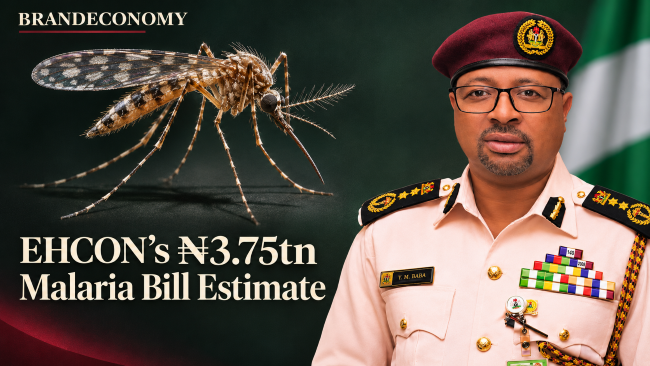 Dr Yakubu Baba, Registrar of the Environmental Health Council of Nigeria (EHCON), has put Nigeria’s annual malaria treatment bill at a possible ₦3.75 trillion. In an interview with the News Agency of Nigeria (NAN) in Abuja on Wednesday, Baba likened the recurring burden to a tax on Nigerians and called for stronger environmental health services, including effective sanitary inspection, to reduce preventable illness and ease pressure on health facilities.
For households paying for tests and medicine, the costs can extend well beyond the pharmacy. A trader may lose a day’s sales, a worker may miss a shift, and a parent may have to stop work to care for a sick child. Those losses rarely appear in a health budget, but they help explain why prevention matters even when the national treatment bill is uncertain.

The registrar’s estimate assumes three ₦5,000 malaria treatments per person each year. It is not a record of national spending, but it raises a question worth answering: how much could better prevention save Nigerian households?
What the ₦3.75 trillion figure measures
Baba used a population base of 250 million, an assumed treatment cost of ₦5,000 per episode and a frequency of two to three episodes per person annually. At two episodes, the calculation yields ₦2.5 trillion; at three, it yields ₦3.75 trillion, or ₦15,000 per person. The headline figure is the upper end of that calculation. The interview did not establish how many Nigerians had malaria, received treatment or paid the assumed price.
For scale, the World Health Organization’s World Malaria Report 2025 country profile estimated about 68.5 million malaria cases and 184,900 deaths in Nigeria in 2024. Baba’s upper scenario implies 750 million episodes, more than ten times that modelled case estimate. WHO’s figure is not a count of treatment purchases, but the difference shows why ₦3.75 trillion should not be used as an expenditure baseline, a market-size estimate or a promise of savings. A credible spending estimate would need data on confirmed and suspected illness, where people seek care, what they pay and who bears the cost.
What environmental health can change
Baba’s central argument is that mosquito-borne disease must be tackled before patients reach a clinic. Children under five are especially vulnerable to severe malaria. Environmental health teams can help identify and manage mosquito breeding sites where local evidence supports it, but general sanitation drives are not a substitute for targeted malaria control. WHO recommends insecticide-treated nets or indoor residual spraying in most at-risk settings; larval control can supplement those measures where appropriate.
Nigeria already has a basis for targeting prevention. At the October 2026 launch of the 2025 Nigeria Malaria Indicator Survey and the 2026–2030 National Malaria Strategic Plan, the Federal Government reported that malaria parasite prevalence among children aged 6–59 months fell from 22 per cent in 2021 to 15.2 per cent in 2025. That survey measure is not an annual count of infections. Its value for policy is in showing where progress has been made and where prevention still needs to reach more people.
Baba also warned that open defecation and inadequate sanitation can contribute to recurring cholera outbreaks. Rainfall can wash human waste into streams used for drinking or irrigation, exposing consumers through contaminated water or food. Urban shoppers are not insulated from conditions in the communities that supply their produce. Unlike malaria, cholera spreads through contaminated food or water, so its prevention depends on safe water, sanitation and hygiene rather than mosquito control.
Bottled water and the cost of losing trust
Baba said EHCON tested three bottled-water brands during an engagement involving WHO. He reported that E. coli was detected in all three samples, yet said one brand met the required standard. WHO’s drinking-water guidance calls for no detectable E. coli in a 100-millilitre sample. The interview did not identify the brands or batches, provide the laboratory results or explain how one sample passed. The account warrants clarification and follow-up testing; it cannot establish how widespread contamination is or be treated as a WHO finding.
For water producers and retailers, the commercial lesson is that packaging cannot prove safety. Documented source-water checks, hygienic production, batch traceability and a clear response to confirmed failures give retailers and regulators evidence they can act on. For investors and lenders, these are practical due-diligence questions: can the producer isolate an affected batch, demonstrate corrective action and sustain quality as output grows?
Fund inspections to fix hazards, not to collect fines
Baba questioned why proposals for teaching hospitals, specialist hospitals and federal medical centres receive attention at the National Assembly while frontline preventive health posts get less. He called for governments to recruit more environmental health officers and give them defined areas of responsibility. He said officers can inspect premises without a warrant and make arrests in certain circumstances under public health law. The scope of those powers depends on the applicable law and circumstances; they should not be read as blanket authority.
Baba also suggested that area-based service assignments could generate public revenue. Published fee schedules, receipts and an appeals process would help distinguish legitimate charges from arbitrary collection. But financing inspections primarily through penalties would create a perverse incentive: the agency would earn more from violations than from getting hazards fixed.
For businesses, more consistent inspections would mean clearer expectations for markets, food processors and water suppliers. For development financiers and service providers, the opportunity lies in projects with a credible payer and verifiable service levels, such as water-quality testing, maintenance of sanitation facilities and targeted vector surveillance. A large disease burden alone does not make any of those contracts bankable.
BRANDECONOMY Insight
Budget for prevention, then measure whether it works. States and local governments should start with high-risk wards, fund the teams and laboratories needed to act, and publish what happened after each intervention. Track hazards corrected and water samples that pass repeat testing. Monitor confirmed malaria cases alongside testing rates so a fall in recorded cases is not mistaken for progress when fewer people are being tested. And measure what households actually pay. The strongest case for prevention is a smaller bill that families can see, not a bigger estimate they are asked to accept.