
Digital Switchover: FG Links Broadcast Reform to Fibre, Satellite and Creative Economy

 The Federal Government says the Digital Switchover is no longer just about better television. It is now part of a wider national digital-infrastructure agenda linking broadcasting, fibre, satellites, broadband, creative content, education and economic inclusion.
 The Federal Government says the Digital Switchover is no longer just about better television. It is now part of a wider national digital-infrastructure agenda linking broadcasting, fibre, satellites, broadband, creative content, education and
 Nigeria’s long-running Digital Switchover project has entered a new phase, with the Federal Government positioning it as a strategic investment in national digital infrastructure rather than a narrow broadcasting upgrade.
At the national launch of the DSO project under the Big Picture Initiative in Abuja, the Minister of Communications, Innovation and Digital Economy, Dr Bosun Tijani, said the transition from analogue to digital terrestrial television is central to expanding access to information, education, cultural content and economic opportunity.




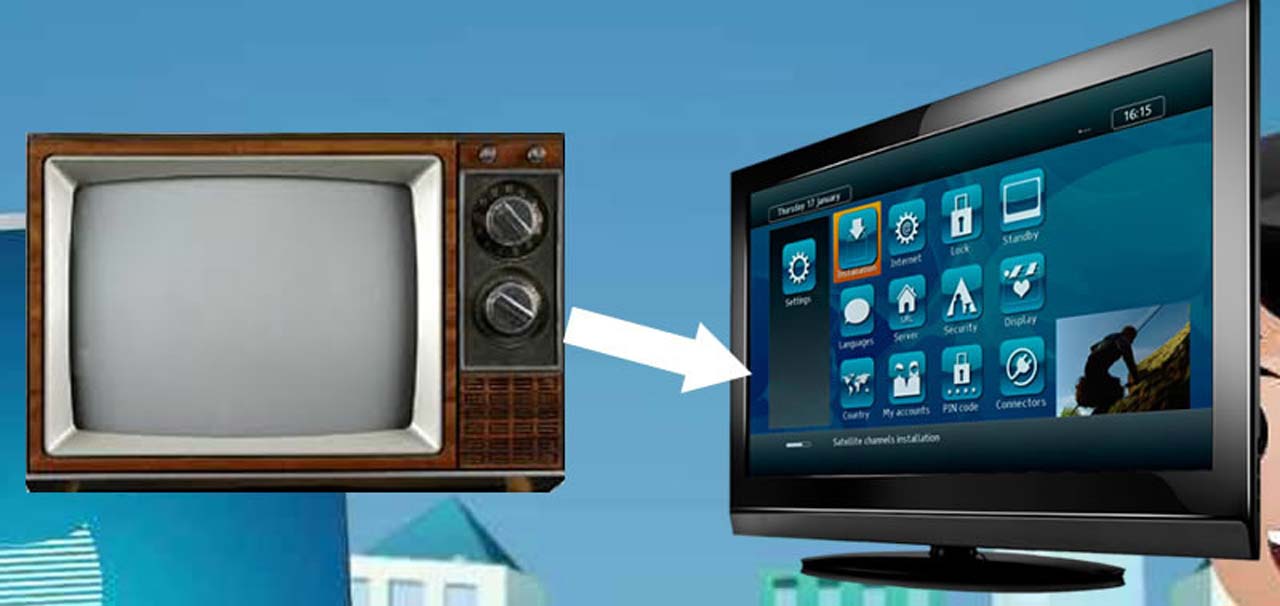
The DSO project, managed by the National Broadcasting Commission, is Nigeria’s nationwide migration from analogue television transmission to digital terrestrial broadcasting. Its promise is significant: clearer broadcast quality, more channels, better spectrum use, stronger creative-economy opportunities and the release of valuable frequencies for broadband services.
For years, however, the project has struggled with delays, funding complications, stakeholder disagreements and slow implementation. The latest launch is therefore not merely ceremonial. It is a test of whether Nigeria can finally convert policy ambition into a functional national digital asset.
Tijani said the project’s real importance lies in what it means for ordinary Nigerians, particularly those who have been excluded by geography, income or weak infrastructure.
For him, DSO means better access to information, education and cultural programming, improved service quality and a stronger guarantee that Nigerians are not cut off from opportunity simply because of where they live.
That is the wider policy argument. In a modern economy, access to information is no longer a luxury. It is part of citizenship, enterprise, education and national competitiveness.
From Broadcasting Reform to Digital Economy Strategy
The Federal Government is now presenting DSO as one visible layer of a much bigger digital-infrastructure plan.
Tijani linked the switchover to the administration’s broader ambition of building the foundations for a one trillion-dollar economy, arguing that countries become prosperous when leaders invest in infrastructure that supports growth for decades.
He disclosed that Nigeria is deploying 90,000 kilometres of fibre optic open-access infrastructure across the country. He also said President Bola Tinubu had approved investment in two new satellites to deepen communication and digital services.
This is where the DSO story becomes more strategic.
Digital broadcasting, fibre networks and satellite capacity are not isolated projects. Together, they can create an infrastructure grid for connectivity, content distribution, e-government, education, emergency communication, remote learning, digital commerce and cross-border digital services.
Tijani said the combination of fibre and new satellite investments could give Nigeria digital productivity comparable to other leading markets while enabling the country to provide services beyond its borders.
He also noted that Nigeria remains the only country in West Africa with a communications satellite, adding that the planned fibre network will reach national borders and allow neighbouring countries to benefit from Nigerian digital and broadcast services.
That statement carries regional ambition. If executed properly, Nigeria could use digital broadcasting, fibre and satellite infrastructure to strengthen its role as West Africa’s communications and content hub.
NIGCOMSAT: Geography Should Not Determine Opportunity
The Managing Director of Nigerian Communications Satellite Limited, Mrs Jane Egerton-Idehen, described the switchover as a nation-building initiative rather than a technical upgrade.
She said the project goes beyond broadcasting to more than 40 million homes or creating jobs in advertising and related sectors. In her view, it is about building a more informed, connected, inclusive and empowered society.
Egerton-Idehen said NIGCOMSAT’s mission is to ensure that geography does not determine opportunity, stressing that satellite infrastructure can bridge connectivity gaps in remote and underserved communities.
That point is crucial. Fibre is powerful, but fibre alone cannot solve Nigeria’s connectivity problem. Difficult terrain, dispersed settlements and low-income rural markets make satellite infrastructure essential for reaching communities that commercial broadband providers may not prioritise immediately.
If effectively integrated, satellite-backed digital broadcasting can support distance learning, public-health messaging, agriculture extension, disaster communication, civic education and local-language content.
In development terms, the DSO can become a platform for inclusion — not just entertainment.
Broadcast Industry Sees Long-Delayed Opportunity
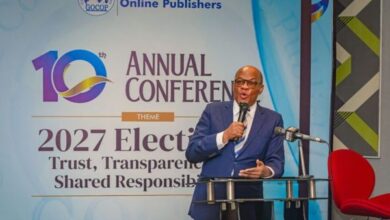
The Chairman of the Broadcasting Organisations of Nigeria, Tony Akiotu, described the launch as an important milestone after more than 15 years of waiting.
He noted that many African countries had already completed or advanced their digital transition while Nigeria’s process remained delayed. He also acknowledged that investors had already committed substantial funds over the years and needed the process to move forward.
Akiotu said digital broadcasting would help Nigeria harness its creative strengths in music, film, entertainment and local content.
That is a major commercial point. Digital broadcasting expands channel capacity. More channels create more content demand. More content demand creates opportunities for producers, advertisers, actors, technicians, animators, sports-rights owners, educators, local-language broadcasters and digital service providers.
Nigeria already has enormous creative energy through Nollywood, music, comedy, sports, faith broadcasting, news and youth culture. DSO can widen the pipe through which that creativity reaches homes.
But the industry will need a sustainable business model. Set-top boxes, content monetisation, advertising revenue, signal distribution, audience measurement, local production standards and consumer affordability will determine whether DSO becomes a commercial success or remains a policy slogan.
Market Implications
The DSO has far-reaching market implications.
For broadcasters, it can improve signal quality, expand channel offerings and open new revenue models. For advertisers, it can deepen audience segmentation and improve campaign targeting across specialised channels.
For content creators, it increases demand for documentaries, children’s programming, educational content, sports shows, drama, culture, lifestyle and local-language production.
For technology providers, the opportunity extends to set-top boxes, transmission systems, satellite services, fibre links, cloud broadcast tools, data services, monitoring platforms and customer-support systems.
For telecoms and broadband markets, the release of spectrum previously tied to analogue broadcasting can support better broadband deployment, especially as demand for data rises across homes, businesses and public institutions.
For consumers, the promise is improved television quality, more choice, stronger educational programming and potentially better access to public-interest information.
Policy Implications
The DSO is now a policy test for Nigeria’s digital economy governance.
To succeed, government must ensure coordination among the NBC, NIGCOMSAT, telecom regulators, broadcasters, signal distributors, content producers and state-level stakeholders.
The process must also address affordability. If households cannot access set-top boxes or digital receivers at reasonable cost, the switchover could widen the information gap it is meant to close.
The government must also support local manufacturing and assembly where possible. A well-designed DSO can stimulate domestic electronics assembly, installation services, repair networks and technical jobs.
Equally important is content policy. Digital broadcasting should not merely multiply channels; it should improve the quality, diversity and relevance of content available to Nigerians.
Brand Implications
For the Tinubu administration, DSO offers a chance to attach the government’s digital-economy brand to something visible in Nigerian homes.
For the Ministry of Communications, Innovation and Digital Economy, the project reinforces the message that digital infrastructure is not only about startups and software. It is also about mass access, broadcast technology, satellites, fibre and public communication.
For NBC, the project is a reputational opportunity after years of delay. Successful implementation would strengthen confidence in its ability to manage a complex industry transition.
For broadcasters, the brand challenge will be quality. More channels will not automatically mean better value. The winners will be those that deliver credible news, engaging entertainment, useful educational programming and culturally relevant content.
Investor Relevance
Investors should view the DSO as part of Nigeria’s wider digital-infrastructure market.
Opportunities may emerge in signal distribution, set-top-box supply, satellite capacity, fibre connectivity, content production, advertising technology, audience analytics, educational media, local content platforms and digital public-service communication.
However, investors will watch execution risks closely. They will want clarity on regulation, tariffs, licensing, revenue sharing, consumer adoption, device affordability and political continuity.
The opportunity is large, but the business case depends on scale, policy certainty and consumer uptake.
If Nigeria executes properly, the DSO could unlock a new layer of value across broadcasting, broadband and the creative economy.
BRANDECONOMY Insight
DSO Must Become More Than Digital Television
Nigeria’s Digital Switchover has taken too long. But if the country gets it right now, the delay can still be converted into opportunity.
The key is to stop seeing DSO as merely a broadcasting project. It is digital infrastructure. It is spectrum reform. It is creative-economy enablement. It is education access. It is local-content expansion. It is advertising-market modernisation. It is regional soft power.
The combination of digital television, fibre infrastructure and satellite capacity can help Nigeria build a more inclusive information economy.
But success will depend on execution discipline.
The set-top boxes must be affordable. The signal must be reliable. The content must be useful. The regulation must be predictable. The advertising model must be commercially viable. The rural consumer must not be left behind.
The DSO can help Nigeria tell its own stories, educate its citizens, create jobs and free up spectrum for broadband. That is powerful.
But a switch is not enough. Nigeria must build the ecosystem that makes the switch meaningful.