

Dangote Refinery IPO Allotment Reportedly Cleared: What Happens Before NGX Trading Begins

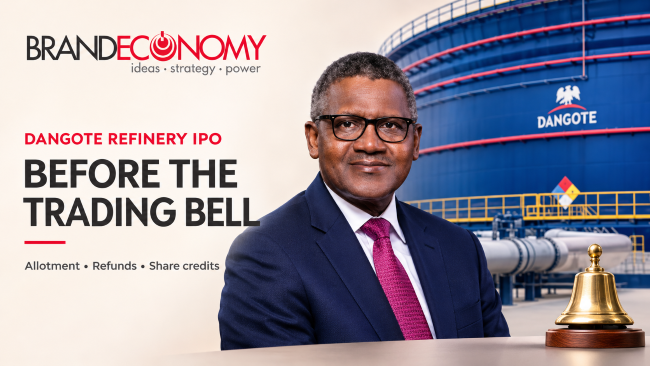 The reported clearance of Dangote Refinery IPO Allotment moves attention to allocations, refunds and share credits. For Nigeria’s capital market, the bigger test is whether mass participation becomes a dependable shareholder experience.
Dangote Petroleum Refinery and Petrochemicals FZE appears to have reached a significant stage in its journey to the Nigerian Exchange, following reports that the Securities and Exchange Commission has cleared its IPO basis of allotment.



Reuters reported on November 23, citing three people familiar with the process, that the regulator had approved the share distribution plan. BusinessDay reported the development the same day. Reuters said a Dangote Group spokesperson declined to comment and the SEC could not immediately comment.
For applicants awaiting the outcome of the offer, the report points towards the allocation and settlement process. It does not, by itself, establish that individual accounts have been credited or that trading has begun.
As of BRANDECONOMY’s review on November 24, the issuer’s accessible public offer page still described applications as being checked. A fresh public SEC or issuer notice confirming the reported allotment decision was not located in the materials reviewed, and an NGX commencement date was not independently verified.
That information gap warrants precise reporting. An issuer webpage can lag work completed behind the scenes. Its wording does not disprove the Reuters report, but investors still need formal, actionable notices.
What the reported clearance changes
The basis of allotment sets out how available shares are distributed among valid applicants. When demand exceeds supply, it determines which applications are filled and how others are reduced.
The issuer confirms that the offer closed on October 27, 2026. Its published sequence proceeds through application checks, regulatory review, publication of allotment results, refunds, share crediting and NGX trading.
This means an application receipt remains evidence that an investor applied, not confirmation of the final holding. A debit alert, a platform status message and a securities-account credit record different stages of the transaction.
The next public announcement should explain the allocation formula, the final number of shares distributed and what applicants must do if their records are incomplete. Clear explanations matter particularly where investors receive fewer shares than requested.
Offer expansion requires its own confirmation
Reports put demand at roughly three times the original offer and say the refinery sought to enlarge it by up to 30 per cent. The reported allotment clearance should not be treated as separate confirmation that the expansion was approved.
The original offer covered 4.1 billion shares at ₦525 each, equivalent to approximately ₦2.15 trillion before costs. Investors need the final approved share count and proceeds rather than assuming every proposed increase became effective.
Likewise, reported preferences for particular investor categories should remain provisional until the final allocation notice supports them. Oversubscription describes demand relative to shares offered; it does not tell an individual applicant how many shares they will receive.
The distinction also affects valuation. If additional shares are issued, analysts must update the total share count and ownership percentages before calculating per-share earnings or comparing the business with other refiners. Estimates based on the original offer can become misleading when the transaction changes.
The timetable investors should understand
The September 7 prospectus defines the Allotment Date as the date SEC approves and clears the allotment. Its timetable gives the following intervals from that date. The Central Securities Clearing System (CSCS) is the securities depository where allotted holdings are recorded.
| Milestone | Prospectus timing | Evidence to check |
| Allotment announcement | One business day after allotment | Official published notice |
| Surplus or rejected application money | Within five business days | Refund record and any applicable accrued interest or profit |
| CSCS account crediting | Within fifteen business days | Account statement showing allotted shares |
| Listing and trading | Indicatively fifteen business days | NGX admission and commencement notice |
These intervals must be read alongside official updates. The prospectus timetable is indicative, and its original October 13 offer-closing date has already been superseded by the issuer’s confirmed October 27 closure. Counting forward from a news publication date would create unwarranted certainty.
The immediate reporting priority is therefore to establish the formally confirmed approval date and obtain any revised timetable. A forecast for trading later in November remains an expectation until the exchange confirms commencement.
Digital access must lead to usable ownership
Banks, brokers and fintech platforms helped bring the offer to investors. Their service responsibility continues through the period between payment and usable ownership.
Applicants should check that their names, Bank Verification Number, Clearing House Number and bank details are consistent with the records held by their receiving channel. The Clearing House Number identifies the investor within the securities depository system; it should not be confused with an IPO application reference.
The issuer’s guidance says Coronation Registrars Limited can hold allotted shares under a Registrar Identification Number where valid CSCS details are unavailable, pending their provision. Applicants in that position should ask how to complete the transfer to their designated account.
For platform operators, a good experience means showing the amount applied for, the allocation received, any balance refundable and the next required action. Customers also need a route to a person who can resolve a mismatch. An attractive subscription interface achieves little if the investor cannot establish where the resulting shares are held.
Reconciliation is the technological challenge beneath the publicity. Receiving channels, banks, registrars and the depository must be able to connect the same investor to the same payment and allocation. Platforms should explain which institution owns each unresolved issue instead of sending customers around the transaction chain.
What listing could change for Nigeria
A publicly traded refinery would give investors a more direct way to assess a major industrial business through the equity market. Its arrival could broaden research coverage, deepen interest in energy-sector earnings and encourage other large private companies to consider public ownership.
The original offer is structured as a subscription for new shares, with net proceeds earmarked for expansion. That creates a connection between household savings and productive investment, provided capital is deployed as disclosed and progress can be assessed.
For businesses, the relevant outcomes would include contracts awarded, capacity commissioned, supplier payments and operating improvements. A successful share sale provides financing; subsequent execution determines its contribution to industrial development.
The eventual increase in NGX market capitalisation should also be interpreted carefully. Market capitalisation values the listed shares at market prices. It is different from the fresh money raised by the company, and neither number measures an equivalent immediate increase in GDP.
Market depth will depend on the shares genuinely available for trading and the willingness of holders to transact. A large company can add substantial quoted value while contributing less liquidity than its size suggests. Investors should examine the final ownership structure before assuming that size guarantees easy entry or exit.
The investment case begins with refinery economics
Subscription demand can establish enthusiasm. Sustainable shareholder returns depend on the economics of converting crude oil into products and selling them profitably.
Investors should examine the relationship between crude acquisition costs and realised product prices, plant utilisation, maintenance requirements and financing costs. Higher oil prices can increase revenue while also raising feedstock and working-capital requirements. The effect on profit depends on margins and operating performance.
Cash generation deserves particular attention. Accounting profit, cash available for expansion and cash available for dividends are different measures. A company pursuing substantial investment may retain funds even during profitable periods.
Governance will matter alongside engineering. Minority shareholders need understandable disclosures on borrowing, related-party transactions, capital allocation and the treatment of competing interests. The strength of a controlling shareholder’s name cannot substitute for scrutiny of the listed enterprise.
Strong IPO demand also offers no guarantee of an opening-day premium. Once trading starts, prices will reflect available supply, investor expectations and new information. Applicants should assess their overall exposure to the company and sector rather than treating oversubscription as an assured return.
The People’s IPO carries a brand trust obligation
Aliko Dangote’s positioning of the transaction as a “people’s IPO” creates expectations about access and fair treatment. Those expectations become especially important when first-time shareholders are waiting for money or an account update.
The issuer and its advisers should publish dated updates that distinguish completed stages from pending work. If a timetable changes, the explanation should identify what changed and what applicants should expect next. Consistent information across receiving channels reduces uncertainty and limits opportunities for impersonators.
The SEC’s September 14 investor advisory warned against unsolicited offers of guaranteed allotments or preferential allocation. The issuer also warns that the offer is closed and that investors should reject purported early-trading arrangements. Applicants should never disclose passwords or one-time passcodes to someone claiming to release an allocation.
For the Dangote brand, this period will influence how new shareholders judge the organisation. For brokers and fintech firms, it will reveal whether customer acquisition is supported by dependable service. For Nigeria’s market, it can influence whether a new investor returns for the next offer.
BRANDECONOMY Insight
Nigeria’s opportunity lies in turning public enthusiasm for a prominent industrial asset into lasting participation in productive enterprise. That requires investors to understand both their ownership rights and the commercial risks they have accepted.
The reported Dangote Refinery IPO allotment clearance is consequential because it could move the transaction towards that ownership. The quality of implementation will determine how much confidence survives the transition.
The strongest next headline should be supported by a published allocation notice, a clear refund timetable and verifiable share credits. Before NGX trading begins, the practical test is whether an applicant can establish exactly what they own, where it is held and how to resolve an error.