

 Bayelsa State has signed an agreement with US-based Fulcrum LNG Incorporated to develop a gas gathering and processing facility that would turn gas now burned at flare sites into fuel for electricity generation and industry. The cost of the Bayelsa project will be determined after a feasibility study.
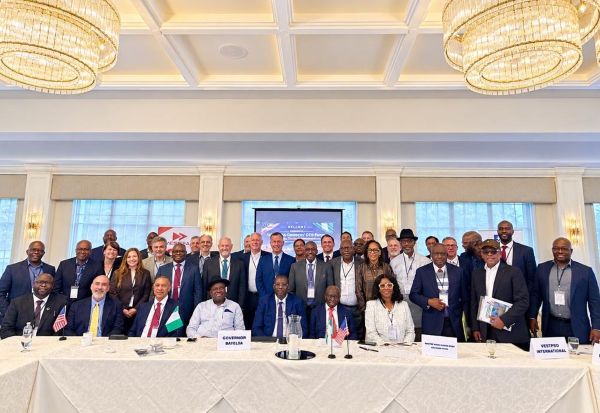
The agreement was reached at the close of the inaugural two-day US–Nigeria Governors G2B Forum on Energy, Mining and Infrastructure, held at Sweet Water Country Club in Sugar Land, Texas, according to a statement by Daniel Alabrah, Chief Press Secretary to Governor Douye Diri.




Westpaq International facilitated the forum in collaboration with the US Department of Commerce and the US Commercial Service in Houston. It brought together Diri, representatives of Nasarawa, Ogun and Ondo states, and more than 15 American energy, mining and finance firms, including Honeywell, KBR, Worley, Lummus Technology and VGas.
Bayelsa targets flared gas for power and industry
The first phase would gather and process gas from selected flare sites for Bayelsa’s independent power plant and emerging industrial clusters. The aim is to reduce pollution around producing communities while giving local industry access to a more dependable energy supply. A subsequent phase would develop a broader plan to commercialise the state’s gas reserves.
Speaking after a closed-door meeting with Diri, Fulcrum LNG Chief Executive Jesus Bronchalo said the governor’s roundtable presentation drew the company’s interest. Fulcrum plans to survey Bayelsa’s flare sites to establish where gas can be recovered economically, what processing technology is required and how the gas would reach users.
Distance and the reasons for flaring will shape that assessment. Some sites may be too remote to justify connecting them to a gathering network. The study will also examine whether flaring stems from limited capacity to transport gas or to reinject it underground, a distinction that could affect how much gas is available for sale.
Fulcrum outlines financing and commissioning timeline
Bronchalo said Fulcrum’s model is to fund the investment in full, with the government contributing capital if it elects to take an equity stake. He estimated about 12 months from a final investment decision to commissioning. The fieldwork, feasibility assessment and investment decision would precede that period.
Bronchalo cited a similar Fulcrum project in Guyana valued at about $3 billion and said the Bayelsa opportunity could ultimately be larger in scale. The Guyana figure refers to that project. A cost estimate for Bayelsa will follow the feasibility study.
Diri pitches Bayelsa as an industrial investment destination
Diri said his administration wanted work to begin promptly, with about 15 months left in office at the time of the announcement. He described pollution reduction and industrial development as the state’s priorities.
In his presentation to investors, Diri said Bayelsa held an estimated 15–20 per cent of Nigeria’s proven gas reserves and supplied about 60 per cent of the gas used by Nigeria LNG at Bonny, Rivers State. He also highlighted the state’s 203-kilometre Atlantic coastline and direct access to the Gulf of Guinea, presenting the Agge Deep Seaport as a natural deep-water location that would require no dredging.
Westpaq International Chief Executive Samuel Diminas credited Senator Ben Murray-Bruce with helping make the forum possible and said Westpaq would continue coordinating with the parties to advance the project.
BRANDECONOMY Insight
The agreement gives Bayelsa a way to use its gas resources to strengthen the case for manufacturing in the state. For businesses deciding where to locate a factory, the proposition becomes tangible when they can see how much power will be available, what it will cost and how reliably the Bayelsa gas processing deal can be delivered.
For investors, the next milestone is a feasibility study that puts numbers on recoverable gas volumes, gathering costs and demand from the power plant and industrial customers. Firm purchase commitments would help establish whether expected revenues can support the investment. For Bayelsa and Fulcrum, credibility with host communities will depend on publishing a baseline for flaring and showing how much it falls once the facility is operating.