Appeal Court Upholds Conviction of Ex-Army General Umar Mohammed, Orders Refund of Over ₦4bn

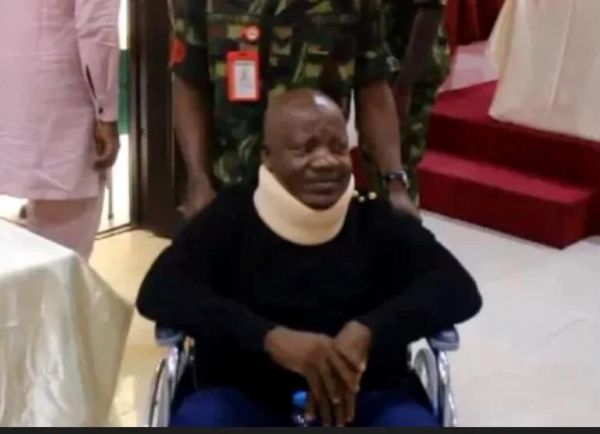
The Nigerian Court of Appeal has affirmed the conviction of a former Group Managing Director of Nigerian Army Properties Limited, Major-General Umar Mohammed, for offences involving the misappropriation of company funds.
In a Certified True Copy of its judgment, the appellate court dismissed Mohammed’s appeal challenging the jurisdiction and verdict of the Special Court Martial that tried and convicted him.




The former senior officer had earlier been convicted on October 10, 2023 by a Nigerian Army Special Court Martial for offences including stealing and criminal misappropriation of funds belonging to Nigerian Army Properties Limited.
Following the conviction, the court martial ordered the dismissal of Ex-Army General Umar Mohammed from the Nigerian Army, sentenced him to imprisonment and directed him to refund $2,099,700 and ₦1.65 billion to the company.
Appeal Court Rejects Defence
Mohammed had approached the Court of Appeal in February 2025 under Suit No. CA/ABJ/CR/383/2025, arguing that the conviction was not supported by credible evidence.
However, a three-member panel of justices — Abba Mohammed, Okon Abang and Eberechi Nyesom-Wike — ruled that the Special Court Martial acted within its legal authority.
The appellate court held that the evidence presented during the trial clearly established the offences and justified the conviction.
According to the judgment, the court martial was right to reject the former general’s defence because it contained inconsistencies that undermined its credibility.
One key contradiction cited by the court involved Mohammed’s claim that Nigerian Army Properties Limited never operated berthing services. This assertion, the court noted, conflicted with documentary records previously authored by the officer himself.
The justices concluded that these inconsistencies weakened his testimony and supported the court martial’s findings.
Conviction Affirmed on Most Counts
The Court of Appeal upheld the conviction and sentence on all major counts, except those related to allegations of forgery.
The ruling effectively confirms the earlier decision of the Special Court Martial and reinforces the penalties imposed on the former officer.
The judgment marks a significant milestone in one of the Nigerian military’s most closely watched financial misconduct cases involving a senior officer.
Additional Asset Forfeiture Ordered
Separate proceedings have also resulted in the forfeiture of assets linked to the case.
In August 2025, Justice Dehinde Dipeolu of the Federal High Court in Lagos ordered the final forfeiture of shares valued at over ₦5 billion traced to Mohammed and a businessman, Kayode Filani.
The forfeiture followed an application by the Economic and Financial Crimes Commission, which argued that the shares were acquired using proceeds of unlawful activities during Mohammed’s tenure at the army’s property company.
The court held that the EFCC had fulfilled all legal requirements for final forfeiture, including mandatory public notice procedures, and ordered that the assets be permanently forfeited to the Federal Government in favour of Nigerian Army Properties Limited.
The application was filed under Section 44(2)(b) of the 1999 Constitution and Section 17 of the Advance Fee Fraud and Other Fraud Related Offences Act 2006.
BRANDECONOMY Insight
The appellate ruling highlights the increasing role of Nigeria’s judicial and anti-corruption institutions in enforcing accountability within public institutions and state-linked enterprises.
1. Military Accountability and Corporate Governance
The Ex-Army General Umar Mohammed case underscores the importance of transparent governance in entities owned or controlled by the military, especially those operating commercial ventures such as real estate and infrastructure investments.
2. Strengthening Anti-Corruption Enforcement
The involvement of the Economic and Financial Crimes Commission and the courts demonstrates the growing collaboration between judicial and investigative institutions in tracking illicit financial flows.
3. Asset Recovery as a Policy Tool
The forfeiture of assets worth billions of naira reflects the Nigerian government’s broader strategy of using asset recovery mechanisms to deter corruption and reclaim public funds lost to financial misconduct.
If sustained, such enforcement actions could strengthen investor confidence in Nigeria’s institutional governance and reinforce the rule of law in public-sector financial management.