
AEDC, NEDC, Niger State Partner to Deploy Solar Mini-Grids for 180 Communities

 Nigeria’s decentralised power reform is gaining momentum as the Abuja Electricity Distribution Company (AEDC) and its subsidiary, the Niger Electricity Distribution Company (NEDC), move to collaborate with the Niger State Government to deploy solar mini-grids and renewable energy systems across underserved communities.
The initiative is part of a broader effort to expand electricity access through decentralised and renewable power solutions in line with the country’s evolving electricity sector reforms.




In a statement released in Abuja, NEDC’s Brand Marketing and Corporate Communications representative, Omede Odekina, said the company welcomed the efforts of the Niger State Government under Governor Mohammed Umar Bago to deploy solar-powered mini-grids to communities that have endured years of inadequate electricity supply.
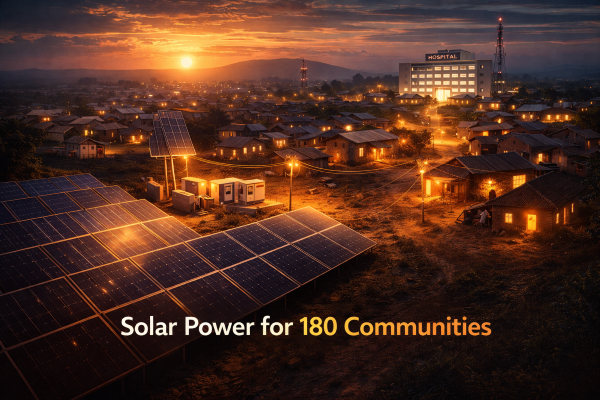
According to him, the programme is expected to deliver reliable 24-hour solar electricity to more than 180 communities that have had little or no meaningful power supply for over a decade.
The solar expansion initiative will also power critical public infrastructure, including Niger State Government House, major hospitals such as the General Hospital and IBB Specialist Hospital, the Niger State Water Board, and several Ministries, Departments and Agencies (MDAs) through independent solar energy systems.
“This represents a major step toward solving long-standing energy access challenges in the state,” Odekina said.
Complementing Nigeria’s Power Sector Reforms
Managing Director of AEDC, Chijioke Okwuokenye, said the company strongly supports Niger State’s approach to expanding electricity access through renewable energy solutions.
According to him, the initiative aligns with the decentralised electricity framework introduced under the Electricity Act 2023, which allows states to play a more active role in electricity generation, distribution and regulation.
“These efforts complement the national push for decentralised electricity supply and demonstrate how collaboration between government, regulators and licensed operators can accelerate progress for electricity consumers,” he said.
The deployment of solar mini-grids is expected to provide immediate relief to communities that are currently beyond the reach of traditional grid infrastructure.
Hybrid Power and Grid Integration Strategy
Chief Business Officer and Acting Managing Director of NEDC, Sam Odekina, said the solar mini-grid rollout aligns with the company’s commitment to inclusive electrification across Niger State.
As the licensed intrastate electricity distributor under the Niger State Electricity Regulatory Commission (NSERC), he said NEDC is prepared to work closely with the state government on hybrid energy systems that integrate solar mini-grids with conventional grid infrastructure where feasible.
He added that the company remains committed to supporting innovative projects that deliver sustainable benefits to households, businesses and institutions.
The rollout of mini-grids in communities such as Lambata in Gurara Local Government Area is already receiving support from key partners, including the Rural Electrification Agency (REA) and international development organisations.
These partnerships are designed to expand renewable energy deployment in communities where extending the national grid may not yet be economically viable.
Toward Inclusive Electrification
According to NEDC, the initiative forms part of a wider strategy to strengthen electricity access while promoting sustainable development and economic growth across the state.
The company said it would continue to explore public-private partnerships, commercially viable grid extensions and hybrid renewable-grid solutions to accelerate electrification.
Officials say the project could deliver significant benefits, including improved livelihoods, enhanced electricity reliability, stronger economic activity and greater energy resilience for communities across Niger State.
BRANDECONOMY Insight
The AEDC–Niger State solar mini-grid partnership highlights one of the most important structural shifts underway in Nigeria’s electricity sector — the transition from a highly centralised power system to a decentralised and multi-source energy model.
For decades, Nigeria’s national grid has struggled to provide reliable electricity across vast parts of the country, particularly rural and peri-urban communities.
The Electricity Act 2023 has now created a legal framework that allows states to develop independent electricity markets and deploy alternative energy solutions such as mini-grids, embedded generation and renewable systems.
Solar mini-grids represent one of the most practical solutions for closing Nigeria’s energy access gap because they can:
- Deliver power faster than traditional grid extensions
• Reduce reliance on diesel generators
• Support rural industrialisation and local businesses
• Improve electricity reliability for hospitals, schools and public services
If implemented effectively, decentralised renewable projects like those being deployed in Niger State could accelerate Nigeria’s transition toward a more resilient and diversified power system.
For investors, the emerging mini-grid ecosystem also represents a rapidly expanding opportunity within Nigeria’s renewable energy market, particularly in underserved regions where demand for reliable electricity remains high.