Food Import Duty Suspension Helped Ease Inflation Pressure, Says Customs Chief

 Nigeria’s temporary suspension of customs duties on selected imported food items has contributed to easing inflationary pressures in the economy, according to the leadership of the Nigeria Customs Service.
Speaking in Abuja, the Comptroller-General of Customs, Adewale Adeniyi, said the Federal Government’s intervention played a measurable role in stabilising prices during a period when food and energy costs were placing intense pressure on households.


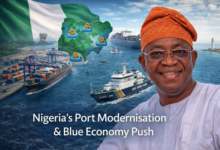

The policy, introduced under the administration of Bola Ahmed Tinubu, temporarily suspended import duties on key food commodities as part of broader economic measures aimed at controlling inflation.
Adeniyi explained that the decision was one of several coordinated economic interventions implemented during a period when rising fuel costs and food prices were driving headline inflation.
According to him, the policy delivered tangible results within months.
“Among the policies the President directed us to implement was the suspension of customs duty on imported food items for six months,” Adeniyi said.
“In the implementation of that policy, alongside other government measures, we were able to tame inflation. Two quarters after that, we began to record successive reductions in inflation rates, which helped the economy avoid slipping into recession.”
The Policy Context
Nigeria’s inflation trajectory over recent years has been strongly influenced by food prices, which typically account for a large share of household spending.
Food inflation has often been driven by a mix of structural and cyclical factors including:
- High transportation costs linked to fuel prices
- Supply chain disruptions
- Currency volatility affecting import costs
- Security challenges affecting agricultural production
The government’s duty waiver on certain imported food items was designed as a short-term supply intervention to boost market availability and moderate price increases.
Customs authorities were responsible for implementing the directive at Nigeria’s borders, ensuring that qualifying imports entered the market without the additional cost burden of customs duties.
Ramadan Food Programme Highlights Social Impact
Adeniyi made the remarks during an Iftar meal service programme organised by Al‑Habibiyah Islamic Society in Abuja.
The initiative provides meals for both fasting Muslims and non-fasting Nigerians during the holy month of Ramadan, reflecting the organisation’s broader humanitarian outreach.
The Customs chief commended volunteers and organisers involved in the programme, noting that food security initiatives remain vital in a country where millions continue to face economic hardship.
“We know how critical food is, whether in breaking the fast or starting the day,” Adeniyi said. “Projects like this provide essential support to many Nigerians.”
Calls for Expanded Support for Food Banks
Also speaking at the event, Uba Ahmadu urged Nigerians to support community food initiatives aimed at reducing hunger and strengthening social solidarity.
He described charitable food programmes as an important complement to government efforts to address poverty and food insecurity.
Similarly, the Chief Imam of Al-Habibiyah Islamic Society, Fuad Adeyemi, emphasised the central role of food charity within Islamic teachings.
According to Adeyemi, feeding the hungry is among the most valued forms of charity, particularly during Ramadan, when acts of generosity are strongly encouraged.
A Policy Tool in Nigeria’s Inflation Battle
While Nigeria’s inflation challenges remain complex, policymakers have increasingly experimented with targeted supply interventions to ease pressure on food markets.
The duty suspension policy reflects a broader recognition that inflation in Nigeria is often driven as much by supply constraints as by monetary conditions.
By lowering import costs temporarily, the government sought to increase food availability and moderate the upward pressure on prices.
Whether similar interventions will be deployed again may depend on future inflation trends, domestic food production levels and fiscal considerations.
BRANDECONOMY Insight
The suspension of customs duties on imported food highlights a growing policy shift in Nigeria’s economic management: the use of targeted trade policy to stabilise domestic prices.
Three structural lessons stand out.
First, food inflation remains Nigeria’s most politically sensitive economic indicator.
Because food accounts for a large share of household consumption, even modest price increases quickly translate into widespread economic pressure.
Second, supply-side interventions can complement monetary policy.
While interest rate adjustments influence demand, targeted import policies can address immediate supply shortages.
Third, Nigeria’s long-term solution still lies in domestic agricultural productivity.
Temporary import waivers may ease short-term inflation spikes, but sustained price stability will ultimately depend on improvements in farming productivity, logistics infrastructure and storage systems.
In that sense, policies such as duty suspensions should be viewed as stabilisation tools rather than permanent economic strategies.