Customs Pushes Automated Licence Portal to Cut Costs, Curb Fraud

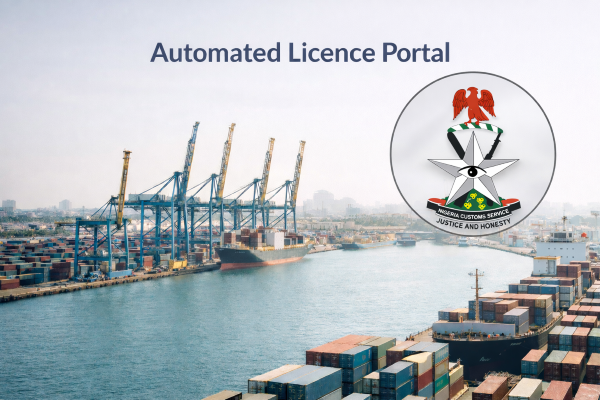 The Nigeria Customs Service (NCS) has intensified its digital reform drive, urging freight forwarders to adopt its newly automated Licence and Permits Processing portal as part of broader efforts to reduce the cost of doing business in Nigeria’s maritime sector.
Speaking at a stakeholders’ engagement in Lagos, Assistant Comptroller-General of Customs, Muhammed Babadede, said the reform responds directly to longstanding industry complaints about delays, manual paperwork and procedural uncertainty.



According to him, the Comptroller-General of Customs, Bashir Adeniyi, has approved full automation of the Service’s licence and permit processes, marking a decisive shift from manual processing to digital administration.
“For years, stakeholders dealt with paperwork, long queues and uncertainty from manual processing. Those days are coming to an end,” Babadede stated, noting that nationwide sensitisation was underway to prepare users ahead of full deployment.
The new portal will allow applications and renewals to be processed remotely via offices or mobile devices, eliminating repeated visits to Customs formations. Officials say the system is designed to improve transparency, enhance record-keeping, reduce documentation errors and standardise compliance procedures.
Deputy Comptroller-General, Tariff and Trade, CK Naigwan, represented at the event, reaffirmed management’s commitment to seamless implementation.
Similarly, Comptroller of Customs, Licence and Permit Unit, Dr. Ngozika Anozie, described the automation as aligning Nigeria’s Customs procedures with global best practices. She said the reform supports institutional efficiency and strengthens revenue assurance mechanisms.
Anozie emphasised that the portal would automatically validate genuine documents while rejecting fraudulent submissions, helping sanitise the licensing ecosystem.
Customs Area Controller, Tincan Island Command, Comptroller Frank Onyeka, urged freight forwarders to engage actively with the new system to ensure smoother operations across commands.
Stakeholders, however, raised concerns about online payment integration and potential technical disruptions. Customs officials acknowledged the concerns and pledged continued engagement to ensure stable rollout nationwide.
BRANDECONOMY Insight
The automation of licence and permit processing marks a significant inflection point in Nigeria’s trade facilitation agenda.
Three structural implications stand out:
- Trade Efficiency and Cost Compression
By eliminating physical documentation and travel requirements, Customs reduces transaction costs for freight forwarders. Lower compliance costs can improve competitiveness across Nigeria’s ports and reduce supply-chain bottlenecks. - Revenue Protection and Data Integrity
Digital systems enhance audit trails, reduce human discretion and strengthen fraud detection. In a sector historically vulnerable to document manipulation, automation improves compliance transparency and revenue collection efficiency. - Alignment with Global Customs Standards
As Nigeria seeks deeper integration into regional and global trade frameworks, digital trade facilitation becomes non-negotiable. Automated systems support World Customs Organization benchmarks and enhance investor confidence in port governance.
However, execution remains critical. System downtime, payment integration failures or cybersecurity vulnerabilities could undermine stakeholder trust.
If implemented with technical stability and policy consistency, the automated licence portal could become a cornerstone of Nigeria’s broader port modernisation and trade competitiveness strategy.