
Lagos Residents Decry Rising Noise Pollution from Generators, Bars and Worship Centres

 From worship centres and bars to generators, workshops and markets, Lagos residents say uncontrolled noise pollution has become a daily assault on health, sleep, learning and productivity.
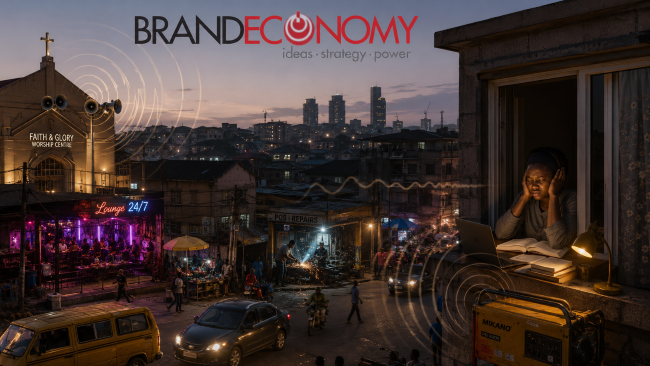 From worship centres and bars to generators, workshops and markets, Lagos residents say uncontrolled noise pollution has become a daily assault on health, sleep, learning and productivity.
Lagos residents are raising fresh concerns over the growing menace of noise pollution across the state, warning that the problem has moved beyond mere inconvenience to become a serious environmental, public-health and productivity challenge.
Residents who spoke in separate interviews complained about loud music from bars, prolonged religious activities, noisy workshops, grinding machines, generator sets, roadside disturbances and overlapping sounds from worship centres located within residential communities.



Their accounts point to a familiar urban reality: in many parts of Lagos, silence has become a luxury.
For Mrs Adewale Miracle, a home baker in Abule Egba, daily life is now shaped by a constant rotation of grinding machines, generators and neighbourhood noise.
“From morning till evening, you hear grinding machines and generator noise everywhere,” she said. “Sometimes, when there is a brief moment of silence, it feels as though your spirit has returned to your body. The noise becomes overwhelming and physically draining. By the time one source stops, another starts.”
Her experience reflects a broader environmental failure in one of Africa’s busiest cities. Lagos is a commercial powerhouse, but its density, energy deficit, informal economy and mixed-use neighbourhoods have created an acoustic crisis. Residential areas increasingly function as worship zones, workshops, mini-industrial clusters, nightlife corridors and generator-powered commercial spaces — often without adequate sound control.
In Akoka, university student Miss Chinwendu Nwoke said late-night music from bars and the prolonged running of generators had affected her ability to study, especially during examinations.
“Most nights, loud music from nearby bars continues till very late, while generators run for hours because of power outages,” she said. “It becomes difficult to concentrate while reading. Sometimes, I end up rereading the same page repeatedly because of the distractions.”
For Mr Daniel Ogunleye, a secondary school teacher in Bariga, the problem has entered the classroom. Sudden loud sounds from nearby workshops and loudspeakers, he said, interrupt teaching and reduce concentration among students.
“Teaching has become difficult. Sometimes, you forget what you were explaining because of sudden loud sounds from nearby workshops or loudspeakers,” he said. “Schools need to be in controlled environments because surrounding noise affects both teachers and students.”
In Ikotun, civil servant Mr Oladipo Oladele said frequent late-night vigils and amplified religious activities had disrupted his sleep pattern and affected his daytime productivity.
“You hardly sleep for more than a few hours before preparing for work because one church is conducting a vigil,” he said. “I slept off inside a bus yesterday and missed my stop.”
The consequences, he added, go beyond irritation. Fatigue reduces alertness, concentration and productivity at work.
At Ladipo Market, foodstuff seller Mrs Kemi Adebayo said traders endure constant noise from mechanic workshops, engine revving, metal-banging and street altercations.
“The banging of metals and continuous engine revving is unbearable,” she said. “Most times, agberos are shouting at drivers or fighting. Everybody is trying to out-shout one another.”
She said the noise often leaves traders exhausted and with headaches by the end of the day.
For vulnerable residents, the risks can be more serious. Mr Ibrahim, a retiree in Surulere, said nearby welding activities had worsened his blood pressure and hearing difficulties.
“Anytime there is loud noise around me, I feel uneasy and my heartbeat increases,” he said. “Sometimes, people have to repeat themselves before I hear clearly.”
According to him, welding machines, metal cutters and hammering dominate the day, while bars and generators take over at night.
LASEPA Warns of Health Risks
Speaking at the 11th Noiseless Lagos Summit, organised by the Lagos State Environmental Protection Agency, the agency’s General Manager, Dr Babatunde Ajayi, warned that prolonged exposure to excessive noise can damage public health.
He said scientific studies had linked persistent noise exposure to hearing impairment, stress, hypertension, sleep disorders, reduced productivity and other adverse health conditions.
Ajayi urged religious organisations, nightclub operators, workshop owners and event-centre managers to adopt sound-control measures and comply with approved environmental standards. He warned that operators who breach environmental noise regulations could face sanctions.
Also speaking at the summit, environmental consultant Mr Rotimi Soremekun said persistent exposure to loud noise had become a growing global health concern. He noted that international public-health evidence continues to show a connection between harmful noise exposure, declining productivity and health complications.
The Legal and Regulatory Question
Noise pollution is not merely a social irritation. It is a regulatory and environmental-law issue.
In a properly managed urban system, residential neighbourhoods should not be routinely overwhelmed by uncontrolled industrial, religious, entertainment or commercial noise. Workshops, bars, worship centres, event centres and factories are expected to operate within zoning, environmental and public-health limits.
The challenge in Lagos is enforcement. Laws and standards exist, but residents often complain that enforcement is inconsistent, reactive or politically sensitive — especially where religious organisations, nightlife operators or informal commercial activities are involved.
A credible noise-control framework requires more than occasional warnings. It requires mapping of hotspots, routine inspections, enforceable decibel limits, mandatory soundproofing, clear operating-hour restrictions, penalties for repeat offenders and fast complaint-response channels.
It also requires fairness. Noise regulation must not target one sector while ignoring others. A church, mosque, bar, workshop, generator-powered business or event centre can all become public nuisances if they operate without regard for surrounding residents.
Lagos needs commerce, worship, nightlife and enterprise. But it also needs sleep, health, learning and liveability.
BRANDECONOMY Insight
Lagos Noise Pollution Is Now a Productivity Problem
Lagos often measures its energy by motion, sound and commerce. But the rising noise burden now poses a serious question: can a city remain productive if its residents cannot sleep, study, teach, trade or recover in peace?
Noise pollution is one of the most underestimated costs of urban disorder. It rarely attracts the urgency of flooding, traffic, waste or air pollution, yet its damage is real. It affects mental concentration, sleep quality, cardiovascular health, workplace performance, children’s learning and quality of life.
The Lagos pollution noise crisis is also tied to deeper structural problems. Poor electricity supply fuels generator noise. Weak zoning allows workshops and bars to operate beside homes and schools. Informal commerce spills into residential areas. Religious and entertainment activities often expand without adequate soundproofing. Enforcement remains difficult because noise offenders are socially and economically embedded in communities.
The way forward is not hostility to business, religion or entertainment. It is intelligent urban management.
Lagos must build a culture of sound discipline. Worship centres should soundproof. Bars and clubs should control amplified music. Workshops should operate within approved zones and hours. Generator noise should be reduced through cleaner energy alternatives. Residents should have simple reporting channels that produce timely regulatory action.
A megacity cannot be truly liveable if silence becomes impossible.
Noise control should therefore be treated as part of Lagos’ productivity, health and investment agenda. A calmer city is not a weaker city. It is a more civilised, healthier and more competitive one.