By ’Tunde Adeparusi
The unfolding debate around the American president’s recent pronouncements on ending the “Christian genocide” in northern Nigeria has forced the world to revisit two uncomfortable questions: how far should a superpower go in confronting faith-based violence outside of its border, and what happens when a state repeatedly fails to secure its own people? This is because, for Nigeria, this is more than a diplomatic controversy; it is an indictment of governance itself, calling into question the state’s constitutional responsibility and its moral obligation. However, for America, it is a delicate dance between moral responsibility and strategic calculation. But from research perspective, this situation exposes the blurred boundaries between terrorism, organised crime, and state fragility, which is a pattern that has consistently and increasingly defined conflicts across Africa’s Sahel and savannah belt.



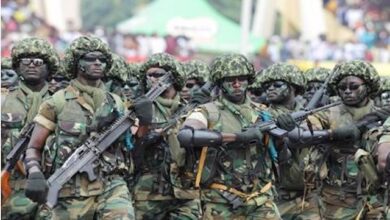
Today, the Nigerian state faces a convergence of multiplicity of crises, which can be said to have stretched beyond conventional terrorism. Taking a critical look at the spate and proliferation of violence, particularly in the country’s northwest and northeast, what we often label as “banditry,” “insurgency,” or “communal clashes,” depending on what feels most convenient, has now become a full-blown ecosystem of insecurity. Field reports and independent datasets show that between 2019 and 2023, kidnapping incidents surged by more than 150 percent, with tens of thousands killed or displaced in attacks that blur the line between jihadist ideology and economic opportunism.
Groups such as Boko Haram and the Islamic State West Africa Province (ISWAP) remain active, yet they now coexist with amorphous criminal networks that control forests, impose taxes, trade in arms, and coordinate mass abductions in many parts of northern Nigeria. Many of these actors shroud their operations in religious rhetoric while running highly profitable criminal enterprises. In other words, their violence carries symbolic weight, targeting churches, schools, and villages, which is driven by economic motives designed to extort, intimidate, and dominate the beleaguered communities where their operations are steadily expanding.
From a criminological standpoint, this hybridisation marks the evolution of banditry into a sophisticated form of organised crime. Religion, here, functions less as theology than as strategy: a means to legitimise control and dehumanise victims. While Christian communities have undeniably borne a devastating portion of the attacks, Muslim farmers, traders, and herders have also been consumed by the same violence. Hence, it can be argued that the common denominator is not faith, but vulnerability:
The American president’s call for decisive action to stop the killings has stirred debate among Nigerians at home and in the diaspora about the question of sovereignty. To many Nigerians, for instance, Washington’s tone feels paternalistic; it is an echo of the old interventionist instinct. But to others, it represents either the voice of a captured people, languishing as a result of what can be described as structural violence, or the frustration of a nation watched by a global community.
Meanwhile, sovereignty, in its truest form, is not only defined by responsibility, but also sustained by it. In other words, a government earns its legitimacy by ensuring the safety of its citizens, which, of course, is the primary purpose for which it is formed. So, when a government fails persistently, its sovereignty becomes hollow. And frantically speaking, Nigeria’s persistent inability and / or unwillingness to confront armed violence across its northern corridor has not only endangered millions but also eroded its diplomatic stature. Unfortunately, the “Giant of Africa” now stands exposed, not by foreign propaganda, but by the evidence of its own paralysis back home.
Nevertheless, the bitter truth is that America’s interest is not purely humanitarian; the United States sees Nigeria’s instability as a regional contagion, one that fuels migration, trafficking, and the spread of jihadist insurgencies through the Sahel. Within Washington’s strategic framework, the rhetoric of ‘‘protecting persecuted Christians” also serves as a moral framework for justifying action against what it perceives as a growing security vacuum in Nigeria and, by extension, West Africa.
Furthermore, in Nigeria’s northern plains, it is to be noted that religion is both the language of grievance and the theatre of manipulation. For instance, it is common knowledge that religion in Nigeria is not only useful but also an effective tool in the hands of politicians, who often exploit religious sentiment, especially during elections, to advance their political ambitions. Interestingly, is often perceived as the media’s pursuit of justice in reportage actually reflects a narrow understanding of a deeper social breakdown, where faith intersects with poverty, governance collapse, and ecological distress. Truth be told, the notion of a “Christian genocide” can be justified based on documented evidence, which seem to support this. In many cases, attacks on churches, clergy, and Christian villages are indeed real and found to be deliberate. Moreover, it is true that several northern states in Nigeria have blasphemy laws that can be used to terrorise both Christians and people of other faiths apart from Islam. Since 1999, 12 northern states have implemented Sharia-based penal codes. However, this does not deny the fact that these attacks are also intertwined with broader conflicts over land, resources, and local authority.
Therefore, the Nigerian government’s persistent denial of the religious dimension of the violence is as misleading as Washington’s oversimplification of it. The truth lies somewhere in between; the violence may not purely be religious, but it is not blind to religion. It is an opportunistic war in which faith identities mark the fault lines that crime and extremism exploit, for lack of a better expression. So, every act of terror in northern Nigeria is sustained by an economy of impunity: Ransom payments, illegal mining revenues, and cross-border trade have created a self-financing system of violence. According to field research by SBM Intelligence, Nigerians have paid more than ₦7 billion in ransoms over the past five years, creating a steady revenue stream that empowers criminal actors and discourages peace in the society.
Meanwhile, many of the affected communities have lost complete trust in state institutions and mostly rely instead on vigilante groups or negotiation networks to survive. This localised governance of insecurity reflects a deeper problem: the substitution of state authority by non-state actors. This also explains why violence persists despite heavy military interventions, because what Nigeria faces is not simply an armed threat but a collapse of moral and institutional order.
America’s renewed attention to Nigeria’s insecurity comes at a time when global powers (i.e. the US, China Russia and the EU) are re-evaluating their moral posture. Therefore, the United States cannot openly ignore widespread faith-based killings without appearing complicit, yet it cannot intervene directly without undermining Nigeria’s sovereignty. As a result, President Trump’s statements serve both as warning and leverage, signalling readiness to act while pressuring President Tinubu’s administration to reform:
It should be noted that this is not unprecedented, as the doctrine of the “Responsibility to Protect” (R2P), born from the failures of Rwanda and Srebrenica, holds that when a state is unwilling or unable to protect its people, the international community has a moral duty to step in. Hence, America’s recent pronouncement on Nigeria echoes this principle, whether or not it is acknowledged explicitly. In that sense, the U.S. position reflects less of an imperial impulse and more of a pragmatic calculation: a weak Nigeria is a global security risk. If Abuja continues to abdicate its duty, external actors, whether regional or Western, will eventually intervene, not out of charity but out of necessity or duty.
Indeed, the real solution to Nigeria’s insecurity does not lie in American diplomacy but in Nigerian accountability. The Nigerian state must rebuild its legitimacy from the ground up: reform policing, decentralise intelligence operations, regulate vigilante groups, create credible justice mechanisms for victims of violence and provide infrastructure that could facilitate conducive living standards and job creation for its energetic young population (many of whom are unemployed and frustrated). Most importantly, it must treat rural insecurity not as a political inconvenience but as a national emergency, giving it all the attention that is required.
For the United States and its allies, the path forward should be guided by precision, not passion. Sanctions, if used, must target specific perpetrators like political figures, financiers, or military officers complicit in atrocities, rather than punishing the population through blanket aid restrictions. Nonetheless, one often wonders why a nation that an abundance of resources (both human and natural l) has should remain perpetually dependent on other nations for survival. Something does not add up! However, external or foreign support, if any at all, should prioritise local early-warning systems, civil society data collection, and peacebuilding networks that give communities agency in their own protection.
In conclusion, the Nigerian crisis is, at its core, a governance problem, though disguised as a religious war. Faith has become the fault line because leadership failed to bridge it. And while America’s voice may sound intrusive, it also articulates a truth that Nigeria must face: a nation that cannot secure its people does not have the moral standing, laying claim to sovereignty! The life of every Nigerian citizen must be valued; this is the least any government can do because it is the very core of its constitutional responsibility. It is a moral code that must never be breached:
The world is watching, not with imperial curiosity but with weary frustration. It is high time the African giant eschewed a great fall, otherwise, the ripple impact of its fall will reach beyond its borders. Therefore, America’s position should neither be read as a challenge to Nigeria’s pride nor a complete disregard of its sovereignty, but as a warning from history: when a state refuses to fix its own house, the neighbours will come knocking, not to admire the architecture, but to contain the fire.
Finally, without justifying the denigrating language of Mr. Trump, threatening to ‘‘go into that now disgraced country, guns-a-blazing…’’, but the question remains, how do Nigerians think the world should see Nigeria?
Author Bio
’Tunde Adeparusi is a criminologist and academic researcher whose current work explores ‘‘victim–community relations and the dynamics of banditry in northern Nigeria’’. He writes on the intersection of security, governance, and post-colonial statehood in Africa. www.tundeadeparusi.com