The NNPC 2026 Refinery Reset: Can Nigeria’s Energy Giant Rise Again?

The New Oil Narrative: Nigeria at an Energy Crossroads
For more than three decades, Nigeria’s oil and gas story has been framed by three paradoxes: enormous reserves but chronic underperformance; vast refining capacity but near-zero local output; bold reform announcements but weak institutional delivery. By 2020, Africa’s largest oil producer had become one of its weakest refiners and one of its most vulnerable petro-economies.
Yet, in 2025, a new chapter is quietly taking shape.

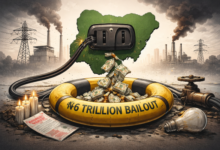


The Nigerian National Petroleum Company Limited (NNPCL) — once the poster-child of inefficiency — is attempting the most ambitious transformation in its 47-year history. A new financial reporting culture, rising production numbers, renewed partnerships with global operators, and a strategic shift away from state-style bureaucracy toward commercially-driven governance have set off fresh conversations across the global energy community complete with NNPC 2026 Refinery Reset: Is NNPC finally positioning itself to become a competitive national oil company?
Nigeria’s oil ecosystem is equally at an inflection point. Crude production, which collapsed to historic lows in 2021–2022 due to theft, pipeline vandalism, and strangled investment, is slowly recovering. The Dangote Refinery — the largest single-train refinery on the planet — has reset regional dynamics, exposing Nigeria’s own refineries as outdated relics of a bygone era. The global energy transition, now accelerating across Europe, Asia, and the Americas, is forcing African producers to rethink long-term strategies around gas monetisation, cleaner fuels, and investment migration.
Into this volatile mix, NNPCL has stepped forward with an audacious target:
By mid-2026, it will select new technical partners to co-manage and hybridise Nigeria’s state-owned refineries — a decisive shift from politically-driven rehabilitation to commercially-led transformation.
This is far more than a routine restructuring gesture. It signals a rare admission:
Nigeria can no longer run refineries alone — and the old model is dead. Is NNPC 2026 Refinery Reset the answer Nigerians have been looking for?
The Lost Decades: How Nigeria’s Refining Capability Collapsed
To understand the stakes of NNPC’s refinery reset, one must revisit the collapse.
Nigeria once boasted Africa’s most advanced refining system. Through the 1980s and early 1990s, the Port Harcourt, Warri, and Kaduna refineries collectively produced enough fuel to supply domestic markets and export modest surplus volumes. Engineers, technicians, and local refinery specialists were among the continent’s finest.
Then came the 2000s — and a devastating trilogy of decline:
1. Chronic underinvestment
Turnaround maintenance was repeatedly deferred, politicised, or poorly executed. Equipment aged. Catalytic units failed. Process plants deteriorated.
2. Governance decay
Weak transparency, political interference, and perverse incentives gutted managerial discipline. Refineries became fiscal blackholes.
3. Talent flight and capability erosion
By the 2010s, thousands of skilled refinery engineers had left the system.
The expertise gap widened. Technology moved on — Nigeria did not.
By the late 2010s, with global standards shifting to Euro-V fuels, Nigeria’s refineries were producing nothing. The country became the world’s largest importer of PMS despite being a top-10 crude producer. In 2022, NNPC publicly declared full transition into a CAMA-style limited liability company, but its refineries remained structurally uncompetitive.
Then came Dangote Refinery.
With Euro-V compliant output and an ecosystem of foreign and Nigerian specialists, the private mega-refinery instantly highlighted how far behind Nigeria’s state plants had fallen. NNPC, for the first time, acknowledged that its own refineries — even after rehabilitation — would remain two grades below international standards.
This set the stage for the NNPC 2026 Refinery Reset partnership strategy.
Inside NNPCL’s New Refinery Strategy: A Commercial, Not Political, Play
According to GCEO Bayo Ojulari, the company has accepted a tough reality:
Nigeria no longer has the global-grade capability to run its refineries competitively.
The new plan is therefore simple — but dramatic:
✓ Partner ONLY with companies that already own and operate world-class refineries
No paper consortiums. No politically-backed middlemen.
Only operators with functional assets and verifiable performance.
✓ Structure the arrangement strictly as a business partnership
Not government oversight.
Not regulatory intrusion.
But equity-driven, commercially governed collaboration.
✓ Allow private partners to lead operations
NNPCL will retain ownership but not operational leadership.
This is unprecedented in Nigeria’s public-sector history.
✓ Redesign refineries into hybrid plants
This involves integrating new configurations that can produce Euro-V compliant fuels or better.
Without hybridisation, post-rehabilitation output will remain globally uncompetitive.
✓ Announce firm completion dates only after redesign decisions
For once, NNPC is resisting political pressure to announce dates prematurely.
Internal projections indicate clearer timelines by mid-2026.
This is the most commercially pragmatic refinery strategy in decades — and arguably the only approach capable of rescuing Nigeria’s refining sector.
Production Rebound: Can Nigeria Hit 1.7m bpd — or More?
NNPCL is simultaneously betting on upstream resurgence.
The revival strategy is built around:
1. The “Production War Room” initiative
A real-time command centre that tracks bottlenecks, pipeline disruptions, security incidents, and performance of JV partners.
2. Better security coordination
Collaboration with the Nigerian Air Force, Navy, and private contractors has reduced pipeline breaches and illegal bunkering.
3. New upstream investments
Recent FIDs — including Ubeta and Bonga North — signal renewed investor confidence.
4. Improved JV financing and cash-call reforms
This has unlocked stalled projects and accelerated drilling activity.
As of early 2025, output averaged 1.725 million barrels per day, the highest in five years.
NNPCL targets:
- 1.7 million bpd by end of 2025
- 1.8 million bpd in 2026
- 2 million bpd by 2027
Though ambitious, these projections are achievable if security gains hold.
Financial Transformation: A Profit of ₦5.4 Trillion and a New Corporate Culture
For decades, NNPC operated as a loss-making, opaque monolith. In 2024, things shifted dramatically.
Key financial results:
- Revenue: ₦45.1 Trillion
- Profit After Tax: ₦5.4 Trillion
- EPS: ₦27.07
- Tax/Royalty/Dividend Remittances: ₦15.98 Trillion
This is unprecedented in NNPC history.
Equally important is the cultural shift:
- Procurement is increasingly transparent.
- Cost controls have tightened.
- Business units are profit-oriented.
- Strategic planning aligns with long-term investment cycles.
NNPCL has transitioned — in practice — into a commercially-governed entity.
Challenges Ahead: The Fault Lines No One Should Ignore
Even with new momentum, significant risks remain:
1. Legacy political interference
Government may still attempt to influence key decisions — especially around refineries.
2. Fragile security improvements
Pipeline vandalism could spike again if surveillance investments wane.
3. Global energy transition pressures
Demand for fossil fuels may shrink faster than expected.
4. Financing constraints
Mobilising $60bn by 2030 requires strong investor confidence and policy stability.
5. Refinery hybridisation complexities
Redesigning plants may uncover new structural limitations, raising costs.
NNPCL’s journey may be promising, but far from guaranteed.
BRANDECONOMY VERDICT: A New NNPC Is Emerging — But It Must Deliver
NNPCL today is more transparent, more commercially driven, and more ambitious than at any time in its history. The refinery partnership plan signals realism. The upstream revival indicates discipline. The financial results show stronger foundations. The CNG rollout and methane reduction commitments suggest strategic alignment with the future.
But Nigeria has heard big promises before.
What will define NNPCL’s legacy is execution.
Not projections. Not press briefings.
Execution.
If the company delivers on refinery partnerships by mid-2026 and hits its upstream targets through 2027, Nigeria could finally break the cycle of refinery failure and revenue volatility.
If not, the country risks another missed decade.