Tinubu Proposes Grid Asset Management Company to Fix Nigeria’s Power Transmission
FG Targets Transmission Bottlenecks in Power Sector Reform

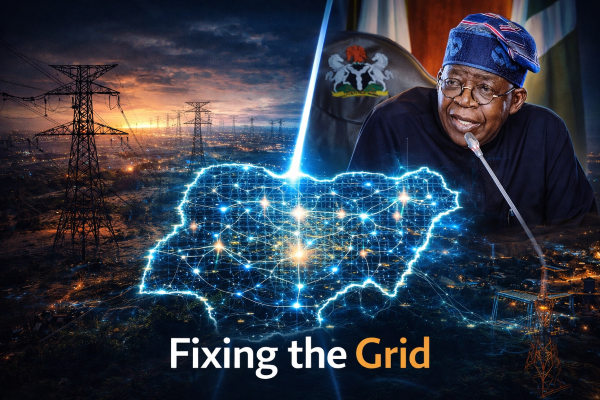 Nigeria’s Federal Government has initiated plans to establish a Grid Asset Management Company (GAMCO) as part of a broader strategy to address structural weaknesses in the country’s electricity transmission network.
The proposal was disclosed by the Minister of Information and National Orientation, Mohammed Idris, following the meeting of the Federal Executive Council presided over by Bola Ahmed Tinubu at the State House in Abuja.




According to Idris, the initiative originated from a memorandum personally presented to council by the president as part of efforts to resolve the country’s persistent electricity supply challenges.
The proposed entity is expected to strengthen the transmission segment of Nigeria’s electricity value chain, widely regarded as the weakest link in the nation’s power infrastructure.
Focus on the Transmission Gap
Nigeria’s electricity sector has operated under a tripartite structure since the 2013 power sector reforms, dividing operations into three segments:
- Generation
- Transmission
- Distribution
While generation capacity has expanded and distribution companies operate across the country, transmission infrastructure remains a critical bottleneck limiting electricity delivery.
Idris explained that the government’s latest move recognises that the transmission network is central to unlocking reliable power supply and industrial growth.
“You recall that since deregulation, the power sector has been divided into generation, transmission and distribution. The president believes that the major challenge lies in the transmission segment,” the minister said.
Inter-Ministerial Committee to Design Framework
To operationalise the initiative, the Federal Executive Council approved the creation of an inter-ministerial committee tasked with designing the regulatory, legal and investment framework for GAMCO.
The committee will include representatives from several key ministries and agencies, including:
- Ministry of Power
- Ministry of State for Gas
- Ministry of Works
- Ministry of Finance
- Ministry of Science and Technology
- The Chairman of the Nigerian Revenue Service
- The Attorney-General of the Federation
The group will examine regulatory implications, investor participation structures and the interests of existing operators within the power sector.
Where legislative adjustments are required, recommendations will be forwarded to the National Assembly for consideration.
Power Sector Reform Linked to Industrial Growth
The government says the proposed grid asset management structure is part of a wider strategy to support Nigeria’s industrialisation drive.
According to Idris, the president believes that fixing the power sector remains central to unlocking Nigeria’s economic potential.
“For us to industrialise as a country, the power sector must be fixed,” he said.
The announcement comes amid ongoing efforts to expand electricity supply capacity, improve grid stability and attract investment into Nigeria’s energy infrastructure.
Additional Pension Benefits Approved for Retirees
In a separate decision, the Federal Executive Council also approved additional exit benefit packages for retiring civil servants under the Pension Reform Act.
Under the new arrangement, eligible retirees in treasury-funded Ministries, Departments and Agencies may receive up to 100 percent of their total emoluments.
The measure is expected to improve morale within the federal civil service while ensuring better welfare outcomes for public sector retirees.
BRANDECONOMY Insight
The proposed Grid Asset Management Company (GAMCO) represents a potentially transformative step in Nigeria’s long-running struggle to stabilise electricity supply.
For decades, the country’s power sector has been constrained by weak transmission infrastructure, despite improvements in generation capacity.
Three structural issues underline the importance of the proposed reform.
1. Transmission as the Critical Bottleneck
Nigeria currently generates more electricity capacity than the grid can efficiently evacuate. Transmission constraints often force power plants to reduce output due to limited grid capacity, resulting in stranded electricity.
2. Infrastructure Investment Gap
The national transmission network requires billions of dollars in investment to expand substations, upgrade transmission lines and integrate renewable energy sources.
A specialised grid asset management company could create structured financing models for long-term infrastructure development.
3. Industrialisation and Power Reliability
Stable electricity supply is essential for manufacturing, digital infrastructure, mining and industrial growth.
Without a stronger grid backbone, Nigeria risks losing competitiveness against emerging African manufacturing hubs.
If properly structured, GAMCO could become a central pillar in Nigeria’s power sector reform architecture, enabling improved grid reliability and unlocking economic productivity across multiple industries.