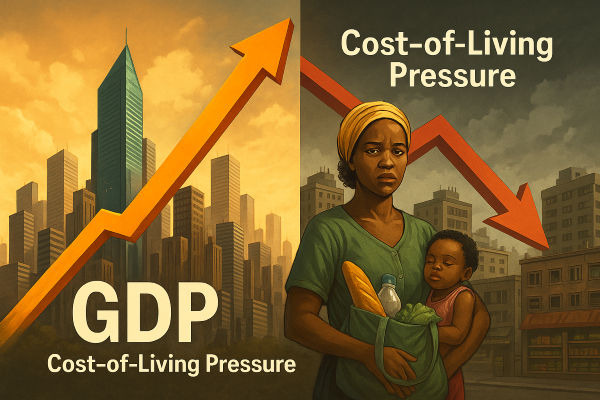
Despite Nigeria’s latest GDP report showing steady recovery momentum, the Centre for the Promotion of Private Enterprise (CPPE) has issued a strong call for targeted, people-centred interventions to ensure growth translates into genuine welfare improvements.
Nigeria’s Gross Domestic Product expanded by 3.98% in Q3, slightly lower than the 4.3% recorded in Q2, but still indicative of a positive rebound driven by macroeconomic reforms.




Dr. Muda Yusuf, Founder of CPPE and one of the country’s most respected economists, welcomed the steady economic recovery but warned that the ongoing cost-of-living crisis continues to overshadow the impact of these macroeconomic gains.
Macroeconomic Stability is Returning—But Households Feel No Relief
According to Yusuf, the Q3 performance reflects the early dividends of ongoing reforms, including:
- Gradual exchange-rate stabilisation
- Moderating inflationary pressures
- Improved fiscal balance
- Renewed investor confidence
- Clearer economic direction
These factors have helped strengthen business sentiment and stimulate activities across multiple productive sectors.
However, he stressed that economic fundamentals alone do not guarantee social well-being.
“It is imperative for policymakers to prioritise targeted interventions around cost of living to ensure GDP growth translates into real welfare improvements,” he said.
While prices of some food items and manufactured goods have begun to ease, households continue to feel the lingering effects of inflationary shocks, subsidy reforms and structural bottlenecks.
BRANDECONOMY Analysis: Growth Must Become Tangible, Not Statistical
Nigeria’s challenge today is not just about achieving growth—it is about making growth felt.
The CPPE’s position reflects a growing consensus among economists: without targeted support, macro gains may not translate into reduced poverty, improved productivity or strengthened human capital.
For an economy with structural vulnerabilities, Yusuf’s recommendations point towards a more inclusive and people-focused development strategy.
Key Policy Priorities Identified by CPPE
To consolidate Q3 gains and unlock stronger, more broad-based growth, Yusuf highlighted critical reforms and interventions:
1. Address Structural Bottlenecks
From logistics costs to regulatory inefficiencies, Nigeria’s structural weaknesses continue to heighten inflation and diminish competitiveness.
2. Ease Cost-of-Living Pressures
Household purchasing power remains depressed. Targeted relief, subsidies for critical sectors, and direct social support can stabilise livelihoods.
3. Boost Agricultural Productivity
Food inflation remains the biggest driver of hardship. Mechanisation, improved inputs, secure farmlands and supply-chain improvements are essential.
4. Strengthen Manufacturing Competitiveness
High energy costs, forex volatility and limited access to raw materials undermine Nigeria’s industrial base.
5. Expand Access to Affordable Housing
Housing shortages continue to slow productivity and widen welfare inequality.
6. Increase Social Sector Funding
Health and education remain underfunded drivers of long-term economic stability.
7. Deepen Non-Oil Export Capability
Nigeria must diversify aggressively to protect itself from oil price shocks.
8. Stabilise Oil Output and Secure Critical Infrastructure
Energy revenues remain vital; stability will support fiscal balance and investment flows.
The BRANDECONOMY Verdict: Reform Must Be People-Centric
Nigeria’s GDP numbers tell a story of recovery, but the Nigerian household tells a different story—one of rising pressure, squeezed incomes and diminishing resilience.
CPPE’s call reinforces the need for government to balance macro stabilisation with micro-level relief.
For reforms to succeed, the gains must be felt in kitchens, markets, workplaces and communities—not just in spreadsheets and quarterly reports.