Nigeria’s payments revolution is accelerating—but the country’s monetary authorities are sending a clear signal: digital-first must not become digital-only. As electronic transactions surge, the Central Bank of Nigeria is urging a deliberate balance between cash and digital channels to avoid excluding rural communities, informal traders and small businesses that still rely heavily on physical currency.
Speaking at the 2026 Committee of Heads of Bank Operations (CHBO) Conference in Lagos, the CBN Governor, Olayemi Cardoso, framed the issue as one of economic inclusion—not technological resistance.



“Cash remains king. It is critical that this is maintained,” said Olayemi Cardoso, Governor, Central Bank of Nigeria.
A Payments Ecosystem Growing—But Not Uniformly
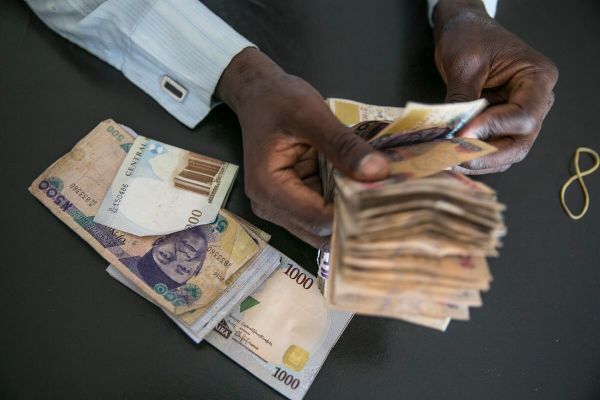
Over the past decade, Nigeria’s payments ecosystem has expanded rapidly, powered by reforms, fintech innovation and changing consumer behaviour. Electronic transactions have surged—volumes up 276% and values up 581% in five years—yet the data tells a more nuanced story. Currency in circulation still grew by 4.6% in 2025, underscoring persistent demand for cash alongside digital alternatives.
The implication is clear: while urban centres and formal businesses race ahead digitally, large segments of the economy still transact in cash, especially in informal markets and less urbanised areas.
Cash as Inclusion Infrastructure
For the CBN, cash is not a relic—it is inclusion infrastructure. Cardoso noted that digital payments, while vital for growth, cannot fully replace cash for everyday transactions where connectivity, literacy or trust barriers remain.
He emphasised the complementary role of ATMs, point-of-sale terminals, mobile wallets and contactless solutions in improving access to cash—decentralising distribution, easing bottlenecks and improving user experience.
“Electronic and digital channels decentralise and stabilise cash distribution, reduce operational bottlenecks, and enhance client experience,” Cardoso added.
Policy Fine-Tuning: Cards, ATMs and Logistics
The apex bank is also reviewing the ratio of bank-issued cards to ATMs, a technical but consequential policy lever that affects cash availability nationwide.
“Within the next few months, we hope to have clarity once engagements with stakeholders are concluded,” said Olayemi Cardoso, Governor, CBN.
Beyond issuance, the governor stressed that cash availability depends on logistics, infrastructure, incentives and coordination among financial institutions—areas where misalignment can quickly undermine public confidence.
Industry Voices: Coexistence, Not Competition
Industry leaders echoed the CBN’s call. The President of the Chartered Institute of Bankers of Nigeria, Pius Olanrewaju, said cash and digital payments must function as complementary pillars.
Despite electronic transactions exceeding 60 billion in 2025, he noted that cash remains essential for low-value transactions that sustain livelihoods in informal and rural sectors. He also commended the CBN’s expansion of agent banking and digital infrastructure to build trust and widen adoption.
Similarly, the Chairman of the Committee of Heads of Bank Operations, Abraham Aziegbe (represented by Tolulope Ogundipe), highlighted Nigeria’s continued reliance on cash, citing ₦36.34 trillion in ATM withdrawals in the first half of 2025.
The Bigger Picture: A Hybrid Monetary Future
Tracing money’s evolution—from commodities to coins, paper, cards and now digital currencies—Cardoso captured the CBN’s philosophy succinctly:
“The future of currency is not either digital or physical; it is both,” said Olayemi Cardoso, Governor, CBN.
For regulators and industry alike, the task ahead is integration: protecting cash access while deepening digital adoption, strengthening oversight, and ensuring no segment of the economy is left behind.
BRANDECONOMY Insight
Nigeria’s payments debate is not about choosing sides. It is about sequencing and inclusion. A resilient financial system must meet people where they are—leveraging digital efficiency without dismantling the cash rails that still power everyday commerce. In a country of sharp contrasts, hybridity is not a compromise; it is strategy.