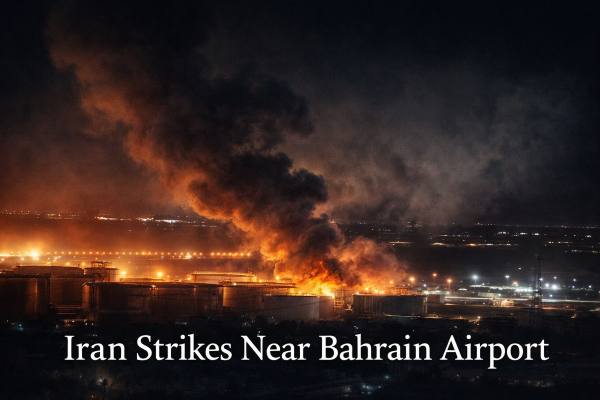
 A fresh wave of geopolitical tension is rippling through the global energy system after Iranian forces reportedly struck fuel storage tanks in Bahrain’s Muharraq governorate, the location of the island kingdom’s international airport and a strategic hub for Gulf energy and aviation infrastructure.
Authorities in Bahrain confirmed that the strike targeted fuel facilities in the area, triggering emergency sirens and prompting residents to seek shelter while security agencies assessed the damage.




Although officials did not immediately clarify whether the impacted tanks were directly connected to aviation fuel infrastructure or adjacent petroleum storage facilities, the incident highlights the growing vulnerability of energy infrastructure across the Gulf region amid escalating regional conflict dynamics.
Strategic Location Amplifies the Stakes
Muharraq is one of the most strategically sensitive locations in the Gulf energy corridor.
It hosts:
- Bahrain International Airport, a key regional aviation hub
- fuel storage and logistics infrastructure serving regional aviation and shipping
- proximity to Bahrain’s major petroleum distribution network
More significantly, Bahrain is home to the United States Fifth Fleet, the principal U.S. naval command responsible for safeguarding shipping lanes across the Persian Gulf and the Strait of Hormuz.
This strategic military presence has increasingly placed Bahrain within the crosshairs of escalating tensions involving Iran, United States, and Israel.
Expanding Regional Strike Pattern
The Bahrain incident appears to be part of a broader pattern of retaliatory attacks across the Gulf as tensions escalate between Iran and Western-aligned regional partners.
Recent security alerts across neighbouring Gulf states underscore the widening scope of the confrontation:
- In the United Arab Emirates, air defence systems were activated after a missile threat was detected.
- In Dubai, a drone fell on a residential building, triggering a fire that authorities quickly contained.
- In Saudi Arabia, defence forces intercepted and destroyed 18 drones targeting eastern provinces overnight.
These developments suggest an expanding theatre of asymmetric drone and missile operations targeting critical infrastructure and urban centres.
Energy Infrastructure Now a Strategic Target
Energy infrastructure has increasingly become a focal point of modern geopolitical conflict.
Fuel depots, storage tanks and refineries represent high-value targets capable of disrupting:
- aviation logistics
- oil supply chains
- maritime shipping
- regional energy pricing stability
Even limited damage to fuel storage facilities can disrupt supply networks and trigger short-term volatility in global oil markets.
The Gulf region remains the world’s most critical energy export corridor, with roughly one-fifth of global oil shipments transiting through nearby maritime routes.
Oil Markets Already on Edge
The escalation comes at a time when global energy markets are already grappling with supply uncertainty and rising geopolitical risk premiums.
Any sustained disruption in Gulf energy infrastructure could affect:
- crude oil shipping through the Strait of Hormuz
- aviation fuel supply chains across the Middle East
- global oil price stability
Energy analysts warn that continued attacks on strategic petroleum facilities could amplify volatility in oil futures markets, particularly if infrastructure damage begins to affect export volumes.
BRANDECONOMY Insight
The New Geopolitics of Energy Infrastructure
The Bahrain incident reflects a broader transformation in modern conflict strategy: energy infrastructure is now a frontline geopolitical asset.
Three structural trends explain the rising frequency of such attacks:
- Asymmetric Warfare
Drones and missile systems allow smaller actors to target high-value infrastructure with relatively low-cost weapons. - Energy as Strategic Leverage
Disrupting petroleum logistics can influence global markets and diplomatic negotiations. - Supply Chain Fragility
Modern energy systems depend on tightly integrated supply chains where even small disruptions can ripple across global markets.
For energy-importing countries—including many African economies—the implication is clear: geopolitical shocks in the Gulf increasingly translate directly into domestic inflation through fuel price volatility.