CBN Sets Up Payments Committee as Nigeria’s Digital Transactions Hit ₦1.07 Quadrillion

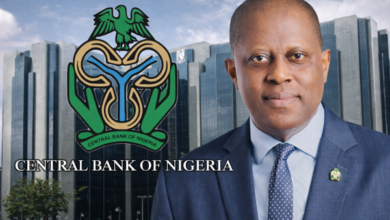
 Nigeria’s digital payments revolution is entering a new phase of institutional coordination, as the Central Bank of Nigeria (CBN) moves to consolidate one of Africa’s fastest-growing fintech ecosystems.
In a decisive regulatory shift, the apex bank has inaugurated a Payments Service Providers’ Committee—an industry-wide platform designed to deepen collaboration, streamline policy execution, and strengthen trust in the country’s rapidly expanding digital finance architecture.




The move reflects a broader recognition within policy circles: Nigeria’s payments ecosystem is no longer emerging—it is systemically critical.
A Quadrillion-Naira Economy Goes Digital
At the heart of the CBN’s intervention lies a striking statistic. In 2024 alone, Nigeria processed over 11.2 billion electronic transactions valued at more than ₦1.07 quadrillion—a historic threshold that underscores the scale and velocity of digital adoption. By early 2026, momentum has only intensified.
For regulators, the implications are profound. Payments are no longer just a financial service—they are infrastructure underpinning commerce, trade, taxation, and financial inclusion.
Speaking at the inaugural meeting in Lagos, Deputy Governor (Economic Policy), Dr Abdullahi Sani, framed the moment succinctly: Nigeria’s payments ecosystem is expanding faster than the coordination mechanisms that govern it. The newly formed committee is expected to close that gap.
From Fragmentation to Coordination
The Payments Service Providers’ Committee brings together licensed operators—banks, fintech firms, switching companies—and key regulators including the Nigerian Communications Commission (NCC), Nigeria Deposit Insurance Corporation (NDIC), and Securities and Exchange Commission (SEC).
Its mandate is clear:
- Enhance policy coordination across regulators
- Facilitate knowledge-sharing and industry alignment
- Resolve operational bottlenecks in real time
- Strengthen Nigeria’s global competitiveness in digital finance
Quarterly engagements are expected to replace the historically fragmented dialogue between regulators and operators—an issue long cited as a drag on innovation.
In effect, the CBN is institutionalising a “whole-of-ecosystem” governance model.
Fintech Strength Meets Regulatory Muscle
Nigeria’s fintech sector has been a standout performer globally, leapfrogging traditional banking constraints to deliver scalable payment solutions.
But rapid growth has come with risks—fraud, cyber vulnerabilities, and regulatory arbitrage.
Deputy Governor (Financial System Stability), Philip Ikeazor, revealed that fraud incidents declined by nearly 50% between 2024 and 2025, a result of tighter controls and enhanced monitoring systems.
The next phase will go further.
A new policy framework mandating automated anti-money laundering (AML) and fraud detection systems across banks and payment service providers is set to be rolled out—signalling a shift toward real-time, tech-driven compliance.
A New Payments Vision: What Comes Next
Beyond the committee, the CBN is preparing to unveil a three-year national payments systems vision, co-developed with fintech operators and industry stakeholders.
The strategy is expected to prioritise:
- Financial inclusion at scale
- Interoperability across platforms
- Cross-border payment integration
- Enhanced cybersecurity frameworks
- Data-driven credit and financial services expansion
For a country with over 40 million SMEs and a large informal economy, the stakes are high.
Digital payments are increasingly the gateway to credit, identity, and economic participation.
Industry Reaction: A Long-Awaited Reset
Industry leaders have broadly welcomed the initiative as overdue.
From banking infrastructure providers to fintech innovators, there is consensus that coordination—not innovation—is now the binding constraint.
The Managing Director of Nigeria Inter-Bank Settlement System (NIBSS), Premier Oiwoh, described the move as “historic,” noting that deeper collaboration between banks and fintech firms could unlock the next wave of financial services expansion.
Similarly, leaders within financial inclusion and mobile payments ecosystems emphasised the importance of balanced regulation—one that protects consumers without stifling innovation.
BRANDECONOMY INSIGHT
Nigeria’s payments boom is no longer just a fintech story—it is a macroeconomic transformation narrative.
The creation of a Payments Service Providers’ Committee signals a strategic pivot by the CBN from regulator-of-systems to orchestrator-of-ecosystems.
Three critical implications emerge:
1. Payments as Economic Infrastructure
With transaction values crossing ₦1 quadrillion, digital payments now function as a core economic artery, influencing GDP measurement, tax collection, and monetary transmission.
2. The Rise of Platform Finance
By integrating payments, lending, identity, and analytics, Nigeria is rapidly evolving toward a platform-based financial system, where fintechs and banks converge.
3. Regulation as Competitive Advantage
In a global race for fintech leadership, countries that combine innovation with predictable, coordinated regulation will dominate. Nigeria is positioning itself to lead—not follow.
However, the ultimate test will lie in execution.
If the CBN payments committee succeeds in reducing friction, aligning stakeholders, and scaling trust, Nigeria could emerge as Africa’s undisputed digital payments powerhouse—and a blueprint for emerging markets globally.