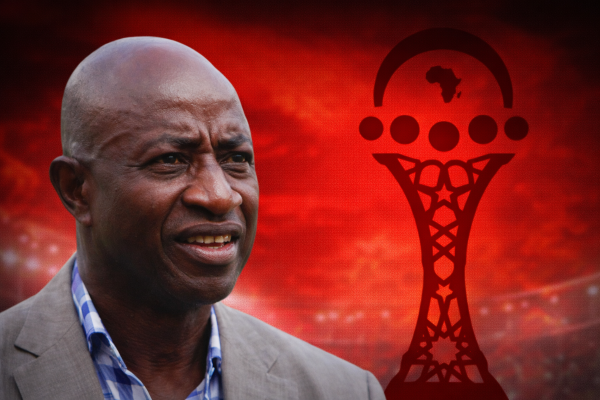
The controversy surrounding the 2025 Africa Cup of Nations (AFCON) has deepened, as Nigerian football legend Segun Odegbami delivers a scathing critique of the Confederation of African Football’s decision to strip Senegal of the title and award it to Morocco.
In a strongly worded intervention, Odegbami described the ruling by Confederation of African Football as “bizarre, condemnable and unjustifiable,” arguing that it undermines the very essence of competitive sport—results earned on the pitch.


A Final Rewritten After the Whistle
At the heart of the dispute lies an unprecedented decision:
A continental final, already played, decided, and celebrated, has been retroactively overturned on regulatory grounds.
Senegal had:
- Won the match after extra time
- Been officially crowned champions
- Celebrated globally with recognition from football authorities
Yet, weeks later, CAF’s Appeals Committee ruled that Senegal’s temporary walk-off—triggered by a late penalty decision—constituted a breach warranting forfeiture.
The result:
A 3–0 administrative victory awarded to Morocco.
For Odegbami, this is where the line was crossed.
“You cannot take away a trophy won on the pitch two months after,” he argued, questioning both the timing and the principle behind the decision.
Rules vs Reality: Where Football Meets Judgment
From a regulatory standpoint, CAF cited competition rules on match abandonment. However, Odegbami insists that context matters as much as codified law.
Key tension points include:
- Senegal players walked off briefly—but returned to complete the match
- The referee allowed play to resume, effectively validating continuation
- Morocco missed the penalty, and Senegal won in extra time
According to Odegbami:
Once a match resumes under the authority of the referee, the forfeiture condition should no longer apply.
This AFCON decision raises a deeper governance question:
Can a completed final be invalidated after official recognition of a winner?
Credibility on the Line
Odegbami warns that the decision risks long-term reputational damage for African football governance.
He describes the ruling as:
- One of the most unpopular in football history
- A decision that has triggered global outrage
- A move that could erode trust in CAF’s institutional integrity
“This judgment has shaken CAF’s credibility. The world is understandably up in arms,” he noted.
A Dangerous Precedent?
Beyond the immediate controversy, the implications are far-reaching:
- Could future finals be litigated after completion?
- Does this open the door for post-match administrative reversals?
- Will players and teams begin to question on-field authority vs boardroom decisions?
Odegbami believes this case sets a troubling precedent:
“If this were a qualifier, perhaps. But this was a final—the pinnacle of competition.”
Call for Reversal—and Reform
The former international is unequivocal in his recommendation:
- CAF should restore Senegal as champions
- Disciplinary actions, if necessary, should be separate from match results
- Regulations must be reviewed to align rules with football reality
“Punish infractions if required—but do not tamper with a concluded final,” he advised.
BRANDECONOMY Insight
AFCON Crisis: Governance, Legitimacy and the Business of Football
This controversy transcends sport—it strikes at the governance architecture of African football as a commercial and institutional ecosystem.
1. Regulatory Authority vs Sporting Integrity
Football thrives on a simple principle:
Results are decided on the pitch.
When administrative decisions override that outcome:
- Fan trust erodes
- Commercial value declines
- Institutional credibility weakens
This creates a dangerous imbalance between legal authority and sporting legitimacy.
2. Brand AFCON at Risk
The Africa Cup of Nations is not just a tournament—it is:
- A continental brand asset
- A broadcast and sponsorship platform
- A soft power instrument for African football
Controversies of this magnitude:
- Undermine sponsor confidence
- Create reputational volatility
- Reduce global competitiveness against UEFA and FIFA tournaments
3. Legalisation of Football Outcomes
The move signals a shift toward:
Post-match legal adjudication of results
This could lead to:
- Increased appeals and litigation
- Prolonged uncertainty in competitions
- A weakening of referee authority on the field
4. The CAS Factor
With Senegal heading to the Court of Arbitration for Sport (CAS), the final outcome may:
- Redefine jurisdictional limits of CAF
- Establish global precedent for match reversals
- Reshape governance standards across football bodies
Bottom Line
The AFCON 2025 controversy is no longer just about Morocco or Senegal.
It is about who ultimately controls the outcome of football—players on the pitch, or administrators in the boardroom.
The answer will shape the future of African football.