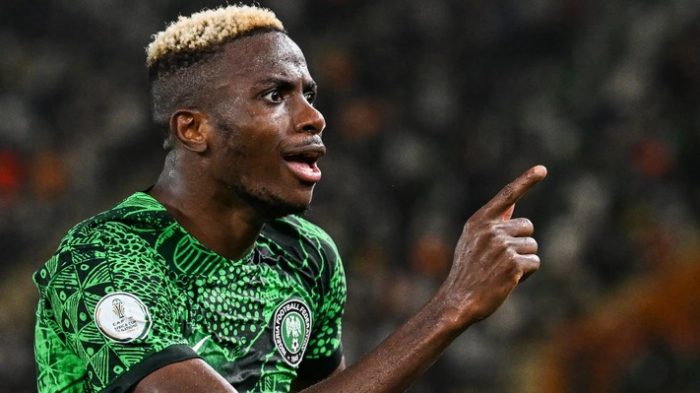
 In elite sport, greatness is often forged not only on the pitch but in moments of quiet rejection behind closed doors. For Victor Osimhen, one such moment came in 2017—long before he evolved into Africa’s most feared striker—when a seemingly minor incident exposed the subtle power dynamics within Nigeria’s senior national team.
A Door Closed, A Career Ignited
Osimhen’s recollection of his early days in the Super Eagles offers a rare, unfiltered glimpse into the psychological terrain young players must navigate. Fresh into the national setup, the then-teenage forward approached the hotel room of Kelechi Iheanacho—at the time a rising star at Manchester City—in a gesture of humility and respect.




Instead, he was met with rejection.
A senior player, sharing Iheanacho’s room, reportedly turned him away at the door. It was a moment that could easily have reinforced hierarchy and intimidation—common but often unspoken features of dressing-room culture across global football.
But Iheanacho’s intervention changed the narrative. By pulling Osimhen into the room and rebuking the dismissal, he subtly reset the tone: talent, not tenure, would define belonging.
Football’s Invisible Power Structures
Incidents like this are rarely documented, yet they are deeply embedded in football ecosystems—particularly in national teams where generational transitions are constant.
For emerging players, especially in African football systems, entry into senior squads often comes with:
- Unwritten codes of hierarchy
- Expectation of deference to senior players
- Psychological tests of resilience and humility
Osimhen’s story underscores how fragile early integration can be. A single negative encounter can shape confidence, identity, and long-term performance trajectories.
Yet, it also highlights the importance of peer leadership—a role Iheanacho inadvertently played. In high-performance environments, culture is often shaped less by formal authority and more by influential individuals within the group.
From Peripheral Prospect to Global Star
Fast forward nearly a decade, and Osimhen’s trajectory reads like a case study in elite athlete development:
- From a young prospect navigating rejection
- To a headline striker at Galatasaray
- And a defining figure in African football’s modern era
The irony is striking: the player once turned away at the door is now among the first names on any team sheet—club or country.
Moments like that 2017 incident often become internal fuel. For elite athletes, perceived slights are rarely forgotten; they are repurposed into motivation.
BRANDECONOMY Insight
Leadership, Culture, and the Business of Talent Development
Osimhen’s experience mirrors a broader organisational truth: talent alone is insufficient without inclusive culture.
Across sports, corporates, and institutions:
- Gatekeeping behaviours can suppress emerging talent
- Mentorship moments—like Iheanacho’s intervention—can unlock future stars
- Early psychological experiences often shape long-term performance outcomes
For Nigeria—and African football at large—the lesson is strategic:
Talent pipelines must be matched with progressive culture systems.
In an era where football is a multi-billion-dollar industry, player development is no longer just technical—it is emotional, social, and institutional.
Nigeria’s ability to consistently produce global stars like Osimhen will depend not only on scouting and training, but on how young players are received, integrated, and empowered.