Venezuela at a Crossroads: Why the World Must Let Its People Decide – UN Chief

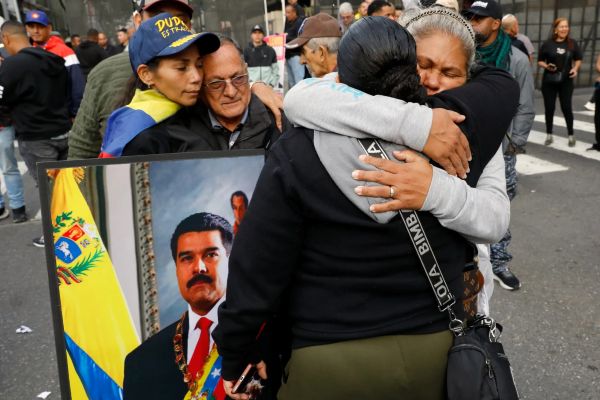
Venezuela’s deepening political crisis has once again thrust the country into the centre of a dangerous global debate—one that pits human rights against sovereignty, accountability against force, and international law against unilateral power. At the heart of the controversy is a clear and forceful message from the United Nations: the future of Venezuela must be determined by Venezuelans themselves.
UN Warning: Human Rights Cannot Be Enforced by Force
The UN High Commissioner for Human Rights has raised grave concerns over recent military actions involving Venezuela, warning that such interventions undermine the very foundations of international law and global security. According to the UN, the use of force against a sovereign state—regardless of the justification—weakens protections for all nations and sets a destabilising precedent.

International law, as enshrined in the UN Charter, strictly prohibits the threat or use of force against the territorial integrity or political independence of any state. The UN has made it clear: human rights accountability cannot be achieved through unilateral military intervention. Doing so erodes the global rules-based order and risks turning human rights into a geopolitical weapon rather than a universal principle.
Sovereignty, Self-Determination, and a Dangerous Precedent
While Venezuela’s human rights record has long been under international scrutiny, the UN insists that violations must be addressed through lawful, victim-centred, and multilateral processes—not coercive action. The concern is not merely legal but structural: once sovereignty is breached under the banner of morality, no state—large or small—is truly secure.
The UN has warned that such actions risk further militarisation inside Venezuela, heightening repression rather than alleviating it. Emergency measures now in place reportedly restrict freedom of movement, property rights, protest, and assembly—raising alarms that national security is being used to justify deeper crackdowns on civil liberties.
A Nation in Crisis Beyond Politics
Beyond the high-stakes geopolitics lies a sobering humanitarian reality. Nearly one in four Venezuelans now requires humanitarian assistance, following years of economic collapse, institutional decay, and social repression. Millions face shortages in food, healthcare, education, and basic services—needs that remain largely unmet.
Despite limited funding, humanitarian agencies continue to operate under severe constraints, reaching only a fraction of those in need. Venezuela remains among the world’s most underfunded humanitarian crises, even as the scale of suffering continues to grow.
The Regional Fallout: Displacement and Instability
Venezuela’s crisis has already produced one of the largest displacement waves in modern history, with millions seeking refuge across Latin America and the Caribbean. While there has been no immediate surge in cross-border movement linked to recent developments, the situation remains fragile. Any escalation risks compounding regional instability and straining host countries already under pressure.
International agencies continue to support displaced Venezuelans, focusing on integration, livelihoods, and long-term stability—but warn that political escalation could undo fragile gains.
The Core Message: Let Venezuelans Decide
The UN’s position is unequivocal: Venezuela’s future must be shaped by its people, with full respect for their human rights, sovereignty, and right to self-determination. Accountability for abuses is essential—but it must come through international law, independent investigations, and inclusive political processes, not force.
In a world already grappling with fractured geopolitics, Venezuela has become a test case for whether global powers will uphold the rules they helped create—or bend them when inconvenient.