The Strategic Earthquake After the US–Israel Strikes on Iran
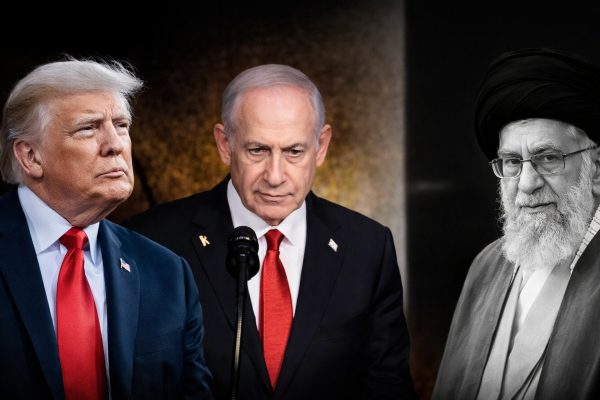
The reported joint U.S.–Israel strikes that killed Iran’s Supreme Leader, Ayatollah Ali Khamenei, mark one of the most consequential escalations in Middle Eastern geopolitics in decades. Whether viewed as a decisive act of deterrence, a high-risk gamble, or a destabilising rupture of international norms, the event represents a turning point whose implications extend far beyond Tehran, Washington, and Tel Aviv.
This is not merely a military episode. It is a geopolitical inflection point.



A Leadership Decapitation Strategy
Targeting the apex of Iran’s political–religious hierarchy signals a shift from containment to confrontation. Ayatollah Khamenei was not simply a head of state; he was the ideological anchor of the Islamic Republic, the ultimate arbiter of military doctrine, and the overseer of Iran’s regional proxy architecture.
The recent strikes that reportedly killed Iran’s Supreme Leader and senior military figures — including the defence minister and the Islamic Revolutionary Guard Corps (IRGC) chief — represent a tectonic shift in Middle East geopolitics. These attacks, jointly attributed to U.S. and Israeli operations, have triggered retaliatory actions across multiple fronts. Tehran’s moves to form an interim leadership council reflect an attempt to preserve institutional continuity, but they also underscore a volatile power transition in a state steeped in revolutionary ideology and regional proxy networks.
This high-stakes confrontation is not a symmetrical military exchange; it is a political contest involving identity, deterrence, regional influence and alliance politics. With repeated cycles of retaliation, the conflict risks a broader security contagion, affecting energy corridors, shipping routes, and diplomatic alignments — all of which carry economic consequences.
By eliminating him alongside senior military commanders, the operation appears designed to:
- Disrupt command-and-control continuity
- Weaken the IRGC’s regional network
- Trigger internal recalibration within Iran’s political elite
- Reset deterrence calculations in the region
However, history suggests that decapitation strategies often produce short-term tactical gains but long-term strategic unpredictability.
The Escalation Trap
Iran’s retaliatory posture — including reported strikes on U.S. bases and Israeli positions — illustrates the structural danger: once escalation crosses certain thresholds, the logic of deterrence gives way to the logic of compellence and survival.
Key risk factors include:
- Expanded missile exchanges
- Proxy activation across Lebanon, Iraq, Syria, and Yemen
- Maritime disruption in energy corridors
- Cyber operations against financial and energy infrastructure
Each layer of retaliation increases the probability of miscalculation.
Iran Leadership Transition and Internal Stability
Iran’s constitutional framework provides for interim governance by senior officials pending selection of a new Supreme Leader. Yet formal succession does not automatically guarantee political stability.
Power in Iran is distributed across:
- The clerical establishment
- The IRGC
- Political reformists and conservatives
- Popular sentiment shaped by economic hardship
The coming weeks will test whether the system consolidates around a successor or fractures under competing visions of Iran’s future direction.
The Global Energy and Market Implications
Iran sits near critical energy transit routes. Even without direct infrastructure damage, geopolitical risk premiums can lift crude prices and increase shipping insurance costs.
Global markets respond quickly to such shocks:
- Oil price volatility
- Safe-haven capital flows into the U.S. dollar
- Emerging market FX pressure
- Increased freight and insurance premiums
The real economic story may not be the bombs themselves, but the cascading price signals that follow.
Diplomatic Divisions at the UN
The United Nations Security Council’s split response underscores a fractured global order. Western powers have largely framed the strikes within a deterrence narrative, while Russia and China have criticised them as violations of sovereignty.
Such divisions complicate collective crisis management and reduce the probability of coordinated de-escalation frameworks.
What Happens Next?
Three plausible trajectories emerge:
- Controlled Containment – Retaliations stabilise under back-channel diplomacy.
- Prolonged Proxy War – Regional militias escalate, but direct superpower confrontation is avoided.
- Broader Regional Conflict – Maritime disruptions, energy shocks, and sustained missile exchanges widen the theatre.
Each scenario carries economic, security, and diplomatic consequences.
The Larger Question
The killing of a sitting Supreme Leader by foreign powers is rare in modern statecraft. Beyond the immediate military calculus lies a deeper question: does this event accelerate regime transformation in Iran, or does it entrench hardline consolidation?
History shows that external shocks sometimes empower nationalist unity rather than opposition movements. It also shows that power vacuums can produce unpredictable internal shifts.
What is clear is this: the Middle East has entered a new strategic chapter. The balance between deterrence and destabilisation now rests on how regional actors, global powers, and internal Iranian institutions manage the days and weeks ahead.
In geopolitics, decisive action rarely ends a story. More often, it begins a new one.
A Middle East Shockwave With Global Ripples
The dramatic escalation in Iran and the Middle East — featuring coordinated strikes by the United States and Israel on Iranian leadership targets, reported retaliatory attacks by Tehran, and leadership uncertainty in Iran — is more than a regional conflict. It is a global destabilisation event with immediate implications for markets, energy pricing, foreign exchange regimes, and national security postures far beyond West Asia.
For Nigeria, Africa’s largest oil exporter and a nation already navigating inflationary pressures and foreign exchange volatility, this conflict strikes at several strategic pressure points simultaneously: energy markets, import costs, risk sentiment, and security risk assessments. Understanding these linkages is critical for business leaders, policymakers, and investors as they assess risk and opportunity in an increasingly interconnected global order.
How is Nigeria Impacted?
Core Transmission Channels to Nigeria’s Economy
1) Energy Price Signals and Nigeria’s Fiscal Position
Oil remains Nigeria’s primary export revenue source. Conflict in the Middle East typically introduces a “risk premium” into oil price expectations even before any physical supply disruption occurs. Higher crude and refined product prices can raise Nigeria’s export receipts and FX inflows, potentially alleviating balance-of-payments pressures.
However, capturing that upside requires sustained production performance and export stability — conditions that have often eluded Nigeria due to infrastructure challenges, theft, and operational disruptions. A price spike without matching output gains creates illusory revenue improvements while stoking import cost inflation.
Moreover, higher energy costs internationally also translate into higher landing costs for refined products and industrial inputs that Nigeria imports, potentially neutralising the benefits of higher crude export revenues.
2) Shipping and Logistics: The Inflation Multiplier
Shipping risk is the quiet inflation engine in global supply chains. Even without direct disruptions to key maritime corridors, tensions elevate:
- War-risk insurance premiums
- Freight rate inflation
- Route diversions and lead-time extensions
Nigeria’s supply chains — especially for pharmaceuticals, industrial machinery, refined products, and food inputs — are sensitive to such cost increases. These cost pass-through effects accelerate imported inflation well before any impact on domestic monetary aggregates is felt.
3) Foreign Exchange Vulnerabilities
Heightened geopolitical risk typically strengthens the U.S. dollar and dampens appetite for emerging market assets. For Nigeria — which has been managing persistent FX market stress — these dynamics can tighten FX liquidity, widen spreads, and amplify expectations of further naira depreciation.
Even if higher oil revenues arrive, the timing mismatch between inflows and FX market reactions can result in short-term FX scarcity, compelling importers to pay up in secondary markets and exert upward pressure on prices.
4) Domestic Energy and Consumer Price Pressures
A global uptick in energy prices, particularly refined products, can rapidly manifest as higher pump prices, increased transportation costs and elevated food prices. These second-round effects strain household budgets and increase pressure on wage demands — a political economy challenge for any government.
Combined with FX pressures, these price dynamics can trigger pockets of socio-economic discontent, particularly in urban centres where cost-of-living inflation is most visible.
5) Security and Cyber Risk Spillovers
While Nigeria is not a party to the Middle East conflict, opportunistic security threats can broaden the risk perimeter. Rising geopolitical tension often facilitates:
- Cybersecurity threats against critical infrastructure
- Disinformation campaigns targeting financial and political stability
- Heightened extremist recruitment narratives
- Diaspora safety concerns in conflict zones
These risks require heightened vigilance across telecommunications, financial systems, and critical infrastructure sectors.
Implications Across Sectors
Business and Investors
- Reassess supply chain exposure and logistics costs
- Strengthen FX risk hedging strategies
- Prepare for commodity price volatility
Policymakers
- Prioritise FX liquidity and inflation containment
- Enhance strategic petroleum reserves and logistics resilience
- Synchronise fiscal and monetary policy responses
Society
- Elevated awareness of rationed energy pricing impacts
- Monitor second-round inflation effects on food and transport
Forward Outlook: Three Strategic Scenarios
1️⃣ Controlled Escalation
Short-lived flare-ups with restrained cost impulses.
Outcome: Moderate oil price uplift, manageable inflation, FX normalisation.
2️⃣ Prolonged Volatility
Sustained geopolitical tension with expanded risk premiums.
Outcome: Managed recession risks, elevated shipping and insurance costs, FX pressure.
3️⃣ Regional Spillover
Expanded conflict with shipping disruptions.
Outcome: Global risk-off, import constraints, deep inflationary triggers, capital flight.
Nigeria’s resilience will hinge on the duration and depth of volatility, the capacity to capture hydrocarbons upsides, and policy coordination that buffers against imported inflation.
BRANDECONOMY Insight
Geopolitical disruptions affect Nigeria through economic transmission channels, not merely headline contagion risk. The high-stakes standoff in West Asia illustrates how security dynamics influence markets, national risk assessments, and economic policy calculus — even thousands of miles away in Iran and the Middle East.
For Nigeria’s economy, the key imperatives are clear:
- Extract maximum value from commodity price cycles
- Mitigate second-round inflationary pressures
- Prioritise FX stability and liquidity
- Strengthen supply-chain resilience
- Anticipate broader security risk vectors
In a world where geopolitical shocks propagate swiftly through interconnected markets, preparedness trumps reaction.