Unilever Nigeria Profit Jumps to ₦32bn as FMCG Giant Leverages Brand Power and Cost Discipline

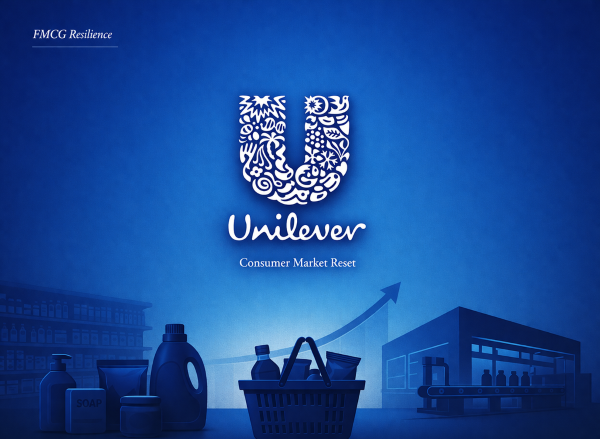 In an economy still recalibrating under inflationary pressure, currency volatility, and shifting consumer behaviour, Unilever Nigeria’s 2025 performance offers a powerful counter-narrative: that disciplined execution, brand focus, and operational agility can unlock growth even in constrained environments.
The company’s sharp jump in profitability—from ₦15 billion to ₦32 billion—signals more than corporate success. It reflects a deeper reconfiguration of Nigeria’s fast-moving consumer goods (FMCG) landscape, where only the most adaptive players are beginning to pull ahead.


Contextual Background: FMCG in a High-Cost Economy
Nigeria’s consumer goods sector has, in recent years, faced a triple shock:
- Rising input costs driven by currency depreciation
- Weakened consumer purchasing power amid inflation
- Supply chain disruptions and energy constraints
For many operators, these pressures translated into margin compression and volume decline. Yet, Unilever Nigeria’s latest numbers suggest that selective portfolio optimisation and pricing discipline are beginning to restore profitability.
Unilever Nigeria reported:
- Turnover: ₦214 billion (up 43% from ₦150 billion)
- Gross Profit: ₦90 billion (up 62%)
- Profit After Tax: ₦32 billion (more than double year-on-year)
This is not merely growth—it is margin recovery at scale.
Core Analysis: The Anatomy of a Turnaround
At the heart of Unilever Nigeria’s performance lies a strategic pivot toward “power brands”—a model increasingly favoured by global FMCG giants.
1. Portfolio Concentration
Managing Director Mr. Tobi Adeniyi (MD, Unilever Nigeria Plc) attributes the performance to a sharper focus:
“Our strong full-year performance reflects a business that is sharper, faster, and built to win… This momentum stems from focusing our resources on our power brands.”
This indicates a deliberate shift away from low-margin or underperforming segments toward high-velocity, high-recognition product lines for Unilever Nigeria.
2. Operational Discipline
The company’s emphasis on clarity, accountability, and speed suggests internal restructuring aimed at reducing inefficiencies—a critical lever in inflationary markets.
“We have embedded clarity, accountability, and speed at the heart of our processes… We are committed to a culture of discipline that improves our cost structures,” Adeniyi added.
3. Consumer-Centric Innovation
Despite economic strain, demand for essential household goods remains resilient. The key differentiator is affordability meets brand trust—a balance Unilever appears to be recalibrating effectively.
4. Structural Tailwinds
Nigeria’s large population and urbanisation trends continue to provide long-term demand support for FMCG players, especially those with strong distribution networks.
Implications: Markets, Policy, and Competitive Dynamics
For Investors
Unilever Nigeria’s results reinforce a broader thesis:
➡️ Nigeria’s consumer sector is not broken—it is stratifying.
Well-capitalised firms with strong brands and operational discipline will capture disproportionate value.
For Competitors
The message is clear:
➡️ Scale alone is no longer sufficient—efficiency and brand equity now define survival.
For Policymakers
The performance underscores the importance of:
- FX stability
- Energy cost reduction
- Infrastructure support
These are critical to sustaining industrial profitability across sectors.
For Consumers
While companies improve margins, the tension remains:
➡️ Can profitability coexist with affordability in a fragile consumption environment?
Forward Outlook: Between Momentum and Fragility
Unilever Nigeria’s trajectory suggests cautious optimism, but sustainability will depend on three key variables:
- Inflation trajectory and consumer income recovery
- Exchange rate stability and input cost moderation
- Ability to sustain innovation without pricing out consumers
If these align, Nigeria’s FMCG sector could enter a new cycle of profitable growth—led by players who have already restructured ahead of the curve.
BRANDECONOMY Insight
Unilever Nigeria’s performance is not an isolated success—it is an early signal of market re-ordering.
What we are witnessing is the emergence of a “survival-of-the-smartest” economy, where:
- Operational efficiency replaces expansion as the primary growth lever
- Brand strength becomes a hedge against inflation
- Strategic focus outperforms diversification
For Nigeria, this has broader implications:
➡️ The future of industrial growth will not be driven by size, but by precision, discipline, and adaptability.