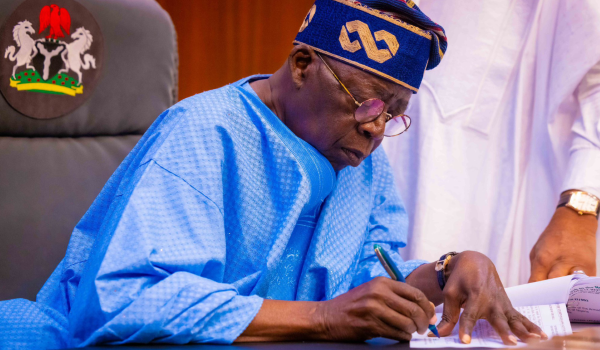
Nigeria is gearing up for a major shift in its fiscal direction as President Bola Ahmed Tinubu has approved the creation of the National Tax Policy Implementation Committee (NTPIC)—a high-powered team that will drive the structured rollout of the administration’s ambitious, technology-driven tax reform agenda.
The committee will be chaired by renowned tax expert Joseph Tegbe, a seasoned professional with more than 35 years’ experience, including his tenure as Senior Partner and Head of Advisory at KPMG Africa. His appointment signals the administration’s intention to anchor implementation on technical expertise, global best practice, and stakeholder confidence.




Supervising the committee’s activities is the Minister of Finance and Coordinating Minister of the Economy, Wale Edun, who will provide policy oversight as Nigeria undergoes one of the most critical fiscal resets in its modern history.
A Reform Agenda Anchored on Transparency, Technology & National Economic Goals
The National Tax Policy Implementation Committee is not just another bureaucratic body—it represents the operational engine designed to translate Nigeria’s new tax laws into real-world results.
According to the Presidency, the committee will be responsible for:
- Nationwide stakeholder consultations,
- Public awareness campaigns,
- Agency alignment and inter-agency coordination,
- Harmonisation of revenue frameworks,
- Unified reporting across all levels of government,
- Ensuring smooth transition into new tax laws,
- Driving technology-enabled compliance.
The NTPIC brings together experts across tax administration, finance, law, private sector, and civil society—reflecting a deliberate multi-stakeholder approach to reform.
Tinubu’s Vision: A Fair, Transparent & Digitally Driven Tax Ecosystem
President Tinubu emphasized that the new Tax Acts reflect the administration’s commitment to:
- Building a fairer tax system,
- Increasing transparency,
- Deploying technology-first frameworks,
- Protecting both citizens and businesses,
- Driving inclusive economic growth,
- Strengthening public finance management,
- Deepening accountability across the fiscal chain.
In his statement, he maintained that Nigeria must shift from fragmented tax regimes toward coherent, predictable, and investment-friendly fiscal structures—a prerequisite for attracting long-term domestic and foreign investment.
Meet the Leadership Behind the Reform Implementation
Joseph Tegbe — Chairman, NTPIC
- Fellow, ICAN & CITN
- Former Senior Partner & Head of Advisory, KPMG Africa
- 35+ years of expertise across tax, consulting, and public sector reform
Tegbe expressed readiness to work closely with all stakeholders, adding that the committee’s success will depend on public trust, policy clarity, and structured execution.
Mrs Sanyade Okoli — Secretary
Special Adviser to the President on Finance & Economy; brings deep experience in corporate finance, investment strategy, and policy design.
Additional Members
- Ismaeel Ahmed
- Rukaiya El-Rufai
…and other sector experts.
This diverse composition offers Nigeria a rare opportunity: a technically experienced, politically-backed, cross-sectoral committee capable of delivering real change.
Why This Committee Matters Now
Nigeria sits at a fiscal crossroads. With rising debt service obligations, limited revenue inflows, fragmented tax administration, and revenue leakages, the need for a coherent and modernized tax system has become urgent.
The NTPIC aims to:
- Boost national revenue mobilisation,
- Reduce leakages,
- Enhance accountability,
- Improve ease of tax compliance,
- Support national development goals,
- Strengthen fiscal sustainability,
- Reset Nigeria’s fiscal framework for long-term growth.
According to Minister Edun, the committee is a decisive step toward creating a tax ecosystem that truly supports Nigeria’s economic expansion goals under the Renewed Hope Agenda.
BRANDECONOMY INSIGHT
The establishment of the National Tax Policy Implementation Committee marks one of the most significant fiscal governance decisions of the Tinubu administration. From our editorial and industry analysis, several strategic implications stand out:
1. Nigeria Is Entering an Implementation Era
Major tax reforms without an implementation engine risk becoming symbolic. The NTPIC bridges that gap—transforming policy into measurable outcomes.
2. Technology Will Drive Compliance
Expect digitisation across tax filing, payments, reporting, audit trails, and inter-agency data integration. A unified national tax identity may also emerge.
3. Investors Will Be Watching
Nigeria’s ability to deliver predictable tax administration is directly linked to investor confidence. This committee enhances Nigeria’s credibility.
4. Revenue Expansion Will Anchor Fiscal Stability
With crude oil still unreliable and debt levels high, Nigeria must expand non-oil revenue. Effective implementation is the difference between fiscal vulnerability and fiscal sustainability.
5. Stakeholder Engagement Will Make or Break This Reform
Nigeria’s tax culture is fragile. Widespread consultation and public education will determine whether businesses and individuals embrace or resist the new regime.
In essence:
This committee is where Nigeria’s fiscal reform will succeed—or fail. The stakes are high, and the opportunities even higher.