Tincan Island Customs Breaks Records With ₦1.57trn Revenue Haul in 2025

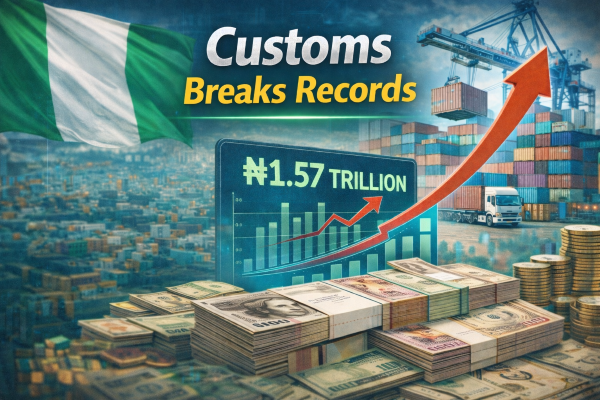
Nigeria’s maritime revenue engine hit a historic high in 2025 as the Nigeria Customs Service, Tincan Island Port Command, closed the year with an unprecedented ₦1.57 trillion in collections—surpassing its ₦1.52 trillion target and reinforcing the port’s status as a cornerstone of Nigeria’s blue economy.
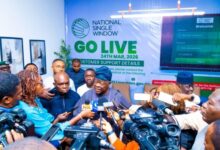
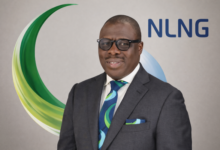
The milestone was disclosed by the Customs Area Controller, Frank Onyeka, during a media briefing in Lagos, where he confirmed that the command exceeded its benchmark by ₦51.8 billion, with collections continuing through December 31.


Discipline, Not Luck
Onyeka described the outcome as a product of deliberate institutional reform, not chance. The command’s performance, he said, flowed from procedural discipline, professional enforcement, and policy clarity—a combination that tightened compliance while accelerating cargo flow.
“Our revenue target was ₦1.524 trillion. We exceeded it through enhanced validation, delayed examination, and strict adherence to procedures,” Onyeka said.
Crucially, the command removed multiple and unnecessary alerts, a long-standing bottleneck that previously slowed clearance, bred inconsistencies, and encouraged abuse. Streamlining internal checks, he noted, improved efficiency without compromising control.
Revenue and Trade Facilitation—Two Sides of the Same Coin
From a blue economy lens, the Tincan story underscores a vital truth: predictable processes improve compliance. Onyeka stressed that revenue growth and trade facilitation are complementary outcomes when systems are transparent and rules are consistently applied.
Sustained engagement with importers, licensed customs agents, terminal operators, and shipping companies helped resolve friction points, build trust, and normalize compliance—reducing disputes and accelerating throughput at one of West Africa’s busiest ports.
Enforcement Remains Firm
Record revenue did not dilute enforcement. Onyeka confirmed continued intelligence-led seizures of improperly declared and prohibited items, emphasizing that outperformance is not a license to relax standards.
“The command remains fully mobilised to ensure every kobo due to the Federal Government is assessed, collected, and accounted for,” he said.
This dual-track approach—facilitation with firmness—is increasingly seen as global best practice for modern customs administrations.
Automation as an Accelerator
A significant enabler was the B’Odogwu Unified Customs Management System. Onyeka acknowledged early teething issues but said targeted stakeholder sensitisation and collaboration resolved them, unlocking the system’s efficiency gains.
Feedback after he assumed office in December 2024 revealed deep-rooted challenges—particularly multiple alerts and enforcement inconsistencies. Fixing internal procedures at Tincan Island Customs first, he said, delivered immediate dividends in performance.
Leadership and Continuity
Onyeka credited the Comptroller-General, Bashir Adeniyi, for strategic direction anchored on professionalism, automation, accountability, and transparency. He also commended his predecessor, Dera Ntadi, command officers, and stakeholders for collaboration that sustained momentum through the transition.
What Comes Next
Looking ahead, Onyeka pledged to block leakages, strengthen enforcement, support legitimate trade, and deepen contributions to Nigeria’s fiscal objectives. Central to the roadmap is sustaining reforms and the one-stop-shop clearance model, designed to further compress dwell time and enhance port competitiveness.
BRANDECONOMY Insight
Tincan Island’s ₦1.57 trillion performance is more than a headline—it is proof of concept. When automation, policy clarity, and stakeholder trust converge, customs administrations can collect more while obstructing less.
For Nigeria’s blue economy, the signal is powerful: ports that marry predictability with probity can unlock revenue, decongest trade corridors, and elevate national competitiveness—without sacrificing security.