TAJBank Secures A1 Credit Rating, Strengthening Position in Nigeria’s Non-Interest Banking Sector

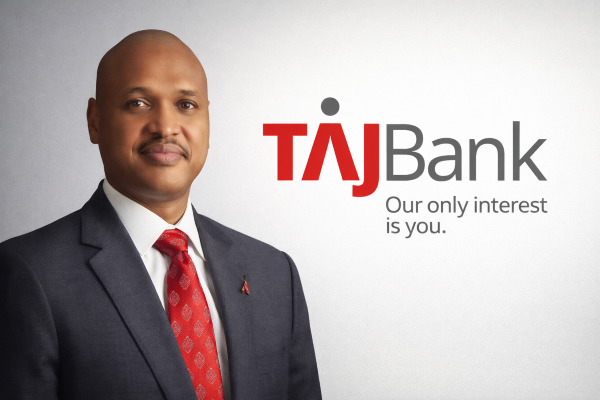
TAJBank Limited has secured A1 credit ratings from Agusto & Co and DataPro, reinforcing its position as one of Nigeria’s strongest players in the non-interest banking (NIB) segment.
According to TAJBank Founder and CEO, Mr. Hamid Joda, the ratings — covering credit risk and operational resilience — represent an upgrade from the Bbb+ score assigned about two years ago.




The improved assessment reflects what rating agencies described as a high-quality balance sheet and solid earnings performance in the 2025 financial year.
Joda attributed the upgrade to operational efficiency, disciplined risk management and customer-focused service delivery despite prevailing economic headwinds. He emphasised that the bank has continued to strengthen its internal controls, governance processes and technology-driven service platforms.
“The improved rating demonstrates our commitment to sound risk management and operational excellence,” he said, noting that the bank remains focused on delivering world-class standards that protect customers’ investments and support long-term growth.
The bank’s Executive Director, Mr. Sherif Idi, added that the A1 rating underscores sustained investment in human capital, technology innovation and branch network expansion — all aimed at deepening market leadership within the NIB space.
For customers and investors, the ratings signal confidence in the bank’s financial stability and operational resilience amid macroeconomic volatility.
BRANDECONOMY Insight
TAJBank’s A1 rating upgrade is more than a corporate milestone — it reflects the maturation of Nigeria’s non-interest banking ecosystem.
In an environment characterised by inflationary pressures, currency volatility and tightening liquidity, credit ratings increasingly serve as credibility currency. For non-interest banks, which operate under ethical finance principles and risk-sharing models, strong ratings help attract institutional investors and deepen market participation.
Three structural implications stand out:
- Capital Attraction: Higher credit ratings reduce perceived counterparty risk, potentially lowering funding costs and improving access to capital markets.
- Subsector Validation: The NIB segment is evolving from niche positioning to mainstream competitiveness within Nigeria’s banking landscape.
- Governance Premium: In a volatile macroeconomic environment, institutions with strong governance frameworks and digital infrastructure enjoy a resilience advantage.
If sustained, TAJBank’s trajectory may accelerate consolidation and innovation within Nigeria’s ethical banking space, positioning NIB as a strategic growth pillar in the broader financial system.