Hormuz Shock: Oil Tops $100 as U.S. Blockade Threat Rattles Global Markets

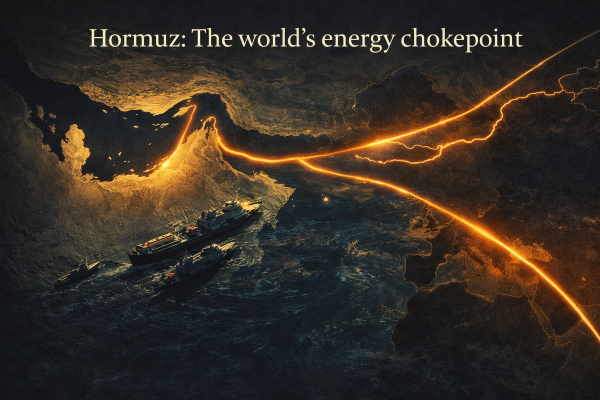 A fragile ceasefire, collapsing diplomacy, and a looming maritime blockade at the strait of Hormuz have combined to deliver a fresh shock to the global economy. As tensions between Washington and Tehran intensify, oil markets have surged past the psychological $100 threshold, while equities across Asia have retreated—signalling investor anxiety over a potential escalation in one of the world’s most critical energy corridors.
At the centre of the unfolding crisis is the Strait of Hormuz—a narrow passage through which nearly a fifth of global oil and gas supplies transit. The United States’ announcement of a blockade targeting vessels linked to Iranian ports has transformed a diplomatic impasse into a high-stakes test of global trade resilience.


From Diplomacy to Deterrence
Weekend negotiations in Islamabad—among the highest-level engagements between the two adversaries in decades—collapsed without resolution. Washington blamed Tehran’s refusal to scale back its nuclear ambitions; Iran accused the U.S. of shifting demands and negotiating in bad faith.
In response, U.S. President Donald Trump escalated the pressure, ordering naval enforcement measures aimed at restricting maritime access to Iranian-linked shipping. While framed as a targeted intervention, the move carries broader implications for global energy flows.
Tehran’s reaction was swift and defiant. Officials warned that any attempt to restrict its access to the waterway could trigger wider retaliation—raising the spectre of disruption beyond Iranian vessels to the entire Gulf shipping ecosystem.
Markets React: Oil Up, Risk Assets Down
The economic response has been immediate.
Crude benchmarks surged sharply, with Brent and West Texas Intermediate climbing above $100 per barrel—erasing last week’s gains that had followed a tentative ceasefire announcement. The rebound reflects renewed fears of supply disruption in a market already sensitive to geopolitical shocks.
Equity markets, by contrast, turned defensive. Major Asian indices—including Tokyo, Hong Kong and Seoul—fell, while currency markets reflected a tilt toward dollar strength, underscoring a broader risk-off sentiment.
The implications extend beyond energy. Higher oil prices feed directly into inflation expectations—complicating central bank policy paths at a time when many economies are already grappling with elevated price levels.
Global Supply Chains Under Strain
The Strait of Hormuz is not merely a regional asset; it is a global economic artery. Any disruption—whether through direct blockade, military escalation or precautionary shipping reroutes—risks amplifying transport costs, insurance premiums and delivery timelines.
Already, logistics operators are recalibrating risk models, while energy-importing nations brace for potential supply constraints.
The ripple effects are particularly acute for developing economies, where fuel price volatility quickly translates into food inflation and fiscal stress.
A Crisis of Trust
Beyond the immediate market reaction lies a deeper structural issue: trust.
As analysts note, the persistent breakdown in U.S.-Iran negotiations reflects a widening credibility gap. Without trust, even temporary ceasefires struggle to translate into durable agreements.
This dynamic is further complicated by parallel tensions in the region, including ongoing hostilities involving Iran-aligned groups in Lebanon—adding layers of geopolitical uncertainty to an already volatile environment.
BRANDECONOMY Insight
The Hormuz crisis is rapidly evolving into a defining moment for global economic stability—and a stress test for the architecture of international trade.
- Energy Security Is Back at the Centre of Global Risk
The sharp oil price rebound highlights the enduring vulnerability of global energy systems to geopolitical disruptions. Diversification strategies will accelerate—but not fast enough to offset near-term shocks. - Inflation Risks Are Re-Emerging
Rising energy costs will likely feed into broader inflation, potentially forcing central banks to maintain higher interest rates for longer—tightening financial conditions globally. - Maritime Trade Is the New Frontline
Control of strategic chokepoints such as Hormuz is becoming a central lever of geopolitical power. Trade routes are no longer neutral—they are contested assets. - Developing Economies Face the Heaviest Burden
Import-dependent nations, particularly in Africa and Asia, will absorb the sharpest impact—through higher fuel costs, rising food prices and constrained fiscal space. - Opportunity in Realignment
For energy producers outside the conflict zone, the disruption may create short-term windfalls. For others, it underscores the urgency of investing in domestic resilience—energy, agriculture and logistics.