Reimagining Nigeria’s Maritime Future
Nigeria’s maritime experts have called for bold, coordinated reforms to modernise the country’s ports and unlock the full potential of its blue economy, insisting that automation, regulation, and institutional competency remain the key levers of transformation.
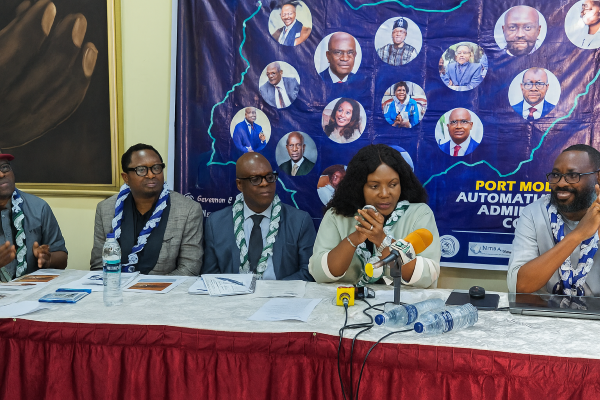
The call was made at the 3rd National Maritime Discourse in Lagos, themed “Port Modernisation: Automation, Regulation, Administration, and Competencies.” The forum — which convened top maritime stakeholders, regulators, and private operators — set the stage for a strategic rethink of how Nigeria’s ports can drive economic competitiveness and sustainability.




Ports as Economic Gateways — The Case for Urgent Reform
According to Captain Sunday Umoren, Secretary-General of the Abuja Memorandum of Understanding (MoU) on Port State Control, ports are “strategic instruments of national development,” shaping trade flows and determining a country’s global competitiveness.
Represented by Mr. Richard Owolabi of NIMASA, Umoren observed that over 90% of global trade moves by sea, yet African nations lose billions annually to inefficient port systems and poor inter-agency coordination.
“Countries that have embraced automation report up to 65% faster vessel turnaround times and **40% shorter cargo dwell times. Efficiency is now measured in minutes, not days,” he noted.
He urged Nigeria to harmonise port regulations, strengthen digital integration, and advance the Port Community System (PCS) and National Single Window to eliminate the bureaucratic bottlenecks that account for more than 40% of cargo delays in Sub-Saharan Africa.
NPA’s Modernisation Drive and the Evolution of Nigeria’s Ports
Tracing the sector’s evolution, Mrs. Rollens Macfoy, President of Women in Maritime Africa (WIMAfrica), Nigeria Chapter, highlighted that the Nigerian Ports Authority (NPA) — established in 1954 — had consistently championed modernisation, from the 2006 port concession reforms to the 2023 commissioning of the Lekki Deep Sea Port, Nigeria’s first fully automated facility.
Between 2023 and 2024, she noted, vessel traffic grew by 5.6%, while export-laden containers surged by 53.7%, a testament to the growing impact of digitalisation and private sector participation.
However, she cautioned that the gains could erode without sustained infrastructure renewal, policy coherence, and talent development.
“We must prioritise training, automation, and regulatory reform through instruments like the Nigerian Shipping and Port Economic Regulatory Agency Bill (2023) to consolidate maritime laws and empower oversight,” Macfoy stressed.
She commended ongoing efforts by NPA to tackle congestion through quay wall rehabilitation, improved digital systems, and rail connectivity to inland terminals.
Automation, Security, and the Green Imperative
Captain (Dr.) Warredi Enisuoh, Executive Director of Operations, Tantita Security Services Ltd, dissected the three stages of port automation — offshore, terminal yard, and hinterland logistics — warning that without efficient cargo evacuation systems outside the port, automation inside the terminals would remain ineffective.
He recommended a greenfield approach to port development, where new deep-water ports are designed with integrated digital infrastructure, sustainability benchmarks, and spatial efficiency.
“Automation is not just about technology — it’s about redesigning how ports interact with their environment and communities,” Enisuoh said.
“We must align port modernisation with green innovation, carbon credits, and inclusive community engagement to achieve true sustainability.”
Enisuoh also lauded President Bola Tinubu’s administration for advancing climate-smart port policies and carbon offset programmes, describing them as essential to building a globally competitive maritime ecosystem.
Synchronised Reform and Maritime Competence Building
Dr. Oluwasegun Musa, Group Managing Director of Widescope International Logistics Ltd, emphasised that Nigeria’s port reform must be holistic and synchronised, anchored on four strategic pillars: automation, regulation, administration, and competencies.
Represented by logistics expert Mr. Mark Onechi, Musa proposed the creation of an independent maritime economic regulator with powers to enforce compliance, attract skilled professionals, and oversee concession performance.
He also called for a National Skills Development Programme to train Nigerians in port automation, digital systems management, and maintenance technologies, financed through public-private partnerships and industry grants.
“True modernisation is collaborative. It requires alignment between government, private operators, and academia to develop people, infrastructure, and governance frameworks that inspire confidence,” he said.
Port Modernisation as National Economic Strategy
The discourse convener and publisher of Maritime Insiders, Mr. Kelvin Kagbare, described the forum as a “movement toward transformation,” urging stakeholders to view port modernisation not as an isolated technical project but as a national economic strategy.
He applauded the participation of industry leaders such as Comptroller-General of Customs, Dr. Bashir Adewale Adeniyi, NPA Managing Director, Dr. Abubakar Dantsoho, NIMASA Director-General, Dr. Dayo Mobereola, and other key figures shaping Nigeria’s maritime future.
“We must modernise, regulate, and empower — not just to catch up with the world, but to lead Africa’s blue economy revolution,” Kagbare said.
BRANDECONOMY ANALYSIS: Port Modernisation as Catalyst for Blue Economy Transformation
1. From Cargo Hubs to Competitiveness Hubs
Nigeria’s ports are not merely gateways for trade — they are strategic economic enablers. A fully modernised port ecosystem can add up to 3% to national GDP, reduce logistics costs, and expand non-oil exports.
2. Digitalisation as the New Infrastructure
Global trade efficiency now depends more on data flows than container flows. Nations that digitise port operations — from manifest submission to clearance — outperform manual systems by miles. Nigeria’s adoption of the ECTS, PCS, and ASYCUDA platforms signals steady progress toward full automation.
3. Private Sector and Green Growth
Port modernisation thrives on PPP models that blend profitability with sustainability. The Lekki Deep Sea Port model shows how greenfield investments, when backed by policy consistency, can attract billions in private capital and create jobs.
4. Human Capital: The Decisive Advantage
Automation without skills leads to digital stagnation. Nigeria’s long-term competitiveness will hinge on training a new generation of maritime engineers, data analysts, and logistics technologists who can drive continuous innovation.
Conclusion: The Next Frontier in Nigeria’s Maritime Renaissance
As global maritime logistics evolves, Nigeria stands at an inflection point — one defined by its ability to move from fragmented port operations to an integrated, digital, and climate-smart port ecosystem.
The message from Lagos is clear: port modernisation is not optional — it is existential.
For Nigeria’s blue economy to thrive, reform must be synchronised, institutionalised, and sustained through smart policies, competent leadership, and unwavering political will.
If these conversations translate into concrete action, Nigeria could transform from a cargo-dependent nation into West Africa’s premier maritime logistics hub — where innovation, efficiency, and sustainability anchor prosperity.