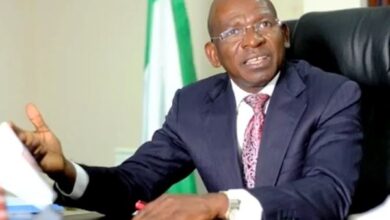
Nigeria Enters New Stability Era as Reforms Lift FX, Inflation and Investor Confidence — Cardoso

Nigeria has entered a new phase of macroeconomic stability, following two years of tough but necessary reforms that have reshaped the policy landscape, strengthened investor confidence, and restored discipline to the country’s economic institutions.
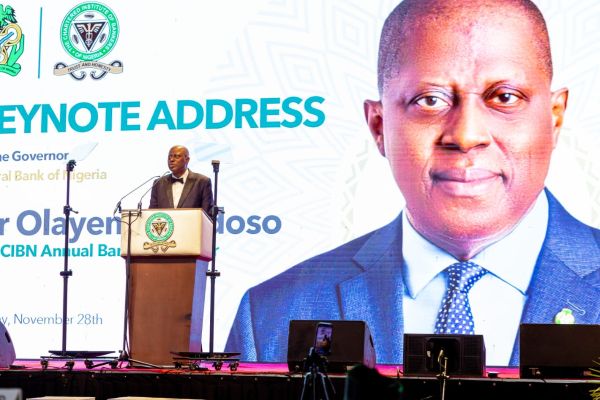
This is the central message delivered by Mr. Olayemi Cardoso, Governor of the Central Bank of Nigeria (CBN), at the 60th Annual Bankers’ Dinner of the Chartered Institute of Bankers of Nigeria (CIBN) in Lagos.




Cardoso described the past two years as a historic reset, characterising the country’s economic revival as a direct product of “disciplined choices, transparency, and institutional rebuilding.” He noted that Nigeria, which teetered on the verge of financial fragility in late 2024, has begun a clear rebound across key macroeconomic indicators—from inflation and FX stability to capital flows and banking resilience.
Inflation Falls for Seven Consecutive Months — First Time in Years
Among the strongest signals of recovery is Nigeria’s success in reversing runaway inflation.
- Headline inflation declined from 34.6% (Nov 2024) to 16.05% (Oct 2025)
- Food inflation dropped sharply to 13.12%, down from 21.87% only two months earlier
This sustained disinflation, Cardoso said, reflects a decisive return to orthodox monetary policy, the end of monetary financing, and improved transparency in FX management. For Nigerian households and businesses, the drop is translating directly into restored purchasing power, easing pressure on savings, consumption, and business costs.
The CBN expects further inflation moderation into 2026, driven by improved productivity, stronger FX liquidity, and structural reforms that continue to cool price volatility.
FX Market Reforms Restore Stability, Narrow Premiums, Rebuild Trust
Cardoso highlighted 2024’s major reforms as pivotal in restoring credibility to Nigeria’s FX market—once a key point of investor frustration.
The CBN:
- Cleared over US$7 billion FX backlogs
- Introduced the Foreign Exchange Code
- Deployed the EFEMS platform to eliminate opacity in FX pricing
- Strengthened supervision across financial institutions
As a result:
- The Naira now trades in a narrow, stable band
- The gap with the parallel market has fallen to below 2%
- FX reserves are being rebuilt organically, supported by non-oil exports and improved capital inflows
Cardoso described this as evidence that “confidence is returning, discipline has been restored, and Nigeria’s financial architecture is stronger than at any time in recent history.”
Nigeria’s Exit from FATF Grey List Unlocks Global Confidence
One of the most significant milestones of 2025 was Nigeria’s removal from the FATF Grey List, which often reduces capital inflows to affected countries by up to 7.6% of GDP.
Cardoso said Nigeria’s exit:
- Eases banking frictions
- Improves due-diligence efficiency
- Restores the country’s attractiveness for global investment
- Strengthens its position in regional and international financial networks
This achievement, he noted, is the result of coordinated reforms between the CBN, financial institutions, the National Assembly, and global partners.
Banking Sector Strengthened, Digital Innovation Expands Under Oversight
Cardoso reiterated that Nigeria’s banking sector remains resilient, underpinned by stronger regulation, enhanced surveillance tools, and proactive supervision.
Looking ahead, the CBN will prioritise:
- Full adoption of inflation targeting
- Strengthening fintech responsibility frameworks
- Modernising the payments ecosystem
- Expanding institutional capacity
- Deepening global regulatory partnerships
He highlighted that digital innovation is welcome, but will operate under firm regulatory guardrails to prevent systemic risk.
BRANDECONOMY INSIGHT
Nigeria’s macroeconomic repositioning is not a coincidence—it is the product of three major structural shifts:
1. The Return of Policy Orthodoxy
The CBN has restored credibility by moving away from quasi-fiscal interventions, enforcing monetary discipline, and anchoring expectations.
2. FX Market Transparency Is Rebuilding Trust
For the first time in years, investors—local and foreign—can price risk with clarity due to thenew era of stability. This is the bedrock of market confidence.
3. Nigeria Is Positioning for a $1 Trillion Economy
From improved reserves to narrowing FX spreads, the indicators show a country attempting to align with global norms, stabilise its currency, and prepare for investment scale-up.
Cardoso’s message is clear:
Nigeria is not just stabilising; it is restructuring for long-term sustainable growth.